

Nailing Tangy Dressings Without the Overkill: 4 Fixes for Bland or Puckering Vinaigrettes
Stop wasting lemons and save your salads with these village-tested balance tricks.

The High Cost of the "Pucker Factor"
We’ve all been there—you spend your hard-earned grocery budget on a beautiful head of crisp romaine, some vine-ripened tomatoes, and a block of the good feta, only to ruin the whole bowl with a dressing that tastes like straight battery acid. 🍋
For years, I thought the secret to a "vibrant" Mediterranean lifestyle was just adding more lemon. I’d squeeze and squeeze until my eyes watered, thinking I was being "fresh." In reality, I was just wasting expensive citrus and masking the flavor of my ingredients. When you’re trying to keep a family healthy on a budget, every lemon and every tablespoon of extra virgin olive oil counts. Learning to balance your acidity isn't just a culinary skill; it's a major money-saver because it means you stop throwing away "failed" salads that nobody wants to eat.
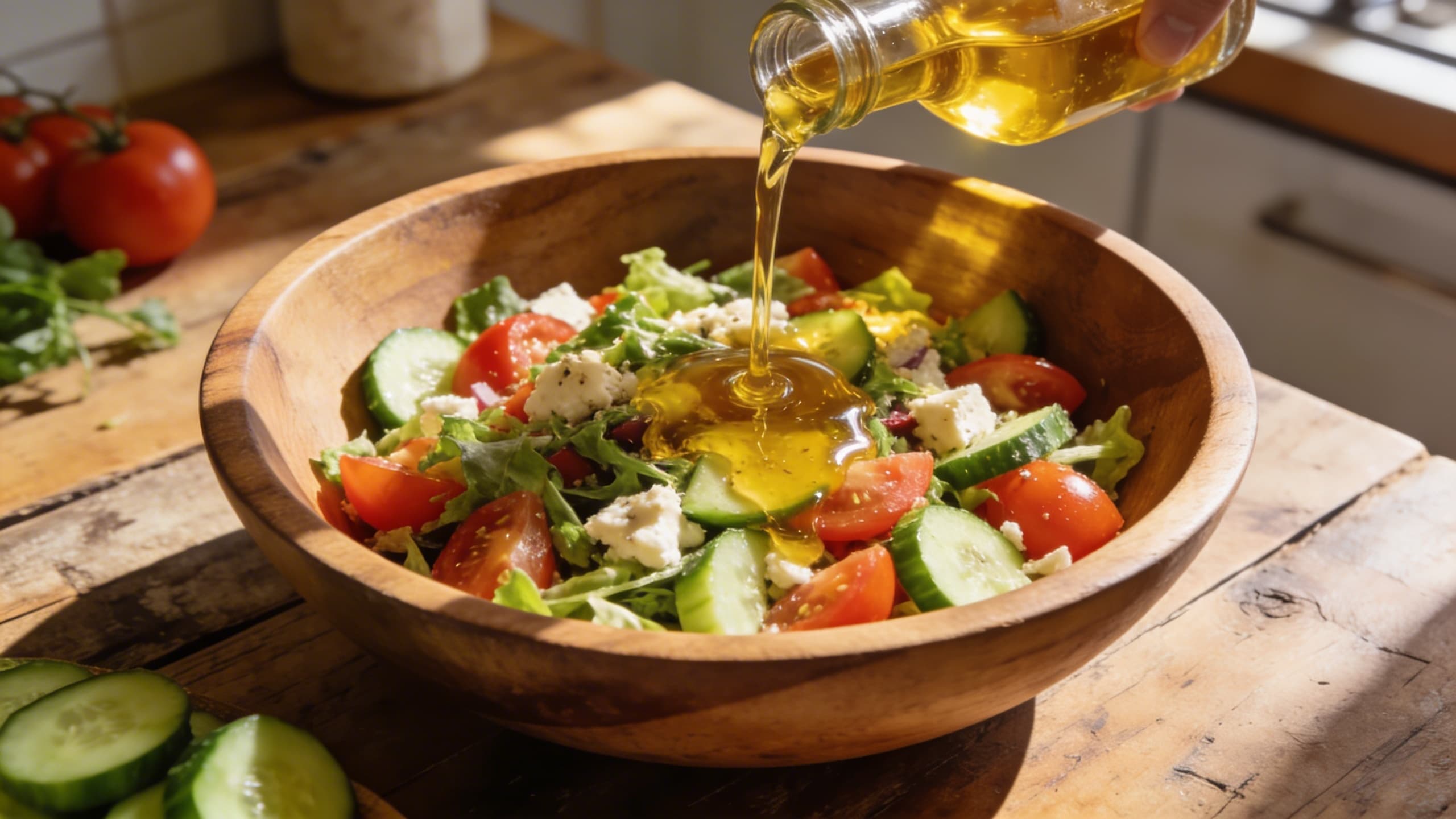
1. The Emulsion Illusion: Why Your Oil is Hiding
If your dressing tastes too sharp, it might not be too much vinegar—it might just be a bad marriage. When oil and acid aren't properly emulsified, your tongue gets hit with a wave of pure acid first, followed by a greasy oil slick.
Pro Tip: Use a "bridge" ingredient. A teaspoon of Dijon mustard or a dollop of Greek yogurt acts as an emulsifier, binding the oil and vinegar together so they coat your greens evenly. This means you use less dressing overall, stretching your pantry staples further!
2. The "Sweet" Spot (Without the Sugar Crash)
In the village, we don't reach for refined sugar to fix a sour sauce. We look for natural mellowing agents. If your vinaigrette is puckering your lips, it needs a tiny bit of "roundness."
- Honey or Maple Syrup: Just half a teaspoon can neutralize the sharp bite of a cheap red wine vinegar.
- Pomegranate Molasses: A Mediterranean staple that adds depth and a different kind of fruity tartness that balances lemon juice beautifully.
- Mashed Roasted Garlic: If you have leftovers from dinner, whisking a clove of mellow, sweet roasted garlic into your dressing adds body and sweetness for zero extra cost.
A great dressing shouldn't shout at your vegetables; it should have a polite conversation with them.
3. The Salt Secret: The Unsung Hero of Balance
Believe it or not, sometimes a "too tart" dressing is actually just under-salted. Salt suppresses our perception of sourness. Before you add more oil to dilute the acid (which just adds cost and calories), try adding a tiny pinch of sea salt or a splash of brine from your olive jar.
Did You Know? Using feta brine or olive juice as part of your "acid" component adds built-in salt and complexity, saving you from using up your expensive vinegars too fast!
4. The Herb Dilution Technique
If you’ve gone overboard on the lemon grove experiments and the dressing is just too intense, don't pour it down the drain! Instead of adding more oil (which can make the dressing heavy), add bulk with fresh, soft herbs.
Finely chopped parsley, mint, or cilantro will absorb some of that acidic punch and distribute the flavor. It turns a "dressing" into a "chimichurri-style" sauce that feels like a gourmet addition rather than a mistake.
Key Takeaway: Balance is a trio, not a duo. It’s the harmony between Acid, Fat, and Seasoning (sweet/salt). If one is screaming, check the other two before you start over!
Fox-Approved Quick Fixes
Warning: Never fix a sour dressing by adding water! It breaks the emulsion and makes your salad soggy. Use a splash of orange juice instead for a cheaper, flavorful liquid volume booster.
By mastering these four simple fixes, you'll stop wasting ingredients and start making salads that your kids will actually ask for seconds of. Healthy made easy, and easy on the wallet! 🦊🌿
#MealPrep #BudgetCooking #MediterraneanDiet #KitchenHacks