

Bubbles & Brine: 5 Sneaky Fermentation Fails and the Gear That Fixes Them
Mastering the Art of Probiotic Mezze Without the "Science Experiment" Smell

The Fermentation Renaissance: Why Your Kitchen Needs a Crock
Imagine a sun-drenched terrace overlooking the Mediterranean, where the air is thick with the scent of wild oregano and the gentle rhythm of waves. In every village kitchen, you’ll find jars of olives and crocks of cabbage, quietly bubbling away. This isn't just about preservation; it’s about capturing a moment in time and turning simple, humble vegetables into gut-healing, flavor-packed mezze. 🌿✨
For a long time, I thought fermentation was a dark art—something reserved for grandmothers with secret ceramic pots and a sixth sense for salt ratios. I’ve had my fair share of "science experiments" gone wrong (let’s just say a certain batch of carrots once smelled more like a gym locker than a gourmet side dish). But once I invested in the right tools and learned the simple science behind the bubble, it changed everything. Today, I’m reviewing the gear that makes this "chore" a 10-minute joy and sharing the five sneaky mistakes that might be holding your kraut back from greatness.
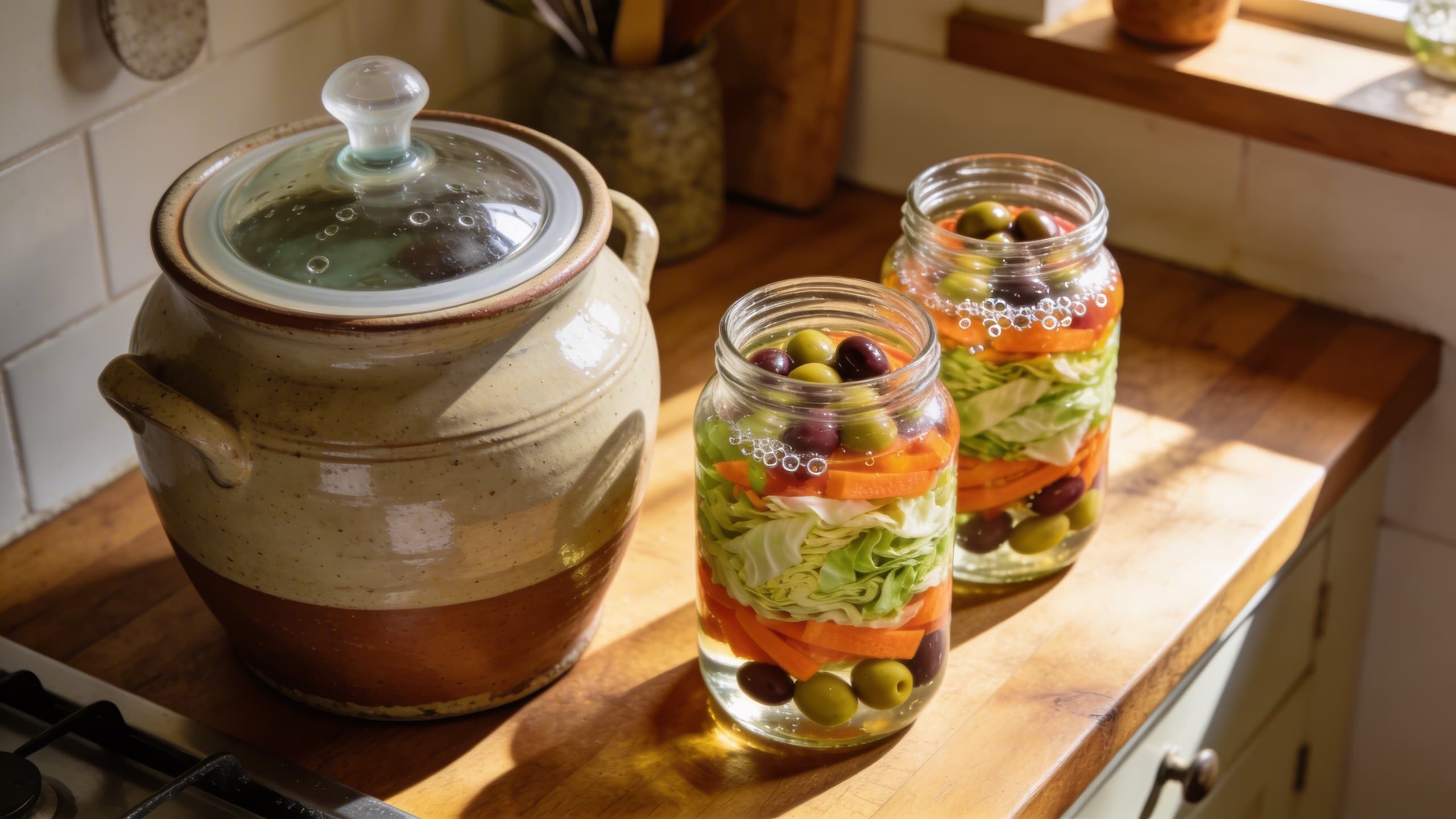
1. The "Open Air" Oversight: Why Oxygen is the Enemy
The biggest mistake I see? Letting your veggies breathe. Fermentation (specifically lacto-fermentation) is an anaerobic process. That means the good bacteria—the Lactobacillus—thrive when there’s no oxygen. When you leave cabbage floating on top of the brine, you’re inviting mold and yeast to the party.
In my early days, I’d just shove some salt in a jar and hope for the best. I ended up with fuzzy, gray olives that were definitely not Mediterranean-chic.
Key Takeaway: If it’s under the brine, it’s fine! If it’s in the air, beware. Always ensure your vegetables are completely submerged.
2. The Great Salt Debate: Why "A Pinch" Isn't Enough
We Mediterranean cooks love to season "by heart," but fermentation is one area where my inner fox gets precise. If you don't use enough salt, the bad bacteria win before the good ones can start. If you use too much, you kill off the very microbes you’re trying to grow.
I used to use standard table salt, but the iodine can actually inhibit fermentation and turn your veggies a weird, unappetizing color. Now, I stick to high-quality sea salt or Himalayan pink salt.
Pro Tip: Aim for a 2% brine for most veggies. That’s roughly 1 tablespoon of sea salt per pound of vegetables (or per 2 cups of water for a brine-based ferment like olives).
3. The Tool Review: Is a Crock Worth the Counter Space?
Let’s talk gear. You can ferment in a mason jar, but if you’re serious about gut health and consistent flavor, a dedicated fermentation crock is a game-changer. 🏺
The Humble House Sauerkrock (My Top Pick)
This is the "little black dress" of the fermentation world. It features a water-seal lid, which acts as a one-way valve. It lets the CO2 escape (the bubbles!) but prevents oxygen or fruit flies from getting in.
- The Verdict: Worth every penny for busy families. You set it, fill the water moat, and forget it for a week. No "burping" jars required!
Glass Weights (The Essential Accessory)
If you stick with mason jars, please, for the love of feta, get some glass fermentation weights. Those little "pebbles" keep your cabbage firmly pinned beneath the brine.
Fox Wisdom: A good crock is like a sturdy pair of boots—it might feel like an investment upfront, but it’ll carry you through a thousand delicious miles.
4. Temperature Tantrums: The "Goldilocks" Zone
Living in a Mediterranean-style climate (or just having a warm kitchen) can be tricky. Fermentation happens faster in the heat. If your kitchen is 80°F, your cabbage will turn to mush in three days. If it's too cold (below 60°F), the process stalls.
I once left a jar of "Egyptian-style" pickled turnips near the oven during a big Sunday roast. By Monday, they were so soft they practically dissolved.
Tip: Find a cool, dark corner of your pantry. Stability is better than speed. 68-72°F is the "Goldilocks" zone for crisp, tangy results.
5. The "Rushing" Regret: Patience is a Nutrient
The final mistake? Digging in too early. The complex, tangy flavors and the peak probiotic counts take time to develop. Most ferments need at least 7 to 10 days to reach that "zesty" sweet spot.
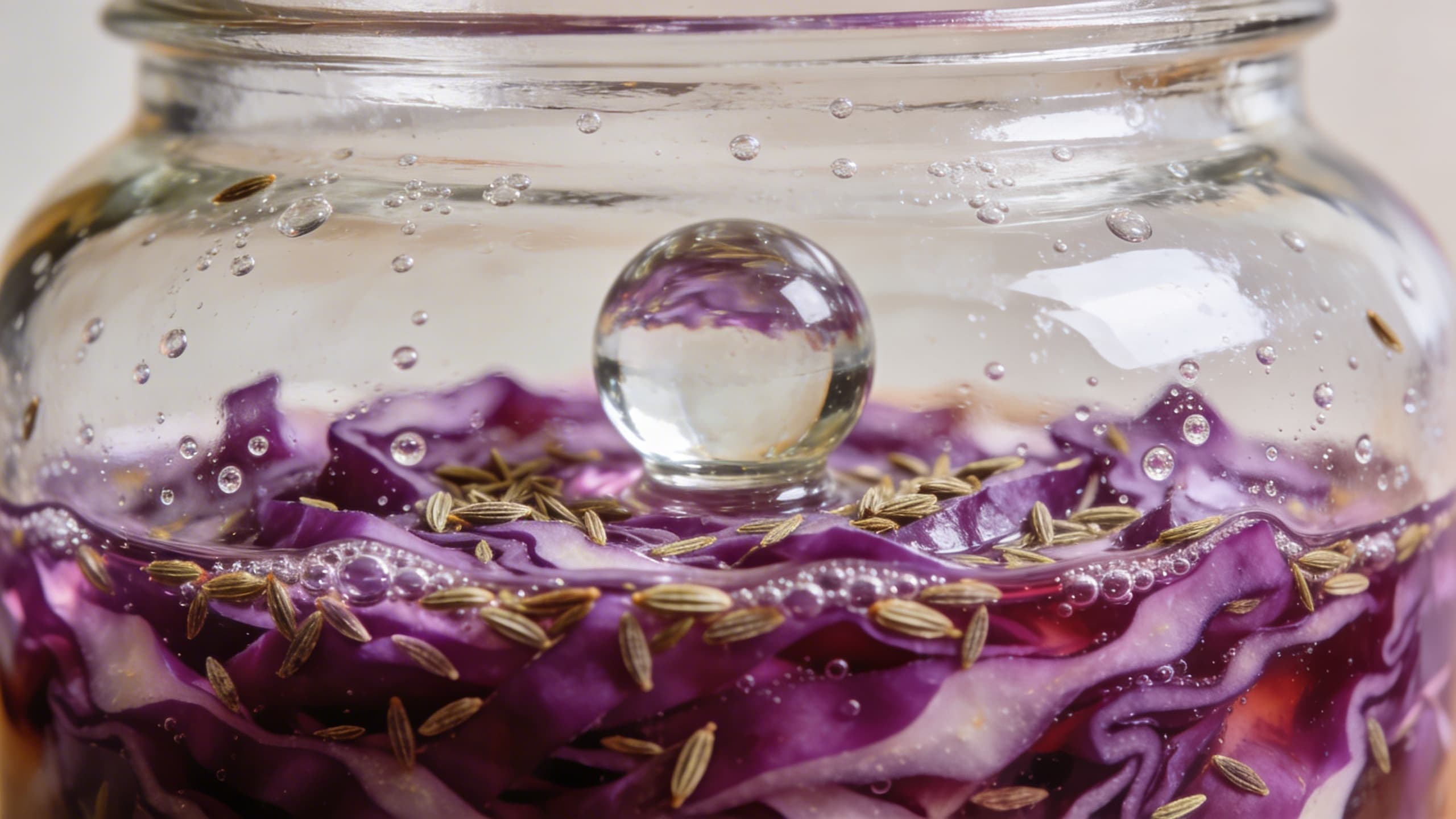
The 10-Minute Starter: "Village Style" Cabbage
If you’re a busy parent, don't start with 20-step pickles. Start with this:
- Thinly slice half a head of cabbage.
- Massage it with 1.5 tsp of sea salt and a pinch of dried oregano until it gets "weepy."
- Pack it TIGHTLY into a jar until the liquid rises above the cabbage.
- Weight it down and wait 7 days.
That’s it. You’ve just created a vibrant, crunchy side that makes any grilled chicken or pita wrap feel like a feast.
Did You Know? Traditional Mediterranean ferments like olives weren't just for flavor—they were the original "fast food," providing essential nutrients and salt to workers in the fields.
Healthy eating doesn't have to be complicated, and it certainly shouldn't be a chore. With the right crock and a little bit of patience, you can turn your kitchen into a Mediterranean sanctuary. From my kitchen to yours, happy bubbling! 🦊✨
#guthealth #mediterraneandiet #fermentation #healthyhacks