

5 Sneaky Ways Herbs Lose Potency in Your Kitchen (And Easy Fixes to Keep Mediterranean Dishes Bursting with Flavor)
Keep your Mediterranean dishes bursting with flavor with these simple storage and prep fixes.

Have you ever stood over a bubbling pot of Mediterranean stew, tossed in a handful of what you thought was fragrant oregano, only to realize it tasted like... well, absolutely nothing? 🌿 💨
It’s the ultimate kitchen heartbreak. You’ve spent the morning at the market, picked the most vibrant bunch of herbs, and by Tuesday, they’re either a slimy mess in the crisper drawer or a pile of flavorless hay. I’ve been there more times than I care to admit! I once tried to "sun-dry" my own wild sage on a breezy seaside balcony in Greece, only to have a sudden humidity spike turn my precious harvest into a moldy science project.
The truth is, fresh herbs are the heartbeat of Mediterranean cooking, but they are incredibly delicate. Science tells us that the moment you cut a herb, its essential oils—the source of all that zesty flavor—start evaporating. If you aren't careful, you're just garnishing your food with expensive green grass.
Let’s dive into the 5 sneaky ways your herbs are losing their "oomph" and the simple, fox-proof techniques to keep them bursting with life.
1. The "Open Air" Evaporation Trap
Many of us leave our herbs sitting on the counter in their plastic grocery bags. This is a recipe for disaster. Herbs like cilantro, parsley, and dill are "soft herbs"—they have thin cell walls that lose moisture rapidly. When they sit in the open air, those aromatic compounds literally vanish into thin air.
Did You Know? Soft herbs are like cut flowers. If they don't have a constant water source and a way to trap humidity, they wilt and lose 50% of their aromatic potency within just 24 hours.
The Easy Fix: The "Herb Bouquet" Method
Treat your soft herbs like a centerpiece! Trim the bottoms of the stems and place them in a glass with about an inch of water. Cover the top loosely with a reusable silicone bag or a damp paper towel. This creates a mini-greenhouse effect that keeps the cells hydrated and the oils locked in.
2. Death by Dull Blades (The "Bruising" Blunder)
This is the most common technique fail I see in home kitchens. If your knife isn't "shaving-sharp," you aren't cutting your herbs—you’re crushing them. Look at your cutting board after chopping basil. Is there a big green stain left behind? That’s not "herb juice"; that’s the flavor and nutrients leaving the leaf and staying on the wood.
Great cooking is about technique, not complexity. If you bruise the herb, the flavor stays on the board instead of in the bowl.
The Easy Fix: The "Sharp & Swift" Slice
Invest in a good whetstone or a professional sharpening service. When you chop, use a long, sweeping motion rather than a downward "hacking" motion. For delicate leaves like basil or mint, try the Chiffonade technique: stack the leaves, roll them like a cigar, and slice thin ribbons with one clean pass of the blade.
3. The Heat-Timing Mismatch
I used to make the mistake of tossing my fresh cilantro and parsley into the pot the moment the heat went on. Big mistake! High heat for long periods destroys the delicate volatile oils in soft herbs. By the time the meal hits the table, the flavor has been boiled away.
Pro Tip: Not all herbs handle heat the same way. Categorize your herbs into "Hard" and "Soft." Hard herbs (Rosemary, Thyme, Oregano) have woody stems and can withstand long simmers. Soft herbs (Basil, Mint, Cilantro) should almost always be added in the final 2 minutes of cooking or as a raw garnish.
4. The "Wet Feet" Syndrome
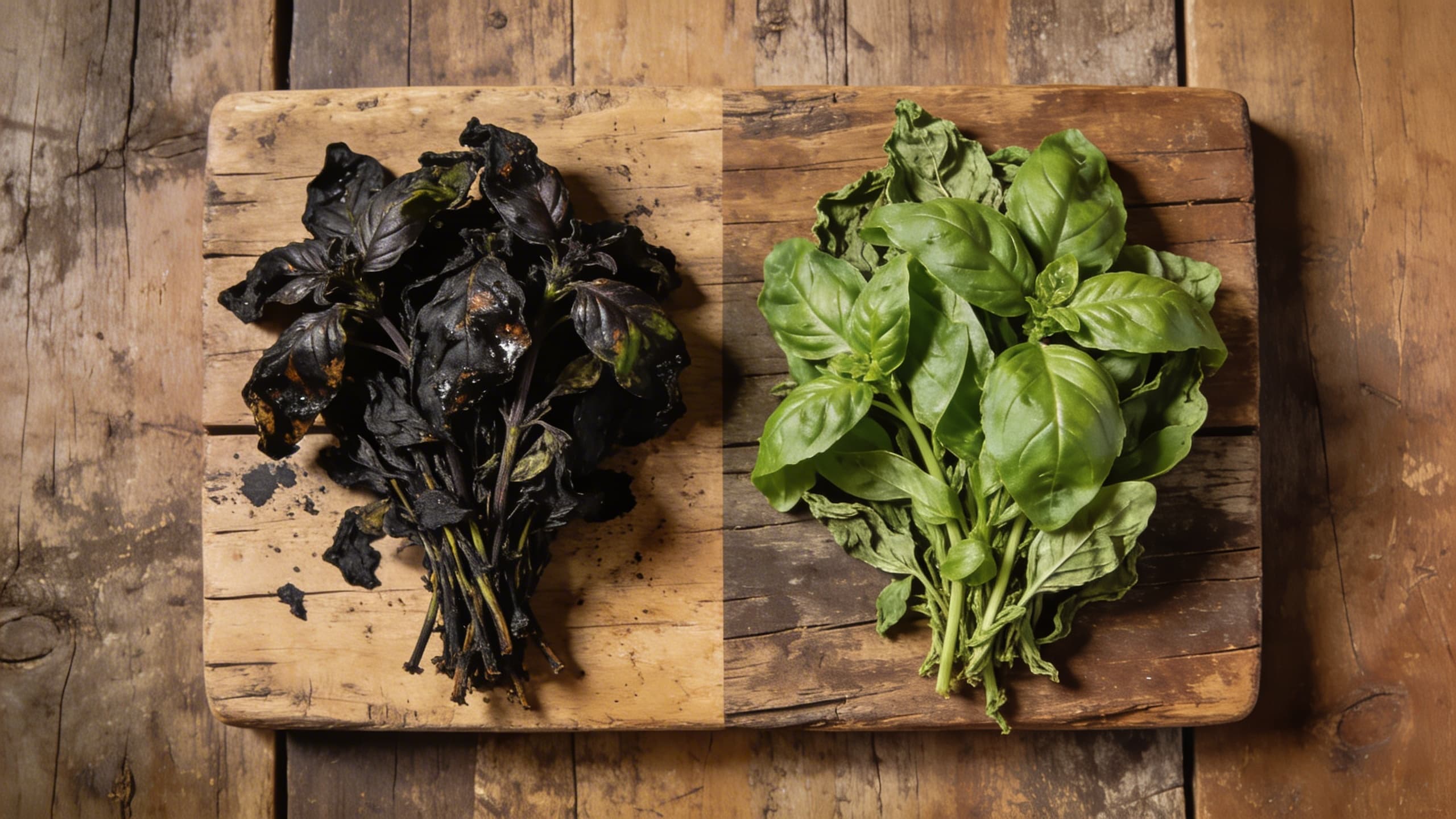
While soft herbs love a drink, they hate being soggy. If you wash your herbs and put them away while they’re still dripping, bacteria will have a field day. This leads to that dreaded black slime that ruins a whole bunch in overnight.
The Easy Fix: The Salad Spinner Trick
After washing, give your herbs a ride in a salad spinner until they are bone-dry to the touch. If you don't have one, lay them out on a clean kitchen towel and gently pat them dry before storing them in the fridge.
5. Ignoring the "Hard" Herb Rules
Rosemary, thyme, and sage are the sturdy soldiers of the Mediterranean kitchen, but they have their own pitfall: they hate too much humidity. If you wrap rosemary in a soaking wet paper towel, it will mold faster than you can say "focaccia."
Tip: Store woody, hard herbs by wrapping them loosely in a dry or very slightly damp paper towel and placing them in a sealed container or bag in the warmest part of your fridge (usually the top shelf or the door).
Key Takeaway: To keep your Mediterranean dishes vibrant, treat your herbs like the living things they are. Keep soft herbs hydrated but not soggy, use a sharp knife to prevent bruising, and always time your "herb drop" based on the herb's heartiness.
Healthy eating shouldn't be a chore; it should be the most delicious part of your family's day. By mastering these simple herb-saving techniques, you’re ensuring every bite is packed with the anti-inflammatory, zesty goodness that makes this lifestyle so wonderful.
Now, go check your crisper drawer—your parsley is waiting for a rescue! 🦊✨
#HerbHacks #MediterraneanCooking #KitchenTips #FreshFlavor