

5 Common Mistakes Home Cooks Make with Couscous (and How to Fix Them)
Stop the soggy mush and start the fluff: Your ultimate guide to mastering the Mediterranean's quickest side dish.

The Tiny Grain with a Big Personality
Let’s talk about that little kitchen chameleon we all love (and occasionally accidentally turn into a brick): couscous. It’s the ultimate "I’m too tired to cook" lifesaver, yet it’s so often misunderstood. In my own "fox den" kitchen, I’ve had my fair share of trial-and-error moments—mostly involving a fork and a lot of frustration. 🦊✨
The beauty of the Mediterranean diet isn't just about what you eat, but how you prepare it to honor the ingredients. Couscous is actually a tiny pasta, not a grain, and it deserves a little more respect than just a quick douse in boiling water. If you've ever ended up with a bowl of soggy mush or dry, sandy bits, this guide is for you.
1. The "Plain Water" Trap
One of the biggest mistakes is using plain old tap water. Since couscous is essentially semolina flour and water, it has a very neutral profile. If you hydrate it with plain water, you're missing the easiest opportunity to build a foundation of flavor.
Mistake #1: Using plain water to hydrate your couscous.
The Fix: Use a high-quality vegetable or chicken stock. If you’re in a pinch and must use water, at least add a generous glug of extra virgin olive oil and a pinch of sea salt. I love to steep a few saffron threads or a cinnamon stick in the liquid first to give it that sun-kissed, aromatic lift.
2. The Ratio Rigmarole
We’ve all been there—eyeballing the water because we’re in a rush. But couscous is precise. Too much liquid and you get "couscous porridge" (yuck!); too little and it’s like eating delicious sand.
Mistake #2: Eyeballing the liquid-to-couscous ratio.
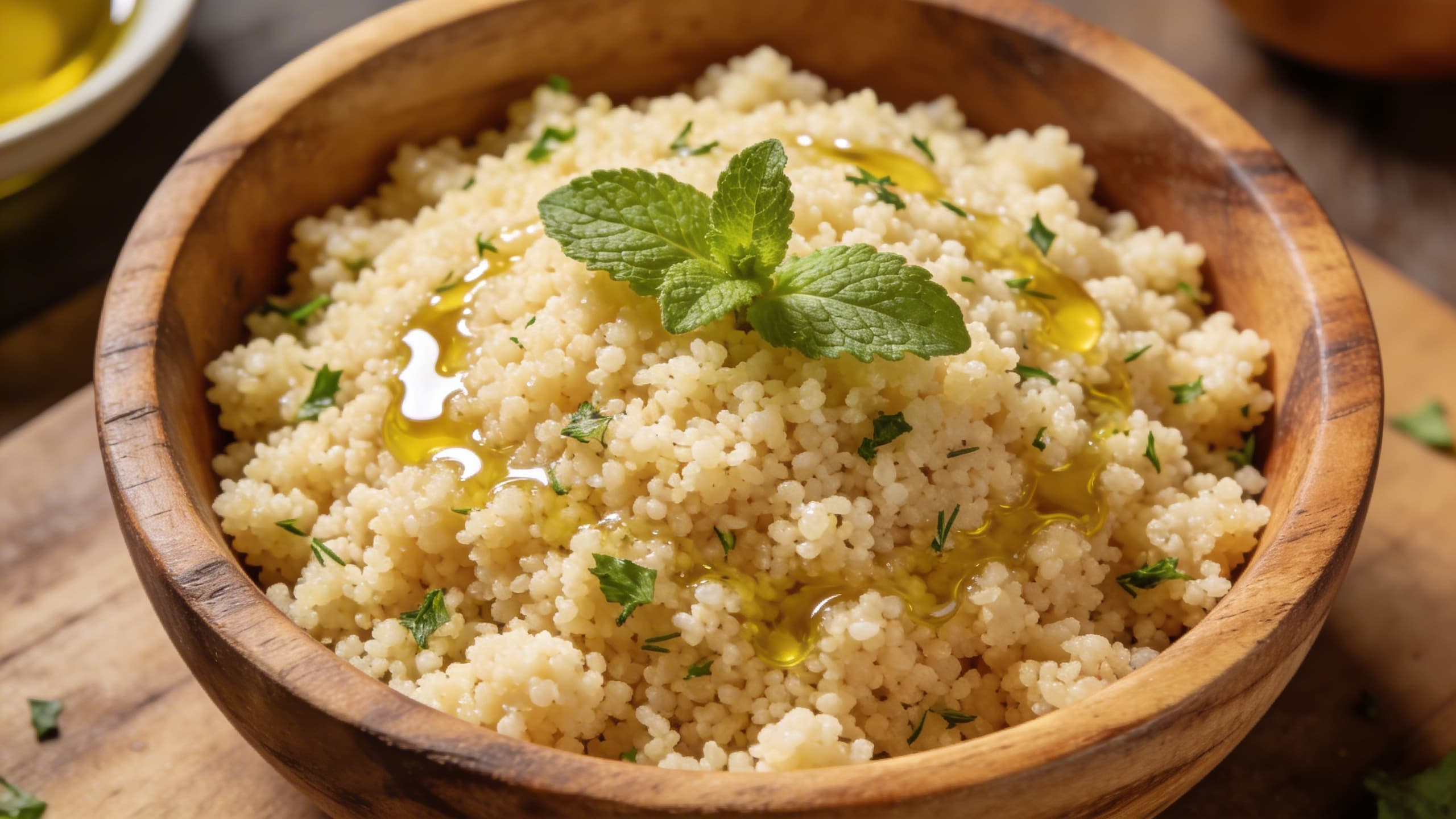
The Fix: For standard Moroccan couscous (the tiny kind), the golden ratio is 1 part couscous to 1 part liquid. For pearl (Israeli) couscous, you usually need a bit more, about 1.25 parts liquid to 1 part grain, and it requires actual simmering rather than just soaking.
3. The "Set It and Forget It" (For Too Long)
Unlike a slow-braised stew, couscous is a sprinter. If you let it sit in the hot liquid for 20 minutes while you're distracted by a phone call or the kids, the steam will continue to cook the grains from the inside out, leading to a gummy texture.
Mistake #3: Letting the couscous sit covered for too long.
The Fix: Five minutes is the magic number. Once you pour the boiling liquid over the grains, cover the bowl tightly with plastic wrap or a lid and set a timer. As soon as those five minutes are up, the lid comes off!
4. The Fork vs. Spoon Showdown
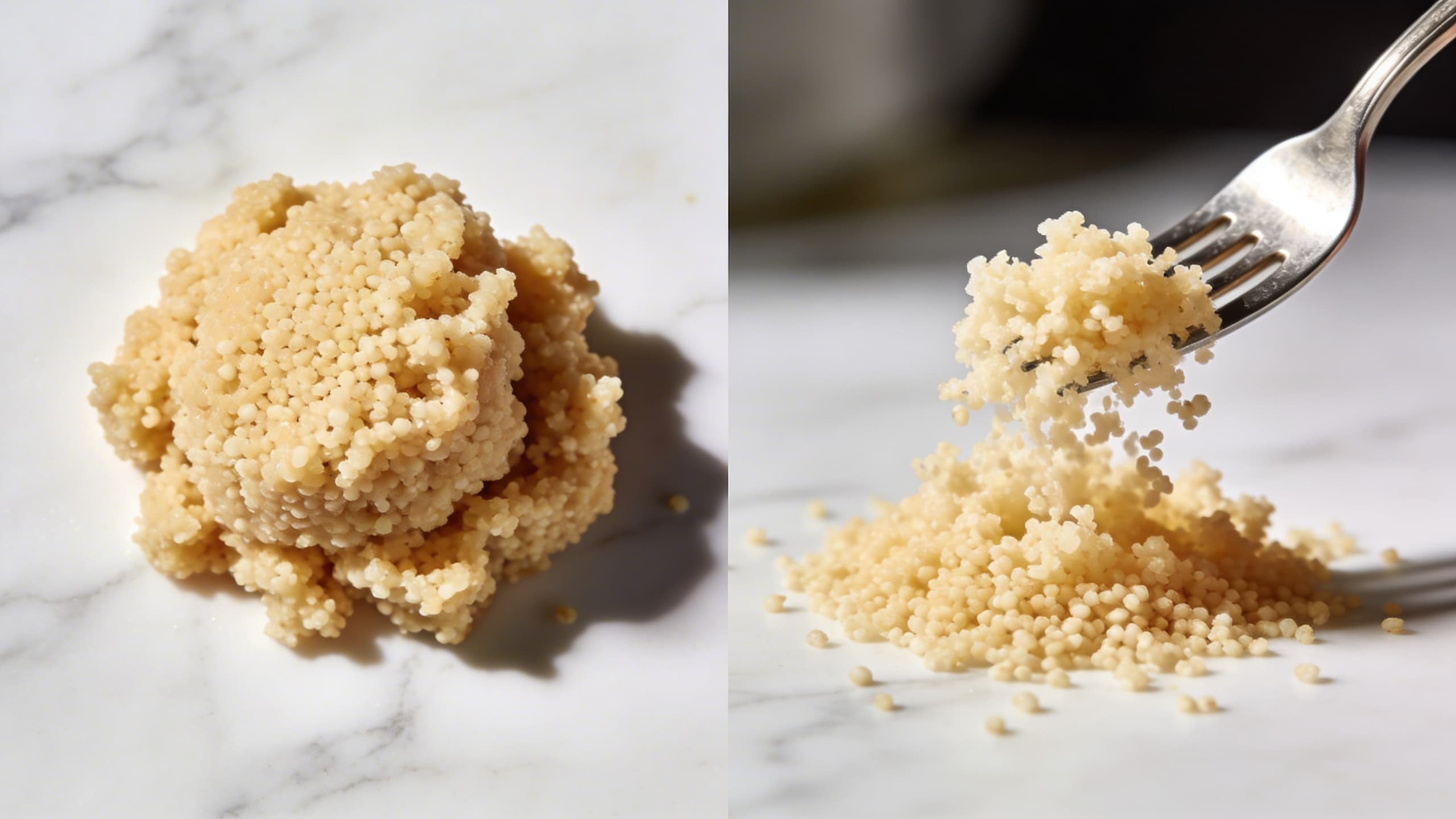
This is where the science of "fluff" really happens. If you go in with a spoon or a spatula to stir your couscous, you are essentially smashing the delicate, hydrated pearls together. This creates clumps that are impossible to separate later.
Mistake #4: Stirring or fluffing with a spoon.
The Fix: Always, always use a fork. Gently rake the tines across the surface, breaking up the clumps and letting the steam escape. It’s like combing hair—be gentle!
A spoon is for soup; a fork is for fluffing. Treat your couscous like a cloud, not a clay project.
5. Skipping the "Fat Cap"
In many Mediterranean villages, the secret to those individual, non-sticky grains is a little bit of fat applied at the right time. If you don't coat the grains, they will naturally want to bond to one another.
Mistake #5: Forgetting to add fat before or after steaming.
The Fix: My favorite "fox hack" is to toss the dry couscous with a tablespoon of olive oil before adding the liquid. This coats each tiny grain in a waterproof barrier, ensuring they stay separate and silky. Alternatively, stir in a knob of grass-fed butter or more oil immediately after fluffing.
Key Takeaways for Fluffy Results
Key Takeaway:
- Flavor the liquid: Use stock or aromatics.
- Stick to the 1:1 ratio: Precision is your friend.
- Time it: 5 minutes of soaking, no more.
- Fork only: Never smash with a spoon.
- Add fat early: Coat the grains for maximum separation.
Pro Tip: If you want to scale this for a big family dinner, spread the dry couscous out in a wide, flat rimmed baking sheet before pouring the liquid over. The increased surface area prevents the weight of the top grains from squishing the ones on the bottom!
Vibrant Food, Vibrant Life
Cooking for your family doesn't have to be a high-stress event. Sometimes, it’s just about mastering these tiny techniques that turn a pantry staple into a star. Try these fixes tonight, and I promise your couscous will finally be the fluffy, flavor-packed side dish it was always meant to be.
From my kitchen to yours, happy fluffing! 🦊🌿
#cookinghacks #mediterraneandiet #mealpreptips #healthyeating