
 Chef Big D
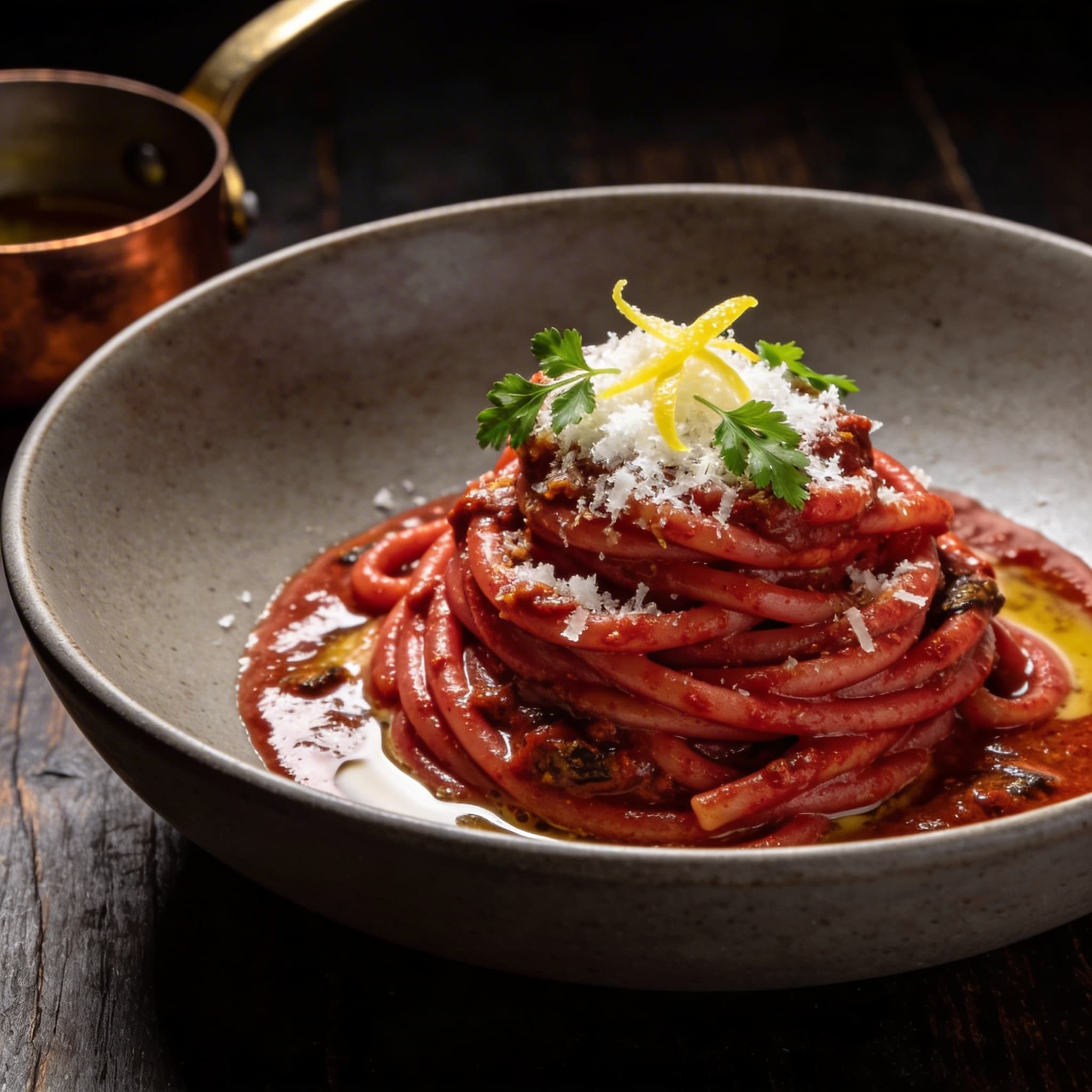
A high-velocity lunch that bridges the gap between Calabrian heat and backyard smoke. Hand-rolled pici tossed in a glossy 'nduja and cold-smoked butter emulsion.
Bring a large pot of heavily salted water to a rolling boil. If you want it to taste like the Mediterranean, use more salt than you think.
Salt the water until it tastes like the sea; it's your only chance to season the pasta itself.
While the water heats, mince your garlic and prepare the lemon zest and parsley. Ensure the 'nduja is at room temperature for better melting.
Drop the pici into the boiling water. If using fresh, it only needs about 3-4 minutes. If dried, follow the package but pull it 2 minutes early for that perfect al dente resistance.
Always reserve a cup of pasta water before draining. It's liquid gold.
In a wide copper saucier or large skillet over medium heat, melt 2 tablespoons of the smoked butter. Add the minced garlic and sauté until fragrant but not browned.
Add the 'nduja to the skillet, breaking it up with a wooden spoon until it begins to melt and release its vibrant red oils into the butter.
Whisk in 1/4 cup of the reserved pasta water to create a base emulsion. The starch will help the fat and water bind into a cohesive sauce.
Transfer the cooked pici directly into the sauce. Add the remaining 2 tablespoons of cold-smoked butter and another splash of pasta water. Toss vigorously—this is where the viscosity happens.
The 'mantecatura' phase is critical. Agitate the pan to build that creamy texture.
Remove from heat. Shower with Pecorino Romano, lemon zest, and parsley. Toss one last time and plate immediately in warmed bowls.
The key to this dish is the emulsion. If your 'nduja is too cold, it won't melt into the sauce; if the pasta water isn't starchy, it won't cling. We're looking for a glossy, brick-red coating that coats the tongue. For the smoke, I prefer a light fruitwood like cherry to complement the pork without overpowering the fermented chili notes of the spread. Don't skip the lemon zest at the end—it's the high-frequency note that cuts through the heavy lipids.
Nutrition data is estimated and may not be fully accurate. This is not medical advice — consult a registered dietitian or healthcare professional for personalized guidance.
Prices shown reflect the estimated cost of the portion used in this recipe, not the full item price. Actual costs may vary by store and location.