
 Chef Big D
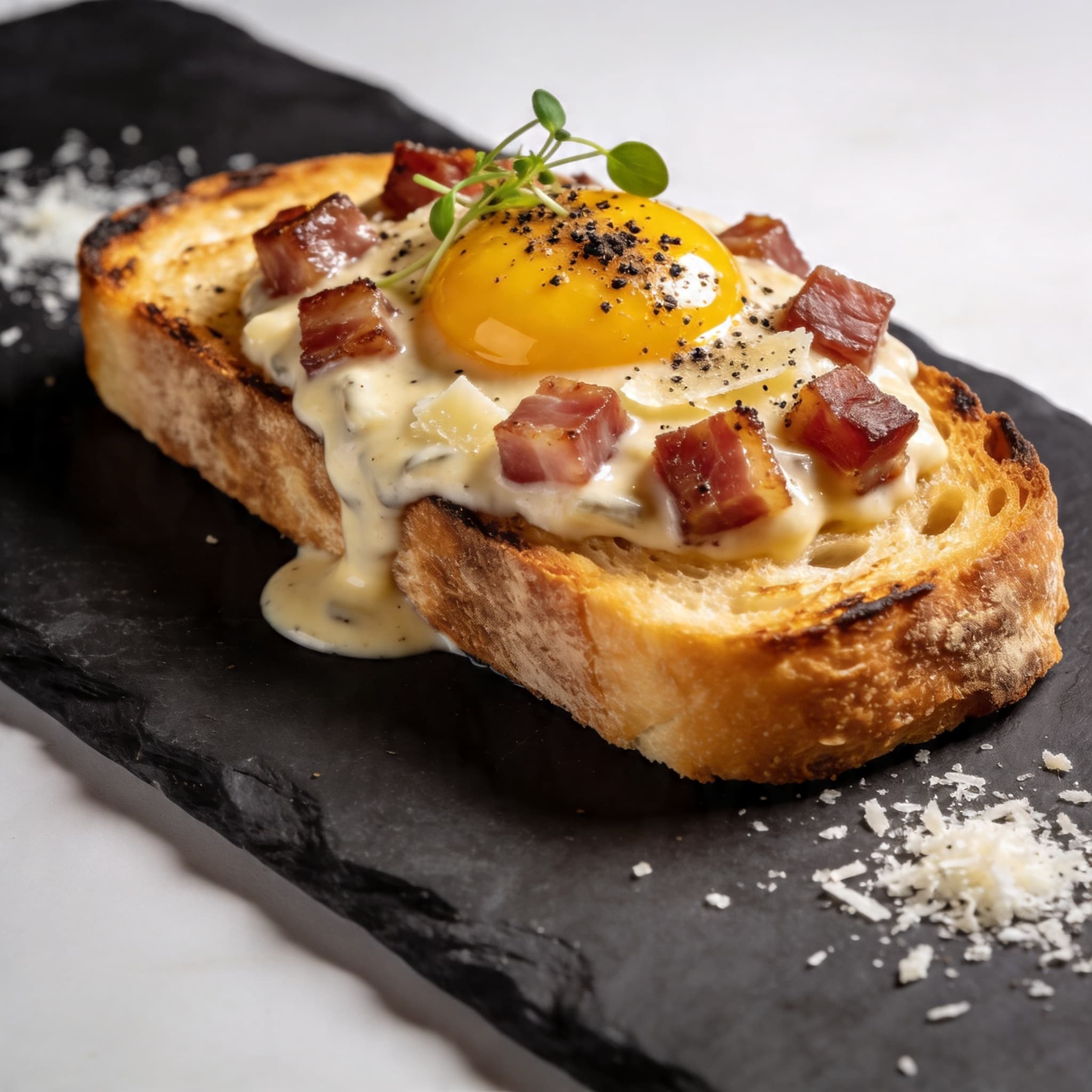
A high-precision Italian breakfast classic reimagined with a deep smoke profile and hand-rolled texture. We're replacing the traditional pasta with a toasted sourdough foundation to support the weight of a perfectly emulsified carbonara sauce.
Place the diced guanciale in a cold carbon steel pan. Render over medium-low heat until the fat is translucent and the edges are starting to crisp. Add the smashed garlic clove for the last 2 minutes to infuse the oil, then discard the garlic.
Starting with a cold pan ensures the maximum amount of fat renders out without burning the meat.
In a small copper or glass bowl, whisk together the egg yolks and finely grated Pecorino Romano until a thick, pale paste forms. Add half of the crushed black pepper to this mixture.
The quality of the cheese dictates the viscosity of your sauce. Don't use the pre-grated stuff.
In a separate skillet, melt the butter and toast the sourdough slices until golden brown and structurally sound. Set aside on a warm plate.
The bread needs to be sturdy enough to handle the sauce without turning into a soggy mess.
Remove the guanciale pan from the heat. Allow it to cool for 60 seconds so you don't scramble the eggs. Slowly whisk 2 tablespoons of the warm guanciale fat into the egg and cheese mixture to temper it.
Tempering is the difference between a silky emulsion and a grainy disappointment.
Pour the tempered egg mixture into the pan with the remaining guanciale. Stir constantly with a silicone spatula until the residual heat thickens the sauce into a glossy, coating consistency. If it's too thick, add a teaspoon of warm water.
The pan should not be on the burner during this step. Residual heat is your best friend.
Spoon the carbonara mixture generously over the toasted sourdough. Top with the remaining crushed black pepper and an extra dusting of Pecorino. Serve immediately.
Plate with precision. The sauce should drape, not run.
The key here is the emulsion of the egg yolk into the smoky fat of the guanciale. If your sauce breaks, you've lost the Michelin star—and my respect. Use a high-quality carbon steel pan for the best heat distribution. Keep the heat low once the eggs are in; we want a silky coating, not a scrambled mess. For the ultimate experience, serve with a glass of dry Lambrusco—the bubbles cut through the fat perfectly.
Nutrition data is estimated and may not be fully accurate. This is not medical advice — consult a registered dietitian or healthcare professional for personalized guidance.
Prices shown reflect the estimated cost of the portion used in this recipe, not the full item price. Actual costs may vary by store and location.