
 Chef Big D
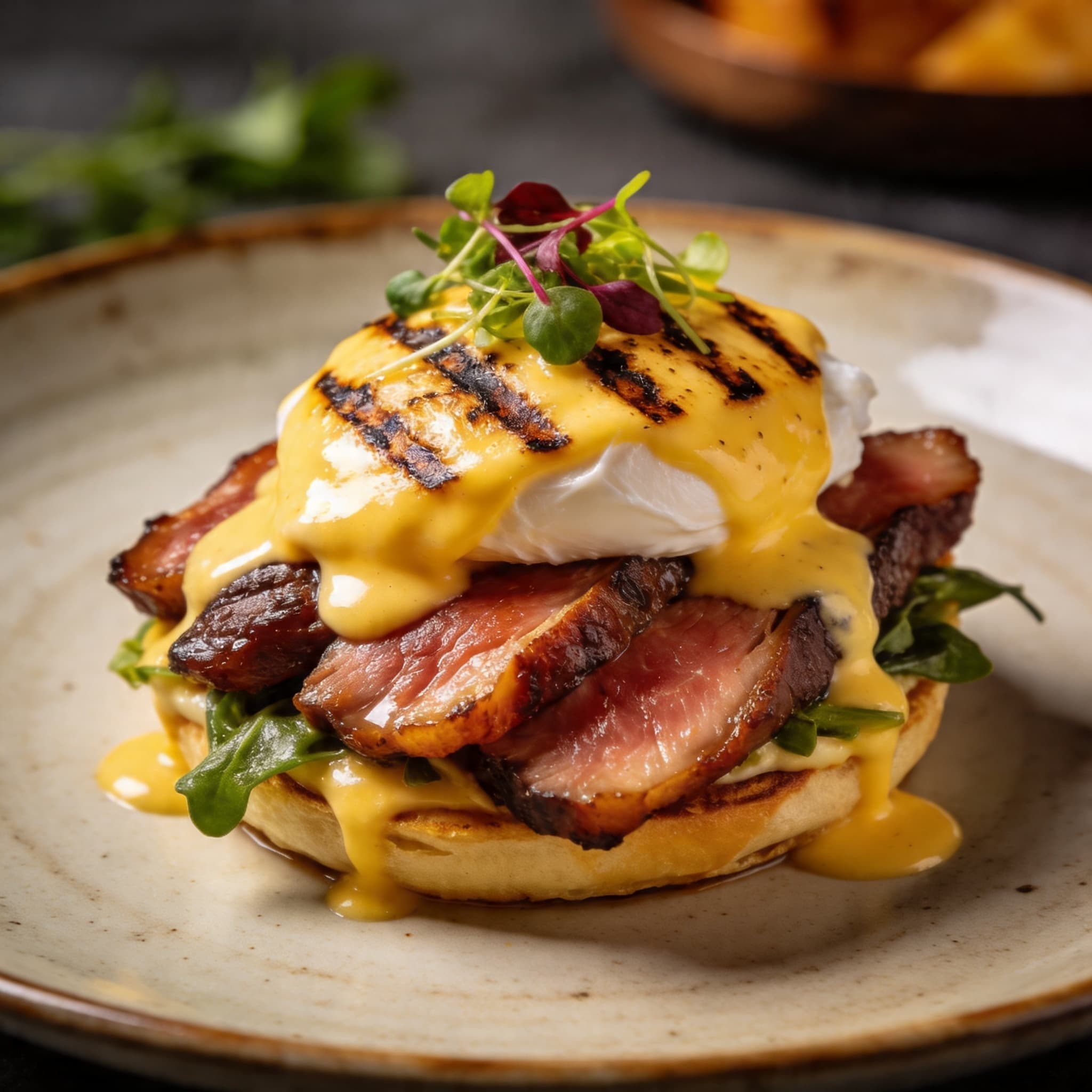
A high-altitude breakfast featuring cold-smoked duck breast and a wood-fired hollandaise that redefines morning elegance. This isn't just breakfast; it's a structural masterpiece of fat and smoke.
Season the duck breast liberally with kosher salt and black pepper. Place in a cold smoker at 80°F (27°C) for 60 minutes to infuse deep smoke without rendering the fat.
Use light wood like cherry or apple if you want a more nuanced smoke profile.
Score the duck skin in a crosshatch pattern, being careful not to cut into the meat. This ensures even rendering.
A sharp Japanese carbon steel knife is non-negotiable here.
Place the smoked duck breast skin-side down in a cold cast-iron skillet. Turn the heat to medium-low and render the fat slowly until the skin is mahogany and glass-crisp.
Patience is a virtue; rushing the render leads to flabby skin.
Flip the duck and cook for an additional 3-5 minutes until the internal temperature hits 135°F (57°C) for a perfect medium-rare. Let it rest for 10 minutes.
Resting allows the juices to redistribute, preserving the texture.
While the duck rests, whisk the egg yolks and lemon juice in a heatproof bowl over a pot of simmering water (bain-marie). Whisk vigorously until the mixture doubles in volume.
Do not let the bowl touch the water or you'll end up with scrambled eggs.
Slowly drizzle in the warm melted butter while whisking constantly to create a thick, glossy emulsion. Season with cayenne and salt. Keep warm.
If the sauce is too thick, add a teaspoon of warm water to adjust the viscosity.
Poach the four eggs in simmering water with a splash of vinegar for 3 minutes until the whites are set but the yolks remain liquid gold.
The vortex method helps keep the whites contained.
To assemble: Place the toasted English muffins on a plate. Top with thin slices of the rested smoked duck. Place a poached egg on each, then drape generously with the hollandaise and garnish with chives.
Plate immediately while the temperatures are optimal.
The key to this dish is the emulsification of the egg yolks and the wood-fired fat. If the sauce breaks, your reputation breaks with it. Use a high-quality, high-fat butter for the hollandaise to ensure maximum silkiness. For the smoke, I recommend post oak or hickory to provide a robust backbone that stands up to the richness of the duck. Keep it classy, keep it smoky.
Nutrition data is estimated and may not be fully accurate. This is not medical advice — consult a registered dietitian or healthcare professional for personalized guidance.
Prices shown reflect the estimated cost of the portion used in this recipe, not the full item price. Actual costs may vary by store and location.