
 Chef Big D
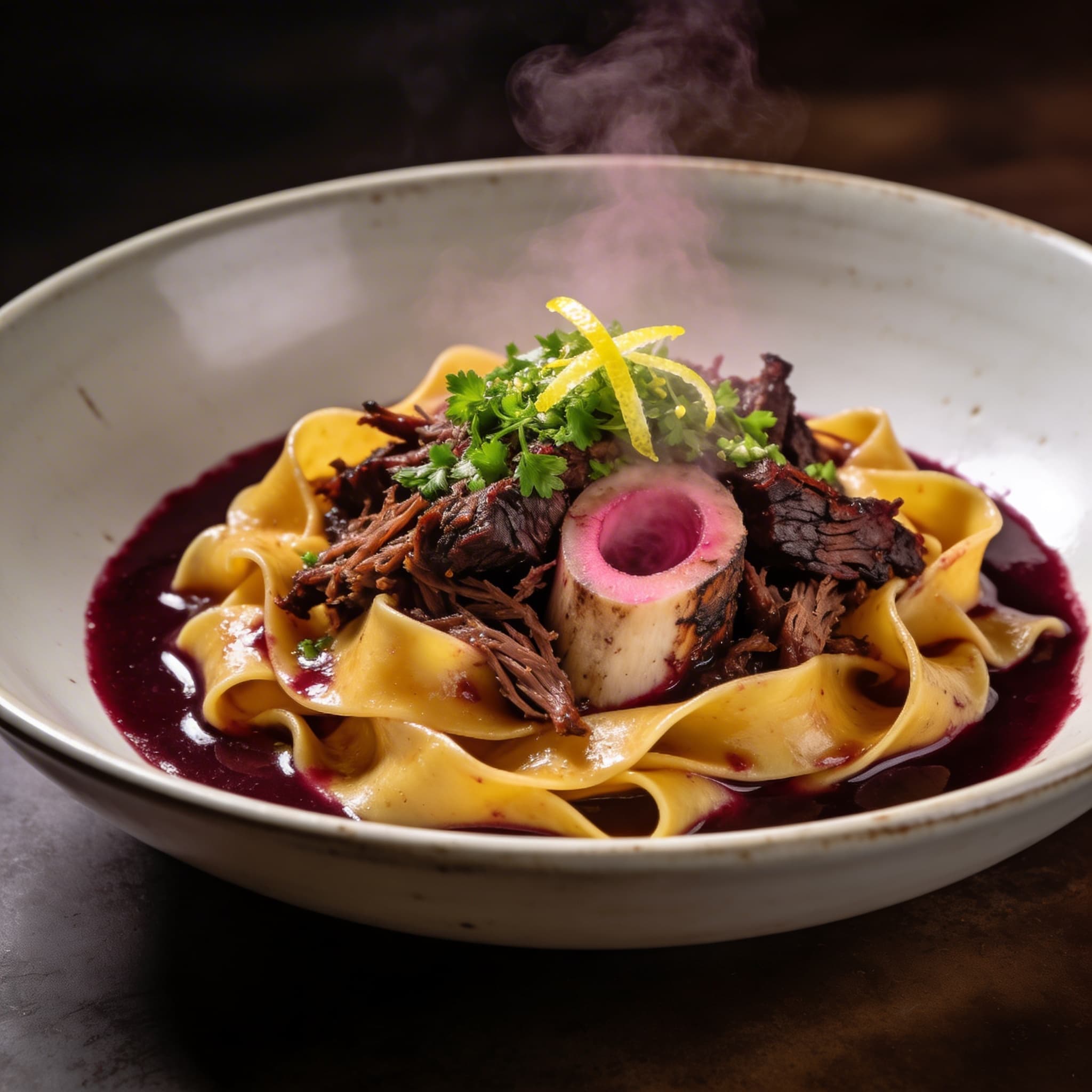
A masterclass in texture: ultra-tender smoked beef cheeks served over hand-cut pappardelle with a decadent bone marrow and red wine reduction.
Season the beef cheeks aggressively with a 50/50 blend of kosher salt and coarse black pepper. Let them sit at room temperature for 45 minutes to sweat.
This creates the tacky surface needed for a superior smoke ring.
Preheat your offset smoker to 275°F using post oak or hickory wood. Aim for clean, blue smoke.
If the smoke is white and billowy, your fire is choked; give it more oxygen.
Place the beef cheeks on the grate. Smoke until they reach an internal temperature of 170°F and have developed a dark, resilient bark.
Don't spritz for the first two hours to let the bark set.
While the beef smokes, roast the marrow bones in a 400°F oven until the marrow is bubbling and soft. Scoop out the marrow and set aside; discard the bones.
Save any rendered fat from the pan for the sauce.
Transfer the cheeks to a heavy Dutch oven. Add the shallots, garlic, red wine, beef stock, and the roasted marrow. Cover tightly and braise in the smoker (or a 300°F oven) until probe-tender.
They should shred with the slight pressure of a fork.
Boil the pappardelle in salted water until just shy of al dente. Drain, reserving a splash of pasta water.
The pasta will finish cooking in the sauce.
Remove the beef from the Dutch oven and shred coarsely. Reduce the remaining braising liquid over high heat until it coats the back of a spoon (nappé consistency). Whisk in the cold butter for a glossy emulsion.
This is where the Michelin magic happens—don't rush the reduction.
Toss the pasta with the sauce and shredded beef. Plate immediately, topping with a fresh gremolata of parsley, lemon zest, and horseradish.
The horseradish provides a necessary bite against the heavy marrow.
The key here is the 'Bark to Bite' ratio. Ensure your smoker stays at a steady 275°F to render that fat cap into liquid gold without drying out the cheek. For the gremolata, use the freshest flat-leaf parsley you can find—the acidity is non-negotiable to cut through the richness of the beef and marrow. If you can't find beef cheeks, chuck roast is an acceptable substitute, but you'll miss that unique collagen-rich silkiness.
Nutrition data is estimated and may not be fully accurate. This is not medical advice — consult a registered dietitian or healthcare professional for personalized guidance.
Prices shown reflect the estimated cost of the portion used in this recipe, not the full item price. Actual costs may vary by store and location.