
 Chef Big D
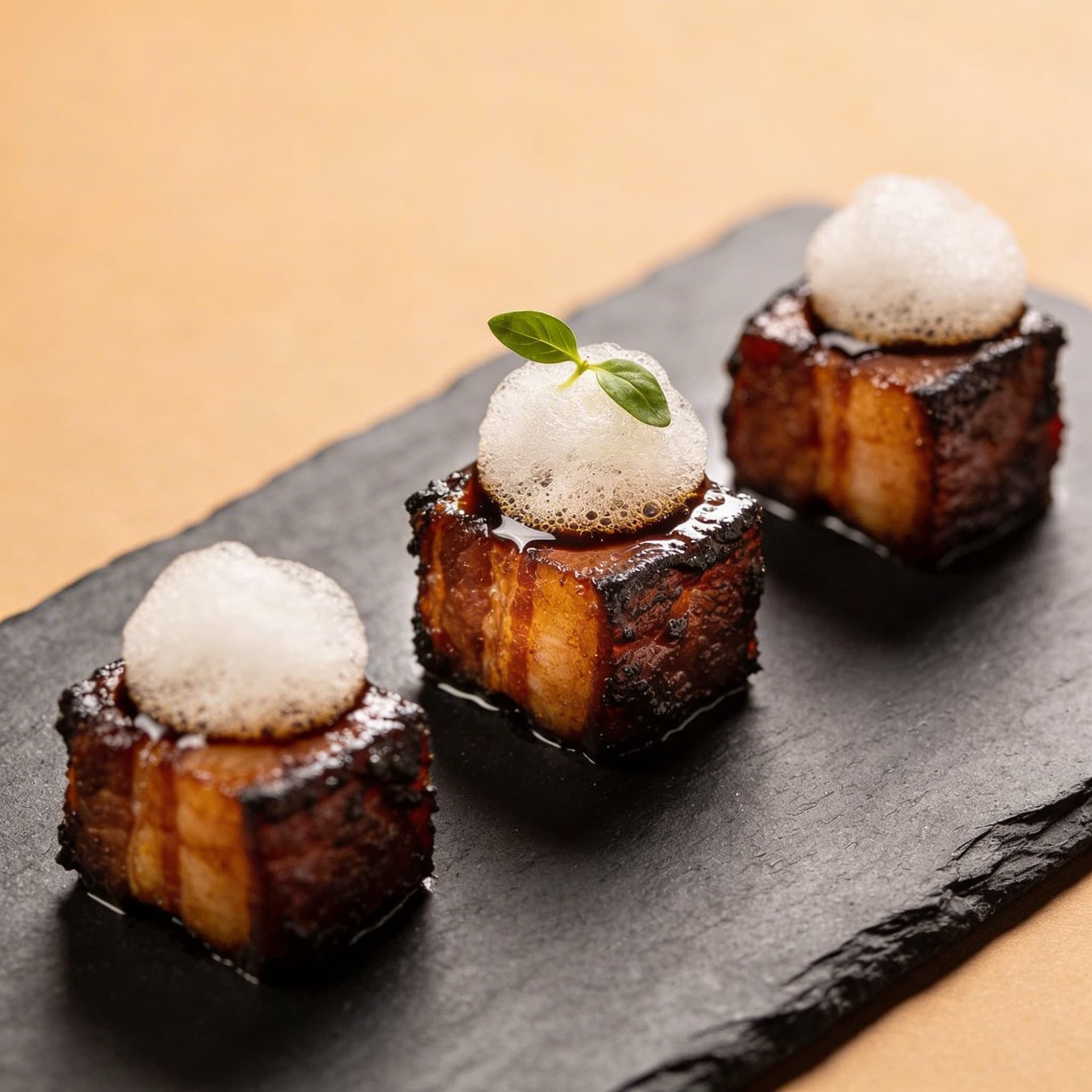
Crispy, hickory-smoked pork belly cubes finished with a technical balsamic-soy emulsion and micro-basil. A high-end play on 'burnt ends' with a refined Italian twist.
Toss the pork belly cubes in a mixture of salt, pepper, and garlic powder until evenly coated. Let them sit at room temperature for 30 minutes to sweat.
Ensure the pork is dry before seasoning to help the bark form properly.
Fire up the offset smoker to 225°F (107°C) using hickory wood for a clean, aggressive smoke profile.
Keep the blue smoke thin; heavy white smoke will make the fat bitter.
Place the pork cubes on a wire rack and slide them into the smoker. Smoke until the internal temperature hits 195°F and the fat has rendered into a buttery texture.
The bark should be dark and tacky, not burnt.
While the pork smokes, combine balsamic vinegar, soy sauce, and lecithin in a small saucepan. Warm gently over low heat—do not boil.
Lecithin is the secret to a stable, airy foam that won't collapse on the plate.
Using an immersion blender at the surface of the liquid, aerate the balsamic mixture until a thick, stable foam forms.
Tilt the blender slightly to incorporate more air.
Plate three cubes of pork belly per serving. Top each with a precise cloud of balsamic foam and a single leaf of micro-basil. Serve immediately while the fat is still molten.
Use a warm plate to keep the pork fat from seizing up.
The key here is the 'bark' on the pork belly. You want that tacky, smoky exterior to contrast with the silky, aerated balsamic. If you don't have a siphon for the foam, a simple high-speed immersion blender will create enough froth for a stunning Michelin-style presentation. Skip the burrata—we're keeping this sharp and clean.
Nutrition data is estimated and may not be fully accurate. This is not medical advice — consult a registered dietitian or healthcare professional for personalized guidance.
Prices shown reflect the estimated cost of the portion used in this recipe, not the full item price. Actual costs may vary by store and location.