
 Chef Big D
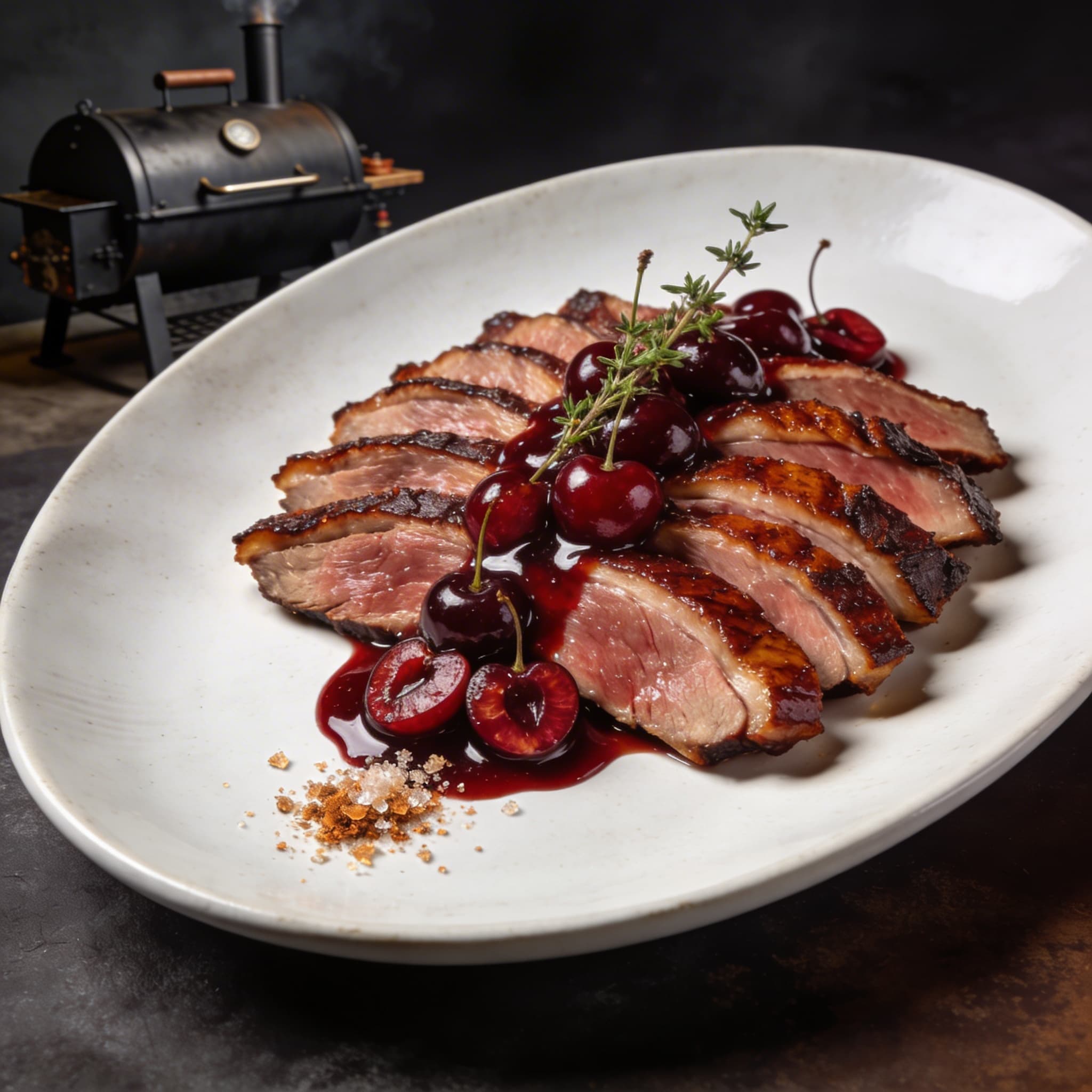
A masterful marriage of French technique and low-and-slow soul. Muscovy duck breast, cold-smoked over cherry wood, pan-seared to a perfect mid-rare, and finished with a sharp, complex cherry gastrique.
Season the duck breasts generously with salt and pepper. Place them in a cold smoker (or use a smoking gun) with cherry wood smoke for 30 minutes to infuse the fat without melting it.
Keep the temperature under 90°F during this phase to maintain the integrity of the protein.
In a small copper saucier, sauté the minced shallots until translucent. Add the cherries, balsamic vinegar, and honey. Reduce by half until the mixture reaches a syrupy consistency.
Watch the viscosity closely; it should coat the back of a spoon.
Add the chicken stock to the cherry reduction and simmer until reduced again by half. Strain through a chinois for a silky texture, then return to low heat.
Press the cherries firmly to extract every drop of essence.
Place the duck breasts skin-side down in a cold cast-iron skillet. Turn the heat to medium-low to slowly render the fat. Cook for 12-15 minutes until the skin is mahogany and shatteringly crisp.
Pour off excess fat as it renders to keep the skin frying, not boiling.
Flip the duck and cook for an additional 3-5 minutes until the internal temperature reaches 130°F for a perfect medium-rare. Remove from the pan and let rest.
Resting is non-negotiable for juice retention. Give it at least 8 minutes.
While the duck rests, whisk the chilled butter into the warm cherry sauce one cube at a time to create a glossy emulsion. Do not let the sauce boil once the butter is added.
This is the 'monter au beurre' technique that separates the chefs from the cooks.
Slice the duck breast on a bias and fan it across the plate. Spoon the cherry agrodolce over the center and finish with a pinch of smoked flake salt.
Plate with precision; the contrast between the dark sauce and rosy duck is stunning.
The key to this dish is the emulsion. You want the fat from the duck to fully integrate with the cherry reduction to create a glossy, high-viscosity sauce that clings to the meat. When scoring the duck skin, be careful not to nick the flesh—we want a clean render, not a bleed. Serve this with a bold Barolo to cut through the richness.
Nutrition data is estimated and may not be fully accurate. This is not medical advice — consult a registered dietitian or healthcare professional for personalized guidance.
Prices shown reflect the estimated cost of the portion used in this recipe, not the full item price. Actual costs may vary by store and location.