

Unlocking Smoke Soul: My Guide to Wood Selection for Deep, Balanced Fusion Flavors
Engineering the perfect aromatic foundation for French-Italian BBQ.

For years, I believed that the only thing standing between a chef and greatness was the edge of his knife and the viscosity of his demi-glace. Then, I met an offset smoker in the humid heart of a Texas summer, and my Michelin-trained brain nearly short-circuited. I realized that smoke isn't just a byproduct of heat; it’s an ingredient—as temperamental as a soufflé and as nuanced as a 20-year-old balsamic.
In the world of French-Italian fusion, where we balance the delicate herbaceousness of a Gremolata with the decadent richness of a Bearnaise, you can't just throw any log onto the fire. You aren't just "cooking" meat; you are perfuming it. If you use the wrong wood, you might as well be seasoning your Wagyu with a charcoal briquette.
The Thermodynamics of Flavor
Most backyard pitmasters treat wood like an afterthought, but in my kitchen, it’s a structural component. We’re looking for "Clean Blue Smoke"—that shimmering, almost invisible output that speaks of complete combustion. Anything else is just soot and regret.
In my early days of experimenting with wood-fired Italian profiles, I once tried to smoke a delicate Veal Osso Buco using nothing but heavy Mesquite. The result? It tasted like a campfire in a tire yard. My kitchen scars aren't just from slips of the knife; they're from the mental anguish of ruining a $200 cut of meat because I didn't respect the wood's "voice."
The Fusion Wood Trinity
When we’re bridging the gap between a Parisian bistro and a Tuscan villa, three woods stand above the rest. They provide the "canvas" for our high-end fats and acids.
1. Post Oak: The Foundation
Oak is the "Gold Standard" for a reason. It provides a medium-to-strong smoke flavor that doesn't overpower. It’s the architectural support for heavy proteins like short ribs or whole ducks.
Did You Know? Post Oak is the backbone of Central Texas BBQ, but its clean, vanilla-like undertones make it a stunning partner for French butter-based sauces.
2. Applewood: The Sophisticate
Applewood is mild, sweet, and fruity. It’s the wood I reach for when I’m working with pork belly or sea scallops. It doesn't scream; it whispers.
Tip: Use Applewood when your dish has a high acidity component, like an apple-cider reduction or a lemon-caper butter. The sweetness of the smoke balances the sharp tang perfectly.
3. Cherry: The Colorist
Cherry is my secret weapon for aesthetics. It imparts a deep, mahogany-red hue to the meat that looks incredible on a white porcelain plate. The flavor is mild and slightly sweet, making it the perfect bridge for Italian herbs like rosemary and sage.
The Wood Flavor Matrix
To master fusion, you must understand the "Viscosity of Smoke." Here is how I categorize the intensity for our specific flavor profiles:
| Wood Type | Intensity | Flavor Profile | Best Fusion Match |
|---|---|---|---|
| Apple | Mild | Sweet, Fruity | Pork Belly with Calvados Glaze |
| Cherry | Mild/Med | Sweet, Tart | Duck Breast with Cherry Gastrique |
| Post Oak | Medium | Neutral, Nutty | Smoked Beef Cheek Ravioli |
| Pecan | Med/Strong | Rich, Sweet | Lamb Chops with Mint Gremolata |
| Hickory | Strong | Pungent, Bacon-like | Braised Short Ribs |
Warning: Avoid Mesquite for French-Italian fusion. Its flavor is so aggressive it will annihilate the nuance of your herbs and the delicate fats in your sauces.
5 Actionable Pairing Tips for the Fusion Pitmaster
- The "Herbal Bridge": When smoking with Cherry wood, lean heavily into Sage and Rosemary. The wood's natural sweetness pulls the oils out of the herbs, creating a resinous, sophisticated crust.
- The Fat Factor: If you are using a rich French Butter Emulsion (like a Beurre Blanc), stick to Applewood. The light smoke won't "break" the perception of the delicate fat on the palate.
- Cold-Smoke the Aromatics: Don't just smoke the meat. Try cold-smoking your garlic and shallots with Oak before using them in your pasta base. It adds a layer of "soul" to a Carbonara that people can't quite place.
- The Picanha Protocol: For a Brazilian-Italian twist, smoke your Picanha (Sirloin Cap) over Post Oak until it hits 115°F, then sear it over screaming hot coals. The oak provides the depth, while the fat cap acts like a sponge for the smoke.
- The "Smoke Ring" Aesthetic: If you want that Michelin-star presentation, mix 20% Cherry with 80% Oak. The cherry will react with the myoglobin in the meat to create a stunning, deep-red smoke ring that contrasts beautifully with a green basil pesto.
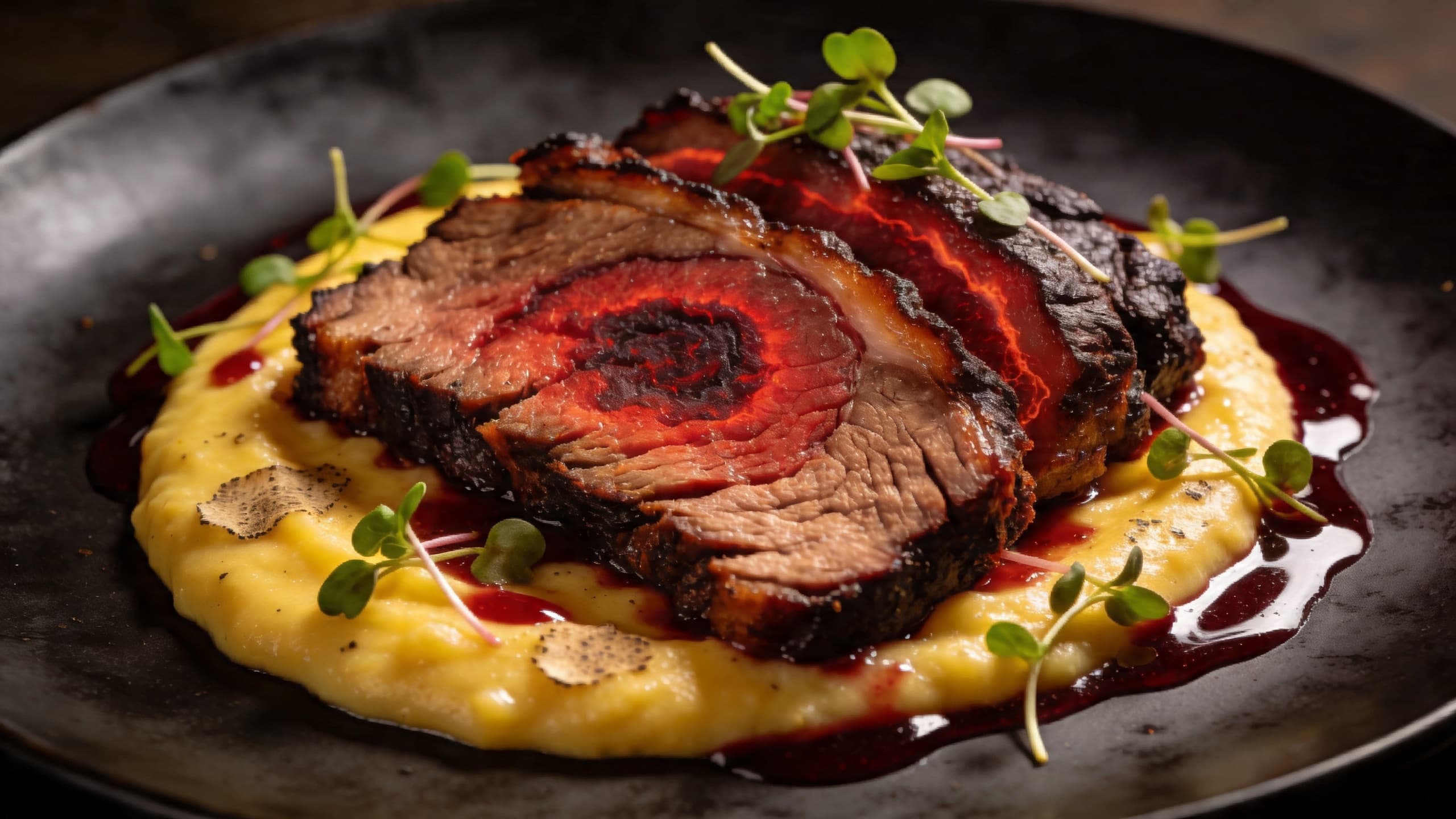
Great cooking is about technique, not complexity. The wood you choose is the first seasoning you ever apply to the plate.
Final Thoughts: The Pit Doesn't Lie
You can hide a lot of mistakes behind a heavy sauce, but you can't hide bad smoke. Wood selection is the ultimate test of a chef’s patience and precision. Whether you're engineering a 48-hour short rib or a simple wood-fired flatbread, remember that the smoke is your soul. Keep it clean, keep it blue, and for the love of all that is holy, keep the mesquite away from the veal.
Key Takeaway: Match the intensity of your wood to the delicacy of your protein. Mild woods for white meats and seafood; medium woods for beef and game.
Keep it classy, keep it smoky.