

The Smoldering Saucier: 5 Pitfalls of Smoking French Emulsions and How to Avoid Them
Precision Technique Meets Live-Fire Chaos: How to Master the Most Temperamental Sauce in the Pit.

The kitchen is a battlefield where the laws of thermodynamics and fluid dynamics are constantly trying to ruin your reputation. I’ve spent fifteen years in the trenches—from the high-pressure, copper-clad kitchens of Paris to the humid, smoke-filled backyard pits of the South—and if there’s one thing that’ll humble a chef faster than a dull knife, it’s a broken emulsion.
When you try to marry the delicate, high-precision world of a French Hollandaise with the raw, industrial power of a wood-fired smoker, you aren't just cooking; you're performing a high-wire act over a pit of burning post oak. I’ve seen seasoned pros turn a silky sauce into scrambled eggs because they didn't respect the variables.
Grab an espresso. Let’s talk about why your smoked Hollandaise is failing and how to fix it before the guests see you sweat.
1. The Thermal Trap: Uneven Heat Distribution
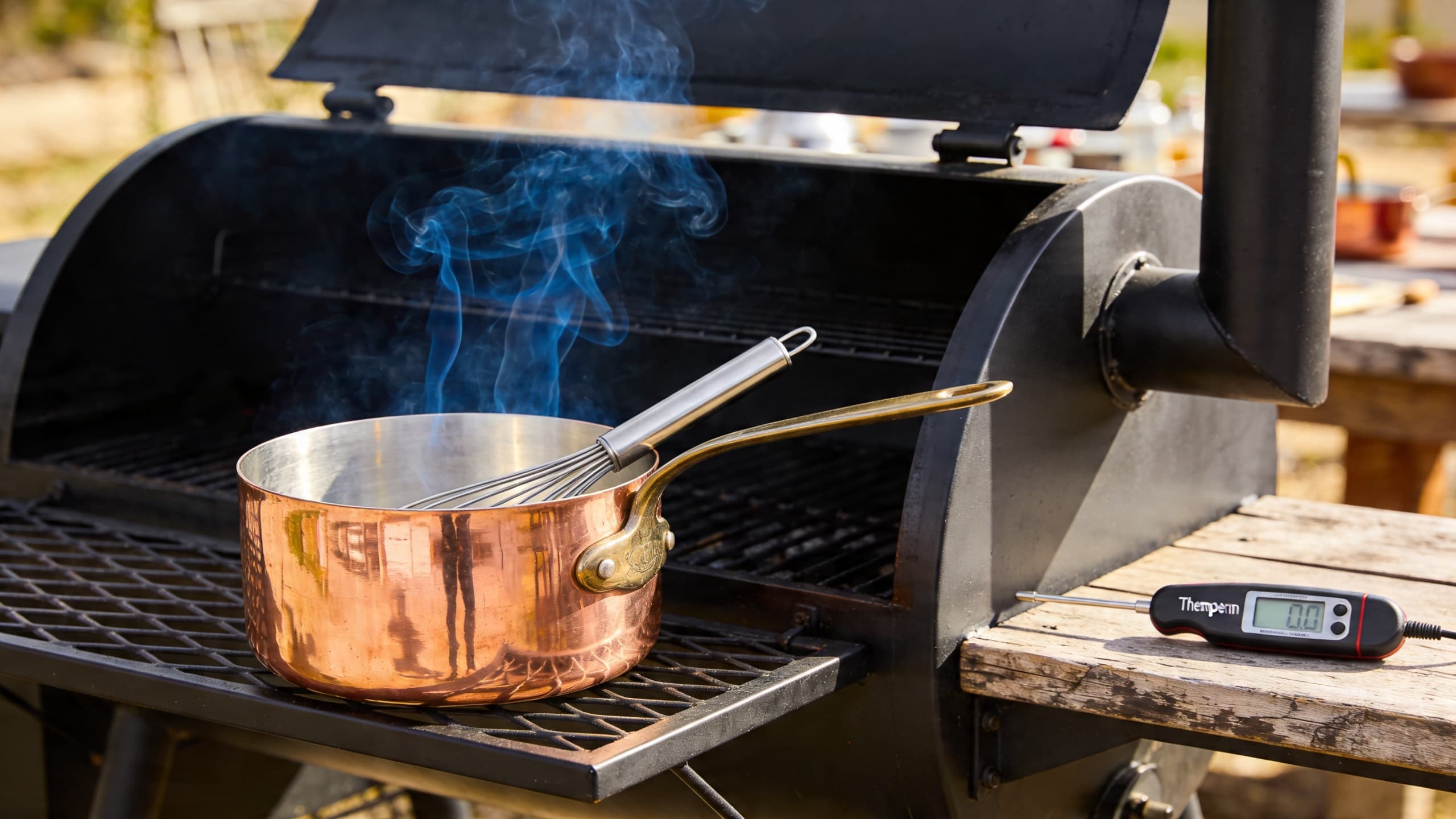
In a Michelin kitchen, we have the luxury of a consistent bain-marie. In a smoker, you have "hot spots" and "dead zones." The most common pitfall is placing your saucier directly over a heat source that’s fluctuating wildly. Hollandaise is a temperamental beast; it wants to be held between 145°F and 160°F. Anything higher, and the proteins in the egg yolks coagulate. Congratulations, you just made smoky scrambled eggs.
Tip: Use a heavy-bottomed copper or tri-ply stainless steel saucier. The thermal mass helps buffer the erratic temperature swings of a live-fire environment.
2. The Smoke Saturation Point: Bitter Wood Overkill
We’ve all been there—thinking "more smoke equals more flavor." Wrong. In a closed environment like a smoker, the high fat content of the butter and yolks acts like a sponge for creosote. If your fire isn't burning "clean" (that translucent blue smoke we live for), your Hollandaise will end up tasting like a wet ashtray rather than a balanced masterpiece.
Pro Tip: Cold-smoke your butter before you even start the emulsion. This gives you total control over the smoke profile without risking the structural integrity of the egg yolks over direct heat.
3. The Viscosity Vacuum: Ignoring the Water Phase
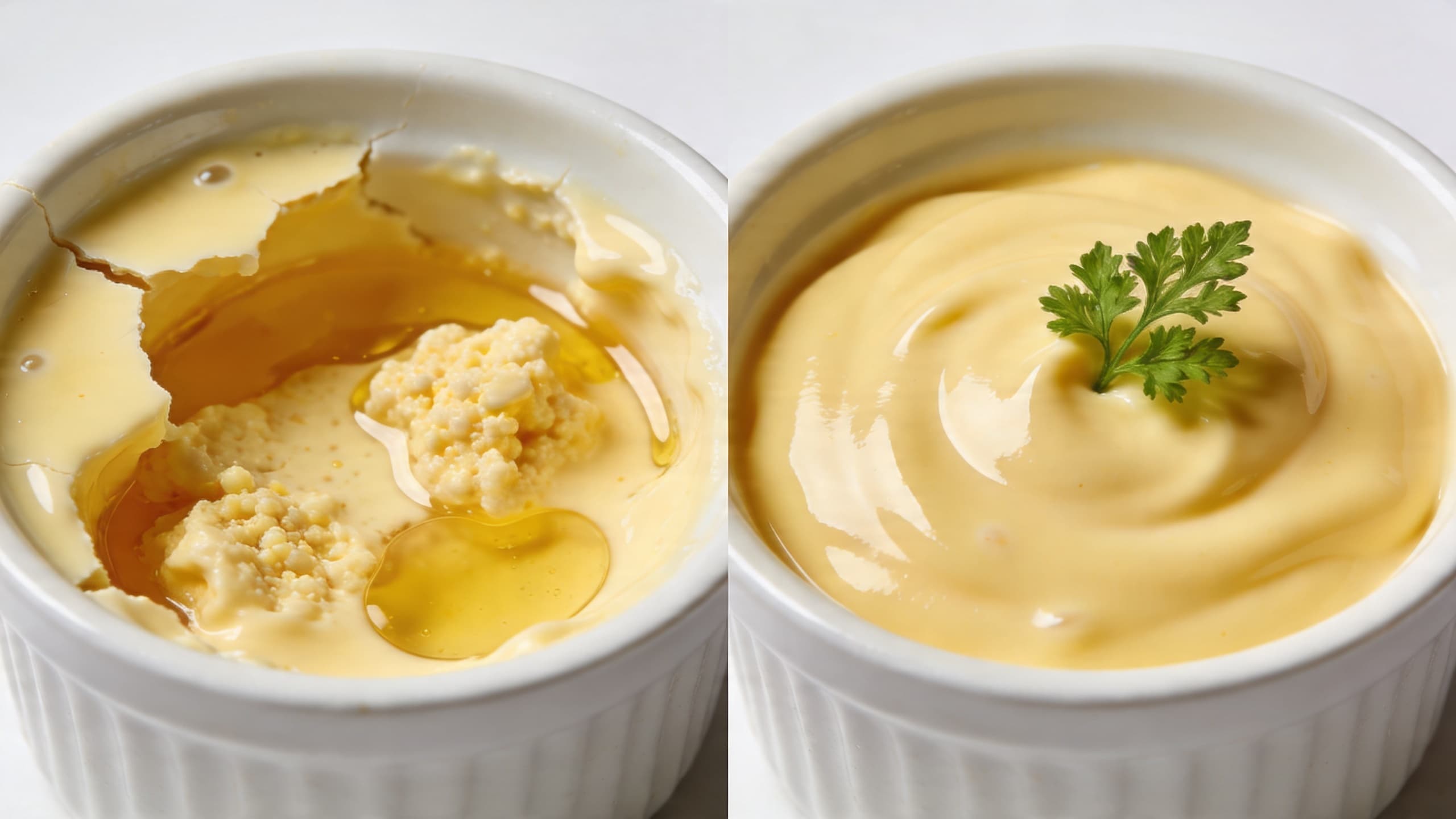
An emulsion is a temporary truce between fat and water, brokered by the lecithin in egg yolks. Home cooks often focus so much on the butter that they forget the water phase (usually lemon juice or a white wine reduction). If your reduction is too concentrated or evaporates too quickly in the dry heat of the smoker, the emulsion will collapse. You need enough continuous phase (water) to keep those fat droplets suspended.
Great cooking is about technique, not complexity. If the sauce breaks, don't panic—just understand the science of why it happened.
4. The Acid Imbalance: The pH Pitfall
In French-Italian fusion, we lean heavily on acidity to cut through the richness of the fat and the heaviness of the smoke. However, adding too much acid too late can destabilize the protein bonds holding your sauce together. I’ve seen guys try to "brighten up" a sauce right before service, only to watch it weep oil like a broken heart.
Key Takeaway: Build your acid base early. Use a reduction of shallots, peppercorns, and white wine vinegar as your foundation. This provides a stable environment for the yolks to begin their work.
5. The Agitation Error: Low-Torque Whisking
Smoky conditions are distracting. You’re checking the dampers, watching the internal temp of the brisket, and trying not to singe your eyebrows. This leads to lazy whisking. A stable Hollandaise requires mechanical energy to break the butter into microscopic droplets. If you aren't whisking with intent, the fat will pool, and the sauce will separate.
The Battle-Tested Recovery
If you’re standing over your pit and you see those dreaded beads of oil forming on the surface, don't toss it.
- The Teaspoon Trick: Take a clean bowl, add a teaspoon of boiling water, and slowly—I mean drop by drop—whisk your broken sauce into the water.
- The Fresh Start: If that fails, whisk a fresh egg yolk with a splash of water over gentle heat until frothy, then slowly incorporate the broken sauce as if it were your butter.
Warning: Never try to "fix" a sauce by just adding more butter. You’re only fueling the fire of your own failure. Fix the emulsion first, then adjust the fat.
Keep it classy, keep it smoky. Precision is your best friend when the wood is burning hot. See you at the pit.
#bbqscience #hollandaise #chefxi #finediningbbq #saucework #culinarytechnique