

The Smoldering Saucier: 5 Pitfalls of Smoking French Emulsions and How to Avoid Them
Avoid the bitter bite and the broken sauce with these battle-tested fusion fixes.

The intersection of a French saucier and an Italian wood-fire pit is a beautiful, albeit dangerous, place to play. When you’re trying to marry the velvety, high-viscosity perfection of a classic French emulsion with the rugged, soulful depth of Italian oak or fruitwood smoke, you aren’t just cooking—you’re performing a high-stakes thermodynamic balancing act.
I’ve spent fifteen years chasing the perfect "Smoky Hollandaise" and "Wood-Fired Beurre Blanc," and let me tell you, the road to fusion glory is paved with broken sauces and singed facial hair.
Speaking of which, if you’ve ever wondered about the thin, jagged scar running through my left eyebrow, that’s a permanent souvenir from the "Great Lardo Flare-up of '09." I was attempting to cold-smoke a batch of whipped lardo for a fusion bruschetta. I got impatient, the airflow spiked, and a drip of rendered pig fat hit a cherry red ember. Whoosh. One fireball and a very startled valedictorian later, I learned that in the world of fusion fats, precision isn't just a suggestion—it's a survival skill.
1. The Temperature Trap: Why Your Emulsion "Flees" the Smoke
The most common mistake is trying to smoke a finished sauce. If you place a delicate Hollandaise or Beurre Blanc inside a smoker—even at "low" temperatures—the direct heat will cause the fat to expand faster than the emulsifiers (like egg yolks or milk solids) can hold on. The result? A greasy, separated mess that looks more like a car leak than a Michelin-star accompaniment.
The Fix: Never smoke the sauce; smoke the fat. Cold-smoke your butter or oil before you ever start the emulsion. By infusing the solid fat with those guaiacol and syringol smoke compounds at sub-90°F temperatures, you lock in the flavor without compromising the molecular structure of your future sauce.
2. The Creosote Crisis: Avoiding the "Bitter Bite"
When we think of Italian wood-smoke, we think of that sweet, aromatic perfume of olive or almond wood. However, in the confined space of a smoker, poor airflow creates creosote—a thick, black, bitter soot that loves to cling to fats. Since butter is essentially a sponge for flavor, it will soak up that bitterness in minutes.
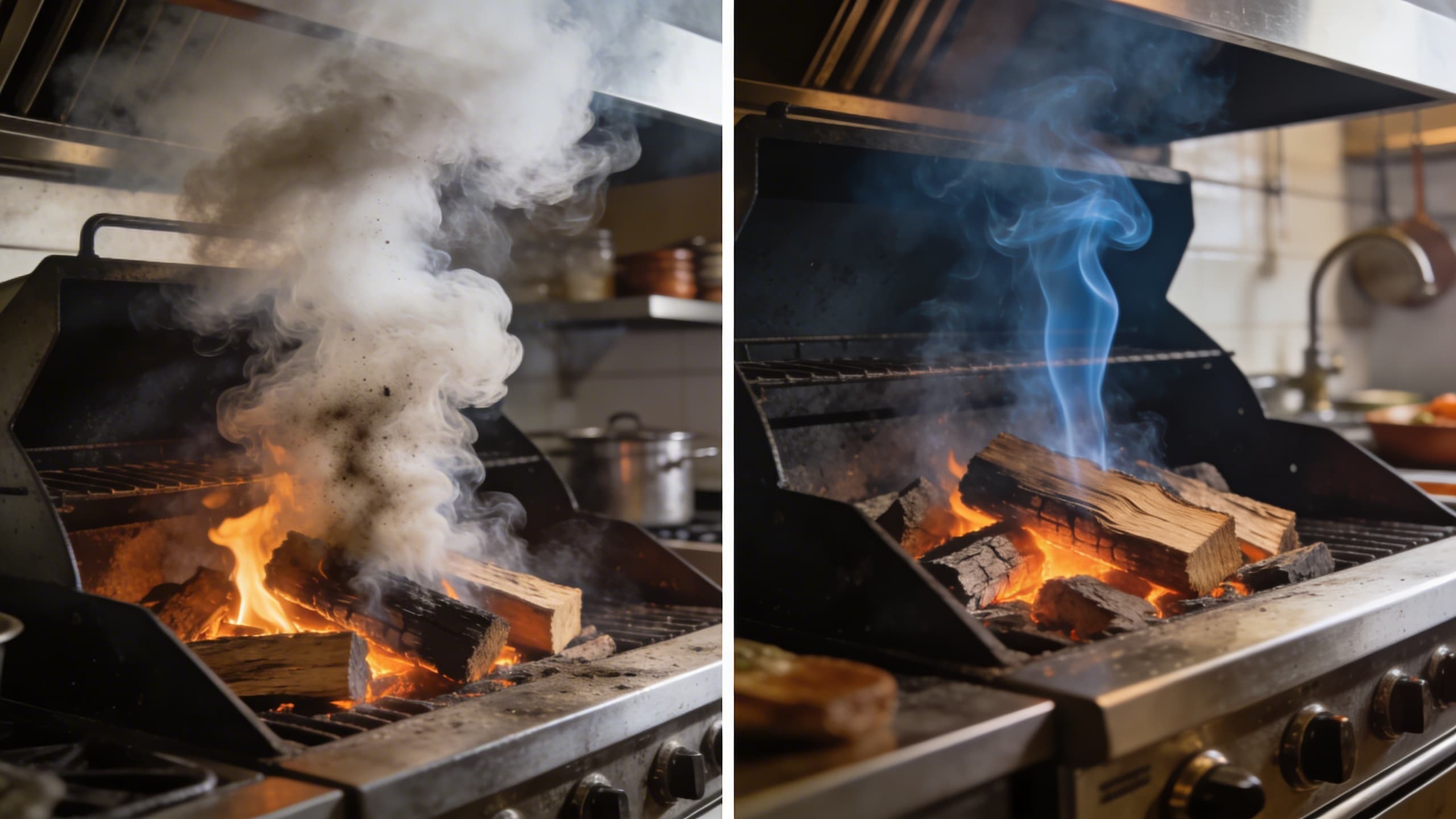
Pro Tip: Look for "Blue Smoke." Your smoke should be nearly invisible to the eye but pungent to the nose. If you see thick, billowing white clouds, your fire is oxygen-starved. That white smoke will turn your delicate French butter into something that tastes like a campfire's ashtray.
3. The Acidity Imbalance: Smoke Needs a Foil
Smoke is a "heavy" flavor. It’s base-heavy and lingers on the palate. Traditional French sauces rely on a delicate balance of acidity (lemon juice or white wine reduction). A common pitfall is keeping your standard acid ratios when adding smoke. Without recalibration, the smoke will simply steamroll the brightness of the sauce, leaving it tasting "muddy."
Key Takeaway: When working with smoked fats, increase your acid reduction by roughly 15-20%. The extra brightness from a high-acid Vermentino or a sharp Sicilian lemon is required to "cut" through the smoke and lift the flavor back to the front of the tongue.
4. The "Dirty" Infusion: Forgetting the Water Content
Butter is an emulsion of fat, water, and milk solids. When you smoke butter, the water content can evaporate or trap "dirty" smoke particles. If you've ever had a smoked sauce that felt "gritty," this is why.
5. The "Over-Whisking" Mirage
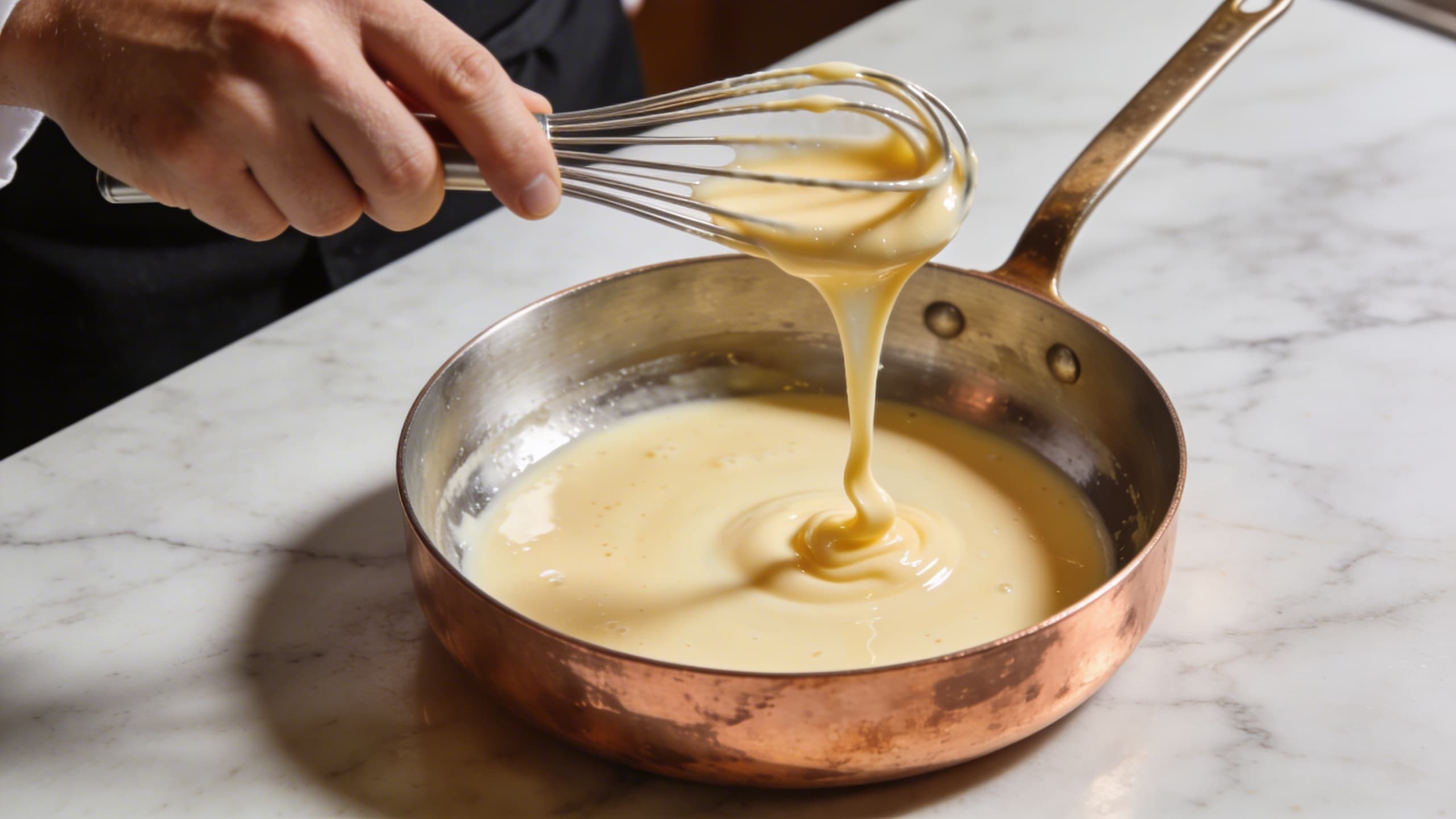
In our quest for the perfect fusion texture, we often over-compensate with mechanical shear. We think that if we just whisk harder, the smoke and the fat will become one. In reality, over-whisking a smoked emulsion introduces too much air, which can actually oxidize the delicate smoke compounds and make them taste "stale" or metallic.
Warning: Avoid high-speed blenders for smoked emulsions. The friction creates heat that can dull the nuanced notes of the wood-smoke. Stick to a balloon whisk and a steady, rhythmic hand. It’s about viscosity, not velocity.
Great cooking is about the marriage of thermodynamics and soul. If you don't respect the fire, the fire won't respect your sauce.
Summary of the Precision Protocol
- Source Quality: Use high-fat European-style butter (82%+ fat) for better smoke retention.
- Wood Choice: Stick to fruitwoods (Apple, Cherry) or light Oak for French-Italian fusion. Avoid Hickory or Mesquite—they are too aggressive for delicate sauces.
- The "Jacuzzi" Method: If you must smoke a finished sauce, use a double-boiler (bain-marie) inside the smoker to provide a thermal buffer.
Keep it classy, keep it smoky. And for heaven's sake, watch your eyebrows when you're playing with lardo.
#bbqtechnique #frenchcuisine #fusioncooking #saucework