

The Saucier's Survival Guide: 5 Emulsion Fails and the Fixes That Saved My Brows
How to fix broken, split, and grainy sauces with Michelin-star precision.

In the world of French-Italian fusion, a sauce isn't just a topping; it’s a high-stakes engineering project involving lipids, proteins, and the volatile physics of heat. When you’re trying to marry the silkiness of a Parisian Béarnaise with the aggressive, smoky profile of a Texas brisket reduction, you’re playing with fire—sometimes literally. I’ve spent fifteen years mastering the thermodynamics of the saucier, and let me tell you, the road to a perfect emulsion is paved with broken yolks and at least one trip to the urgent care for a singed eyebrow.
The "Hollandaise Explosion" of '09 is still whispered about in certain kitchens. I was trying to stabilize a smoked-butter emulsion over a direct wood-fire (rookie move, I know) when the steam trapped under the yolk-base decided to achieve escape velocity. The resulting "pop" was loud enough to clear the line and hot enough to leave me with a permanent reminder of why we respect the double boiler.
But failure is the best seasoning. Today, we’re breaking down the most common emulsion disasters I’ve survived so you can skip the scars and go straight to the stunning results.
1. The "Scrambled Egg" Catastrophe
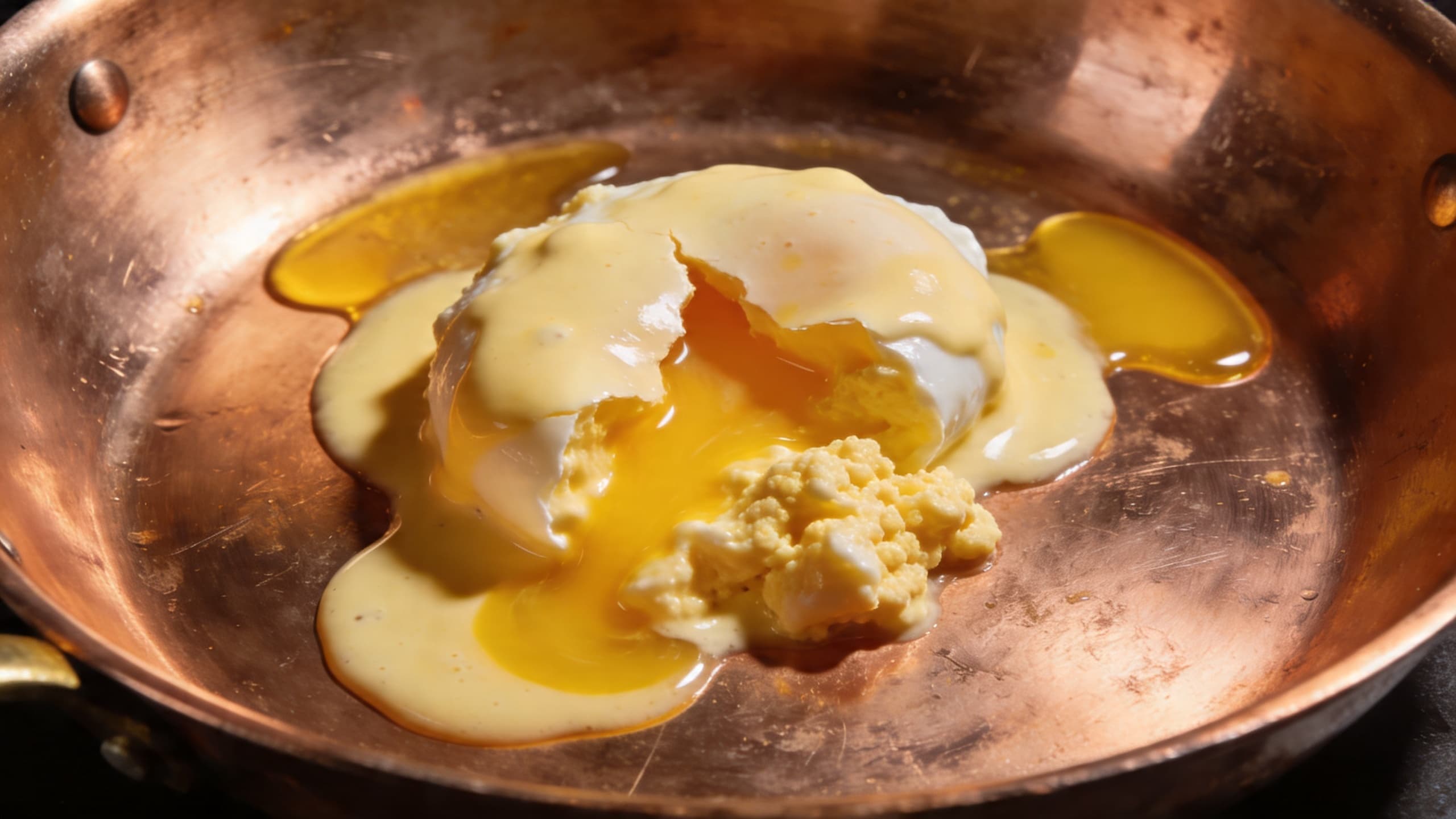
We’ve all been there. You’re whisking your yolks for a Carbonara-inspired emulsion, the heat gets a twitch too high, and suddenly you aren't making sauce—you’re making breakfast. In fusion cooking, where we often use heavy reductions, the margin for error is razor-thin.
Tip: Always use a heavy-bottomed copper saucier if you have one. The thermal conductivity is unmatched, giving you the precision to pull the pan off the heat the millisecond you see the protein starting to tighten too much.
The Fix: If it’s just starting to grain, immediately whisk in a tablespoon of ice-cold heavy cream. The fat and the sudden temperature drop will shock the proteins back into a liquid state.
2. The Great Oil Slick (The Split)
This usually happens when you’re incorporating smoked fats—like tallow or bacon drippings—into a balsamic reduction. You get impatient, you pour too fast, and the emulsion "breaks," leaving a lake of oil sitting on top of a muddy sludge.
The pit doesn't lie, and neither does a broken sauce. It tells the world you rushed the process.
Pro Tip: When working with smoked fats, remember they have different melting points than butter. Always keep your fat and your base at a similar "warm but not hot" temperature (around 110°F to 120°F) before combining.
The Fix: Take a clean bowl, add one teaspoon of warm water and a fresh egg yolk. Slowly—and I mean drop-by-drop—whisk your broken sauce into the new yolk. It’s like a rescue mission for your lipids.
3. The "Glue" Texture (Over-Reduction)
This is the silent killer of the French-Italian fusion world. You’re reducing a red wine and bone marrow base, and you let it go too far. The viscosity becomes more like industrial adhesive than a Michelin-star sauce.
Did You Know? As water evaporates, the concentration of gelatin and minerals increases. If it gets too thick, the emulsion can't "breathe," and the flavor becomes muddy and overly salty.
The Fix: Don't just add water. Whisk in a splash of high-acid liquid like white wine vinegar or a squeeze of lemon. The acidity breaks the tension of the over-concentrated proteins and restores the "snap" to the flavor profile.
4. The Smoke-Induced Graininess
When you incorporate cold-smoke into a fat, you’re introducing microscopic particulates. If your emulsion isn't perfectly stable, these particles act as "seeds" for the fat to crystallize around, making the sauce feel sandy on the tongue.
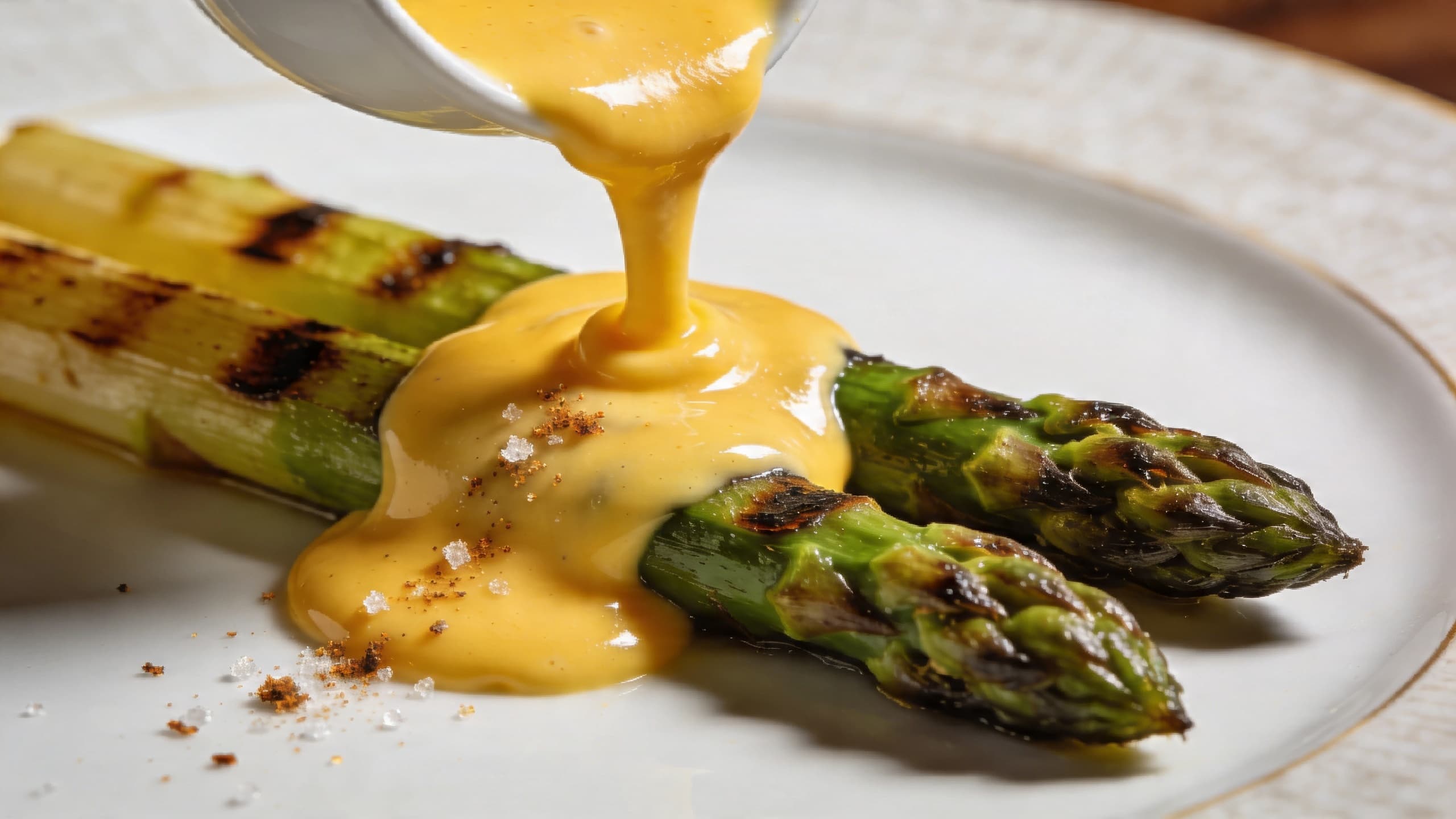
Key Takeaway: Always pass your smoked fats through a coffee filter or a very fine chinois before starting your emulsion. You want the flavor of the smoke, not the soot.
The Fix: If the sauce feels grainy but hasn't split, use an immersion blender for 30 seconds. The high-shear force will break down those particulates and force the emulsion into a tighter, smoother bond.
5. The "Skin" Disaster (The Cooling Fail)
You’ve made a perfect sauce, but you leave it on the counter for five minutes while the brisket rests. You come back, and it’s developed a thick, rubbery skin. This is the result of surface evaporation and protein coagulation.
Warning: Never try to whisk a skin back into the sauce. It will create lumps that are impossible to remove, ruining the texture of your dish.
The Fix: Prevention is key. Place a piece of plastic wrap or parchment paper directly on the surface of the sauce (touching it!) to block air. If a skin forms anyway, carefully peel it off and discard it, then gently whisk in a teaspoon of warm stock to restore the surface tension.
Keep it Classy, Keep it Smoky
Emulsions are a dance between chemistry and intuition. Don't fear the butter, and certainly don't fear the failure. Every broken sauce is just a lesson in thermodynamics that you haven't mastered yet. Just keep your whisk moving and your heat under control—and maybe keep your eyebrows a safe distance from the pan.
Key Takeaway: Precision technique is the foundation, but a sense of humor and a deep smoke ring are the soul of great food. Stay focused, stay technical, and let's get cooking.