

The Halo Effect: Unlocking the Perfect Smoke Ring at Home
Science, Hacks, and How to Master the Halo on a Budget

Let’s be honest: that vibrant, pink halo beneath the bark of a brisket is the culinary equivalent of a Michelin star for the backyard pitmaster. It doesn't technically add flavor—science tells us it's just a chemical reaction between myoglobin and nitrogen dioxide—but we all know the truth. We eat with our eyes first, and a deep smoke ring says, "I know exactly what I'm doing with this fire."
However, getting that ring consistently without spending a fortune on "competition-grade" wood chunks or high-end offset smokers is where the real technique comes in. I’ve spent years bridging the gap between the precision of a French saucier and the raw thermodynamics of a live-fire pit. Today, we’re breaking down how to achieve that elite aesthetic on a budget, using science rather than a massive credit card bill.
The Chemistry of the Halo
To master the ring, you have to understand the protein responsible for it: myoglobin. This is the iron-rich protein that gives raw meat its red color. When you cook meat, myoglobin usually turns brown (metmyoglobin) around 140°F (60°C).
The "smoke ring" happens when nitric oxide (NO) and carbon monoxide (CO) from your wood fire bind with that myoglobin before it has a chance to turn brown. This locks in that pink color permanently.
Did You Know? The smoke ring isn't actually "smoke" at all. It’s a preserved state of the meat’s natural pigment, protected by the gases produced during combustion.
My First Epic Fail: The "Boiled" Brisket
Early in my career, fresh out of the precision-obsessed kitchens of Paris, I thought I could "engineer" a smoke ring by simply cranking the humidity and slamming the meat with cold smoke. I ended up with a grey, flabby piece of beef that looked like it had been through a car wash rather than a smoker. I had the moisture, but zero airflow and zero combustion quality.
The lesson? You can't fake the bark, and you can't rush the nitrogen. If the meat surface dries out too fast, the gases can't penetrate. If it stays too wet without enough heat, you’re just steaming your dinner.
Great BBQ is a dance between the humidity of a French kitchen and the dry heat of the Texas desert.
Precision Hacks for the Budget Pitmaster
You don't need a $5,000 custom offset to get results. You just need to manipulate the variables that the nitrogen dioxide loves.
1. The "Cold Start" Advantage
Nitrogen dioxide absorption stops once the meat hits about 140°F. To maximize the ring, keep your meat in the fridge until the second it’s ready to hit the grates. The colder the meat, the longer it stays in that "reception zone" for the smoke gases.
2. Humidity is Your Best Friend
A dry surface is a barrier. Use a water pan (an old cake tin works perfectly) to keep the environment humid. This keeps the surface of the meat "tacky," allowing the nitric oxide to dissolve into the meat's moisture and penetrate deeper.
3. The Wood Ratio
For a budget setup like a kettle grill or a bullet smoker, don't just toss in dry chips. Use a mix of 70% fruitwood (like apple or cherry) for sweetness and 30% hardwood (like oak or hickory) for the heavy nitrogen hit.
The French-Italian Twist: The "Agrodolce" Spritz
In my fusion kitchen, I don't just use plain water to spritz. I use a version of a classic Italian Agrodolce—a "sour and sweet" mixture.
- The Mix: 1 part Red Wine Vinegar, 1 part Apple Juice, and a splash of Worcestershire sauce.
- The Why: The acidity helps break down the surface proteins slightly, creating a "tackier" surface (the pellicle) that grabs onto those smoke gases like a magnet.
Pro Tip: Avoid using heavy sugar-based rubs early on. Sugar can caramelize too quickly and create a "seal" that prevents the smoke ring from forming. Keep it simple with 16-mesh black pepper and Kosher salt for the first 3 hours.
DIY Setup: Maximizing a Standard Kettle
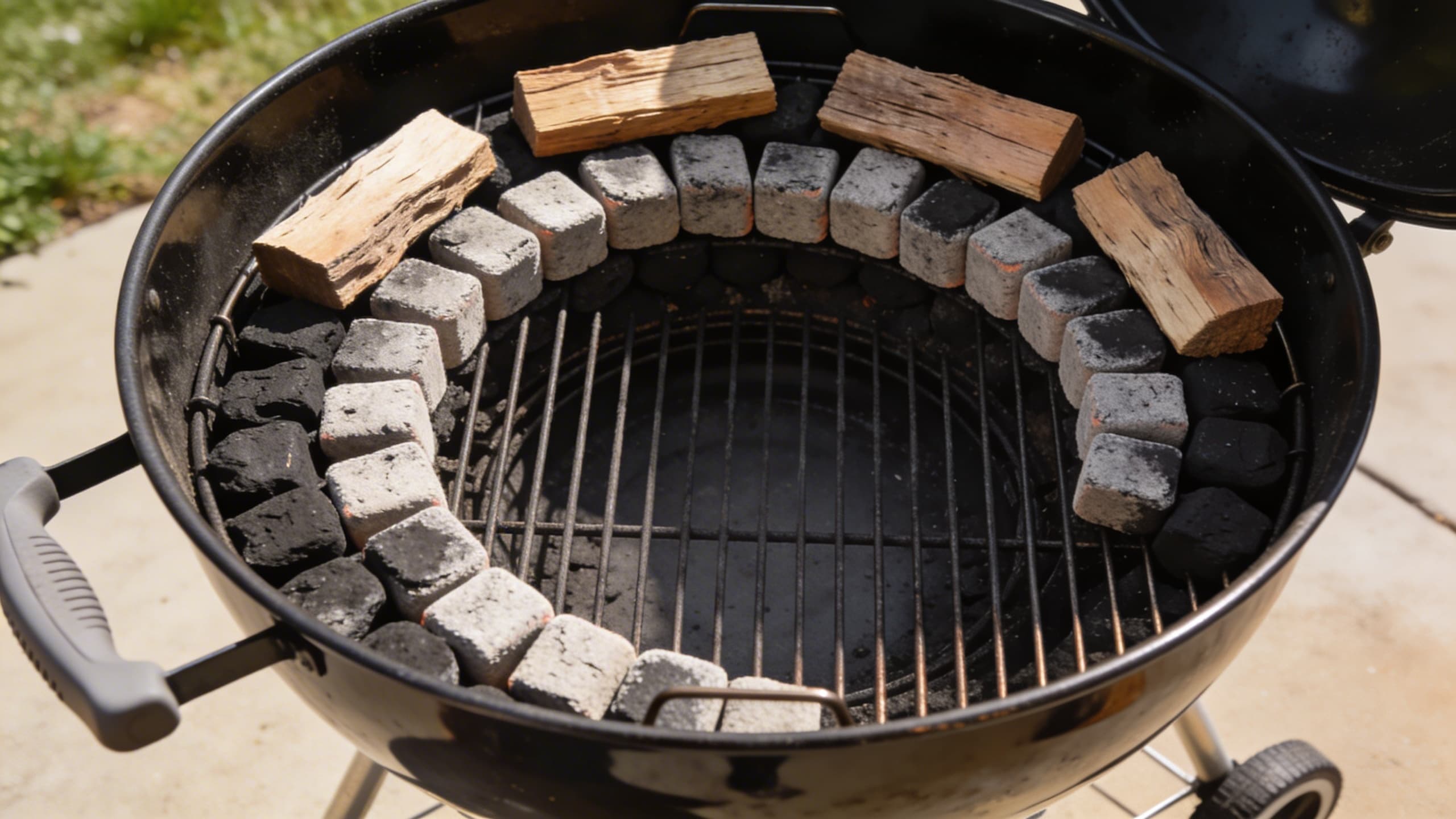
If you're working with a basic charcoal grill, use the Snake Method. Arrange your charcoal briquettes in a semi-circle around the edge of the grill, two wide and two high. Place your wood chunks sporadically along the first half of the "snake."
This ensures a low, slow, and consistent burn that produces a steady stream of nitrogen dioxide without spiking the temperature and "locking" the meat too early.
Money-Saving Meal Prep: The Smoke Ring Strategy
Achieving a deep smoke ring isn't just about vanity; it’s about efficiency. When you master the low-and-slow curve, you can take cheaper, tougher cuts like Chuck Roast or Pork Shoulder and turn them into something that tastes like a $50 steakhouse entree.
- Bulk Buy: Buy the whole sub-primal cut. A whole brisket is significantly cheaper per pound than pre-trimmed flats.
- The "Second Life" Hack: If you smoke a large batch of meat with a solid smoke ring, the leftovers retain their moisture better when vacuum-sealed and reheated sous-vide. That pink ring helps prevent the meat from looking "grey and unappetizing" on day three of meal prep.
Key Takeaway: The perfect smoke ring is a result of cold meat, high humidity, and clean combustion. Master these three, and you’ll out-cook pitmasters with gear ten times the price of yours.
Keep it classy, keep it smoky. See you at the pit.
#bbqtips #smokering #foodscience #budgetcooking #pitmaster