

The Emulsion Rescue: 5 Costly Mistakes and How to Fix Them on the Fly
How to Fix Broken Emulsions and Save Your Grocery Budget

If you’ve ever stood over a bowl of curdled, oily sadness that was supposed to be a silky garlic aioli, you know the specific kind of heartbreak that only a broken emulsion can provide. It’s the culinary equivalent of watching a high-performance engine throw a rod on the starting line. But here’s the reality: most home cooks treat a broken sauce like a terminal diagnosis and toss the whole mess in the trash.
That, my friends, is a structural deficit in your kitchen economy. We are recalibrating the way you handle fats and acids today, because throwing away four egg yolks and a pint of premium olive oil is not just a technique failure—it’s a budgetary disaster. Precision is the foundation, but being able to fix a mistake on the fly is what separates the line cooks from the chefs.
The Day the Butter Broke Me
I’ll never forget my final practical exam in Paris. I was aiming for a perfect Beurre Blanc to drape over a poached turbot. The tension in that kitchen was high enough to snap a carbon steel blade. I was whisking like my life depended on it, but I got cocky. I let the heat climb just three degrees too high, and in a heartbeat, my beautiful, creamy emulsion shattered into a yellow puddle of clarified butter and sad shallot reduction.
I felt the sweat hit my brow. The chef instructor was hovering like a vulture. I had two choices: start over and fail on time, or use the "emergency reset." I grabbed a clean bowl, a single tablespoon of heavy cream, and started whisking the broken mess into the cream drop by drop. It came back together with the viscosity of liquid gold. I passed, but the lesson stuck: the pit doesn't lie, and neither does the whisk.
The balance between fat and acid is a delicate dance of molecular physics; if one partner steps out of line, the entire performance collapses.
1. Temperature Tantrums
The most common reason an emulsion fails—especially in French classics like Hollandaise or Beurre Blanc—is temperature. If it's too hot, the proteins in the egg yolk denature and lose their grip on the oil. If it's too cold, the fat solidifies and refuses to play nice.
Tip: If your sauce looks like it’s starting to "leak" oil around the edges, it’s likely too hot. Immediately pull it off the heat and whisk in a single ice cube. The rapid temp drop and the tiny bit of water often pull it back from the brink.
2. The "Speed Demon" Syndrome
We get it—you’re hungry. But dumping all your oil into the base at once is the fastest way to a broken vinaigrette. An emulsion is a suspension of tiny droplets; if you overwhelm the base, the droplets merge into a greasy lake.
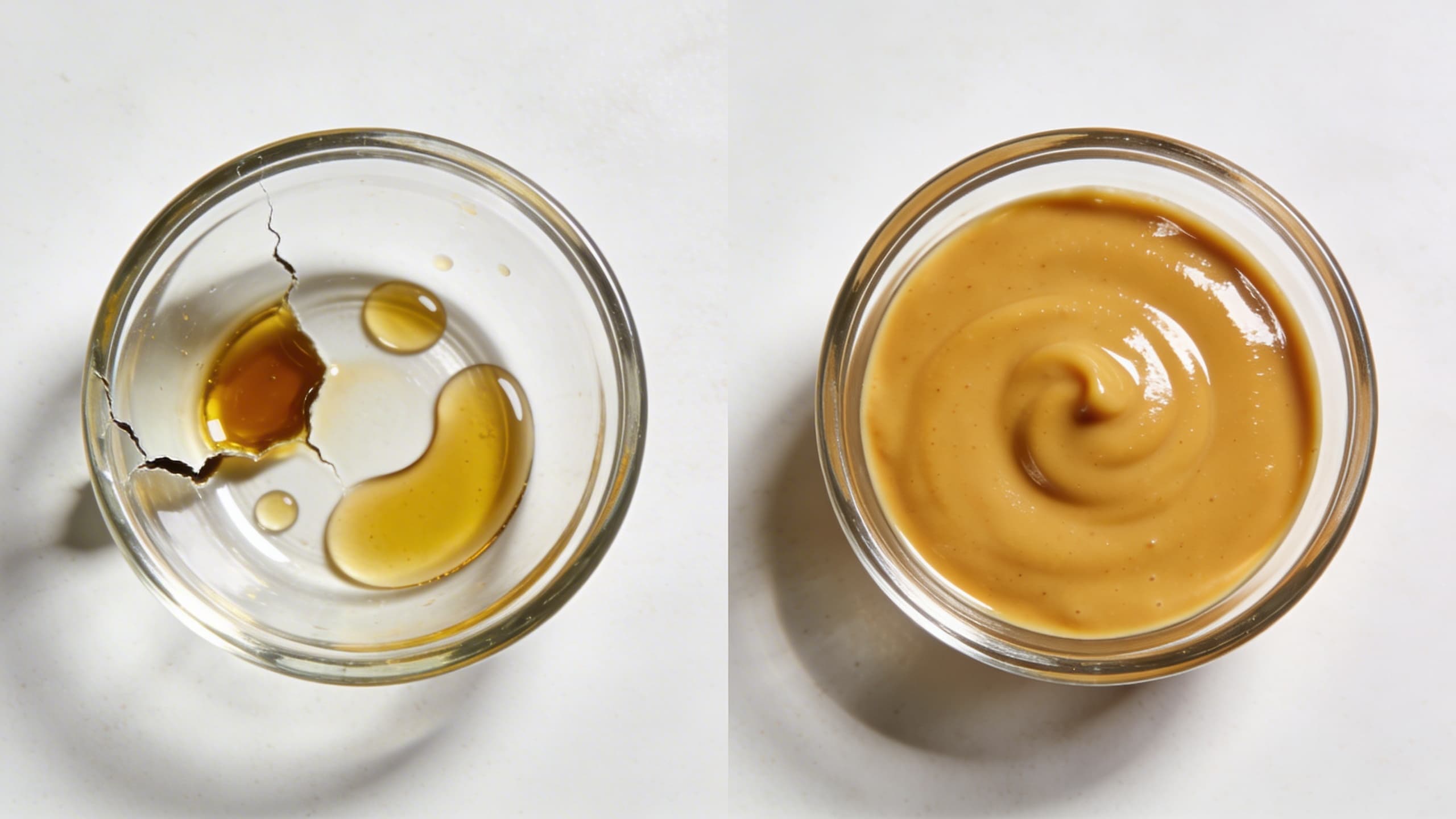
Fix it on the fly: Stop adding oil. Grab a clean bowl, add a teaspoon of mustard or a fresh egg yolk (the "emulsifiers"), and slowly whisk your broken sauce into the new base. It’s a $0.50 fix for a $10 mistake.
3. Ignoring the Power of Mustard
In Italian-style vinaigrettes, we often rely on mechanical force, but a little chemical help goes a long way. Mustard contains mucilage, which acts as a molecular bridge between water and oil.
Pro Tip: Always whisk your acid (vinegar/lemon) and your emulsifier (mustard/egg yolk/honey) together before the oil touches the bowl. This creates a stable landing pad for the fat molecules.
4. The Viscosity Gap
If your sauce is too thick, it can actually break because there isn't enough liquid to keep the fat droplets separated. This is common with high-protein aioli.
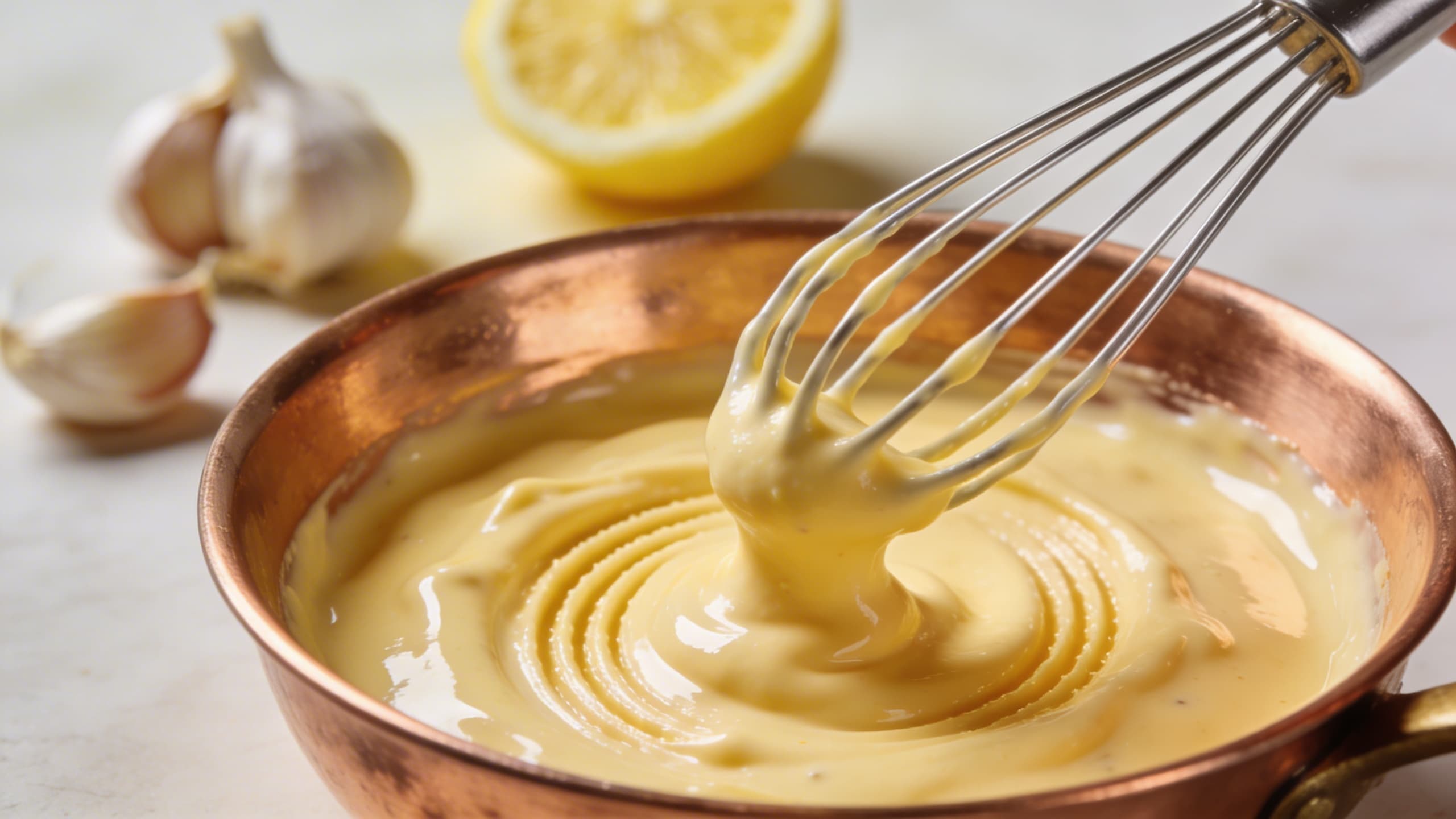
Warning: If the whisk is leaving deep tracks in the sauce and it looks "matte" rather than "glossy," you are seconds away from a break. Whisk in a teaspoon of warm water immediately to loosen the tension.
5. Giving Up Too Soon
The biggest mistake isn't the break—it's the trash can. Almost every broken sauce can be saved. Whether it's a Mayo, a Bearnaise, or a simple balsamic dressing, the "New Base" method is foolproof.
- Start with a clean bowl.
- Add a "primer" (1 tsp water, 1 tsp mustard, or 1 egg yolk).
- Whisk the broken sauce into the primer, one drop at a time, until it stabilizes.
- Continue at a normal pace once the emulsion is established.
Key Takeaway: Kitchen confidence isn't about never making mistakes; it's about knowing exactly how to fix them without spending an extra dime.
Keep it classy, keep it smoky, and for the love of all things holy, stop throwing away your egg yolks. 🍳🔥
#KitchenHacks #SauceScience #ChefTips #BudgetCooking #CulinaryTechnique