

The Edge of Survival: 5 Knife Mishaps That Turn Pros into Patients
Why your dull blade is a liability and how to master the cuts that define French-Italian fusion.

The Edge of Survival: A No-Nonsense Review of Knife Safety and Precision Cuts
Let’s be honest: if you’ve spent more than a week in a professional kitchen, your hands probably look like a topographical map of "lessons learned the hard way." I’ve got a jagged little souvenir right through my left eyebrow from a freak accident involving a dull santoku and a particularly stubborn butternut squash back in my early days. It wasn't a "Michelin-star moment"; it was a "Jimbob needs stitches" moment.
In the world of French-Italian fusion, where we’re constantly oscillating between the delicate chiffonade of basil for a pomodoro and the rigorous brunoise of aromatics for a smoked duck mirepoix, your knife is either your best ally or your most dangerous critic. Statistics show that nearly 22% of injuries in full-service restaurants are cuts and lacerations. Most of these aren't from "freak accidents"—they’re from a lack of technical precision and poor equipment maintenance.
1. The "Dull Knife" Delusion
The most dangerous tool in your kitchen isn't the blowtorch or the meat slicer—it’s a dull chef’s knife. When a blade is dull, it requires more downward force to break the skin of a tomato or the bark of a smoked brisket. That extra force is exactly what leads to the blade slipping off the food and into your knuckle.
Did You Know? A sharp knife follows the path you dictate; a dull knife follows the path of least resistance, which is usually toward your fingers.
The Fix: Professional Sharpening
Don't settle for those "pull-through" sharpeners that chew up your steel. Invest in a multi-grit whetstone set (1000/6000 grit) or find a local pro who uses a water-cooled grindstone. A sharp edge should glide through a piece of paper with zero resistance.
2. The "Suicide Grip" vs. The Pinch Grip
I see home cooks holding a knife like they’re about to go into battle—white knuckles, index finger extended along the spine. This is a recipe for instability. If that index finger slips, you lose all lateral control.
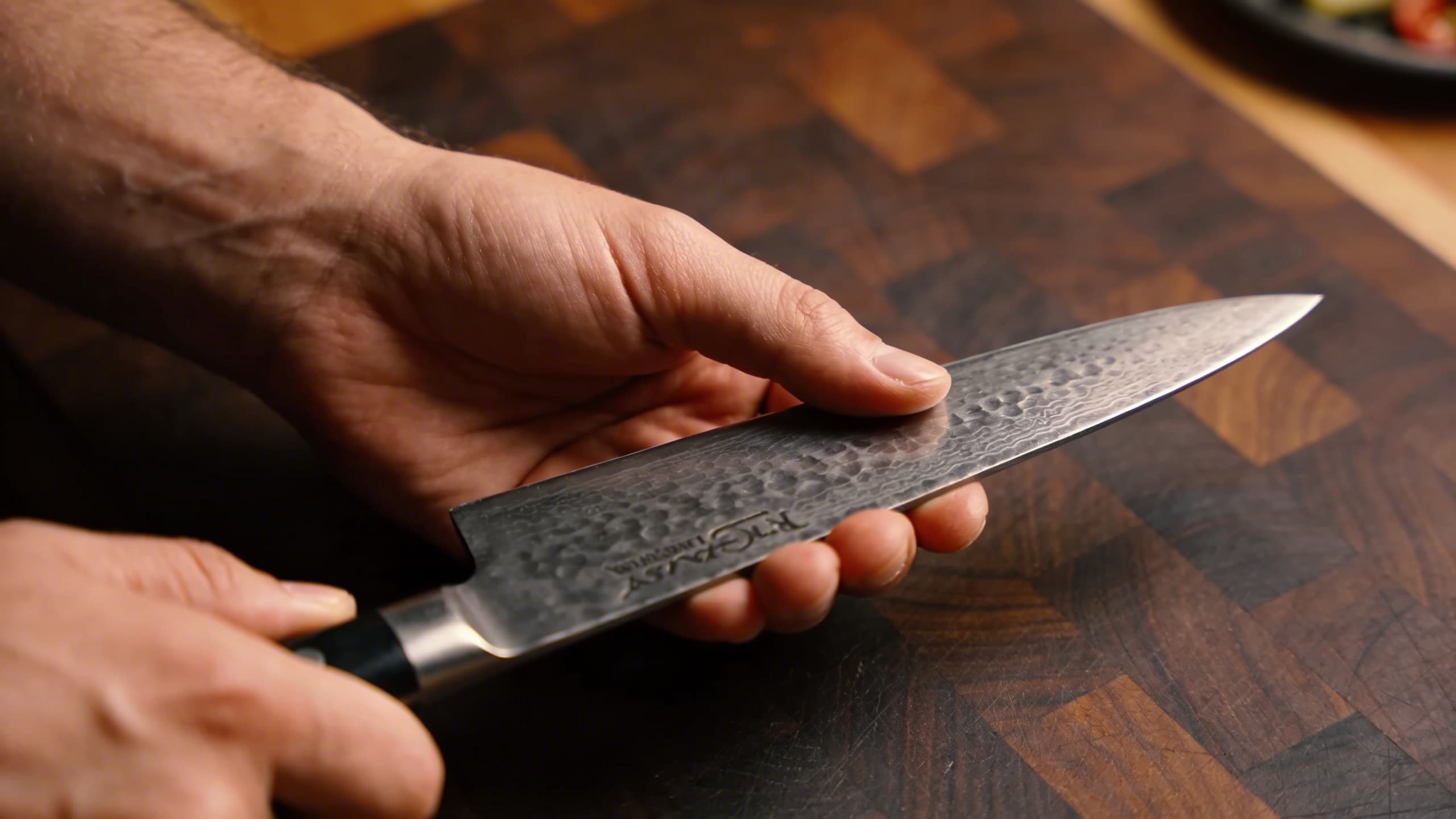
Tip: The "Pinch Grip" is the gold standard. Grip the bolster (where the blade meets the handle) between your thumb and the side of your index finger. This creates a pivot point that gives you 100% control over the angle of the cut.
3. The "Claw" or the "Hospital Visit"
Your non-cutting hand is the one in the most danger. If your fingers are flat on the cutting board, you’re just waiting for a slip.
- Tuck the tips: Curl your fingertips inward like a tiger claw.
- Use the knuckles: The flat side of your blade should rest against your middle knuckles.
- The Thumb: Keep your thumb tucked behind your fingers. Never let it "peek" out.
4. Precision Over Speed: The Brunoise and Chiffonade
In French-Italian fusion, texture is everything. A brunoise (tiny 1/8-inch cubes) ensures that your smoked vegetable base emulsifies perfectly into a butter sauce. A chiffonade (fine ribbons) of herbs prevents bruising, keeping that vibrant green color intact.
Great cooking is about technique, not complexity. If your cuts are uneven, your cook times will be uneven, and your textures will be a mess.
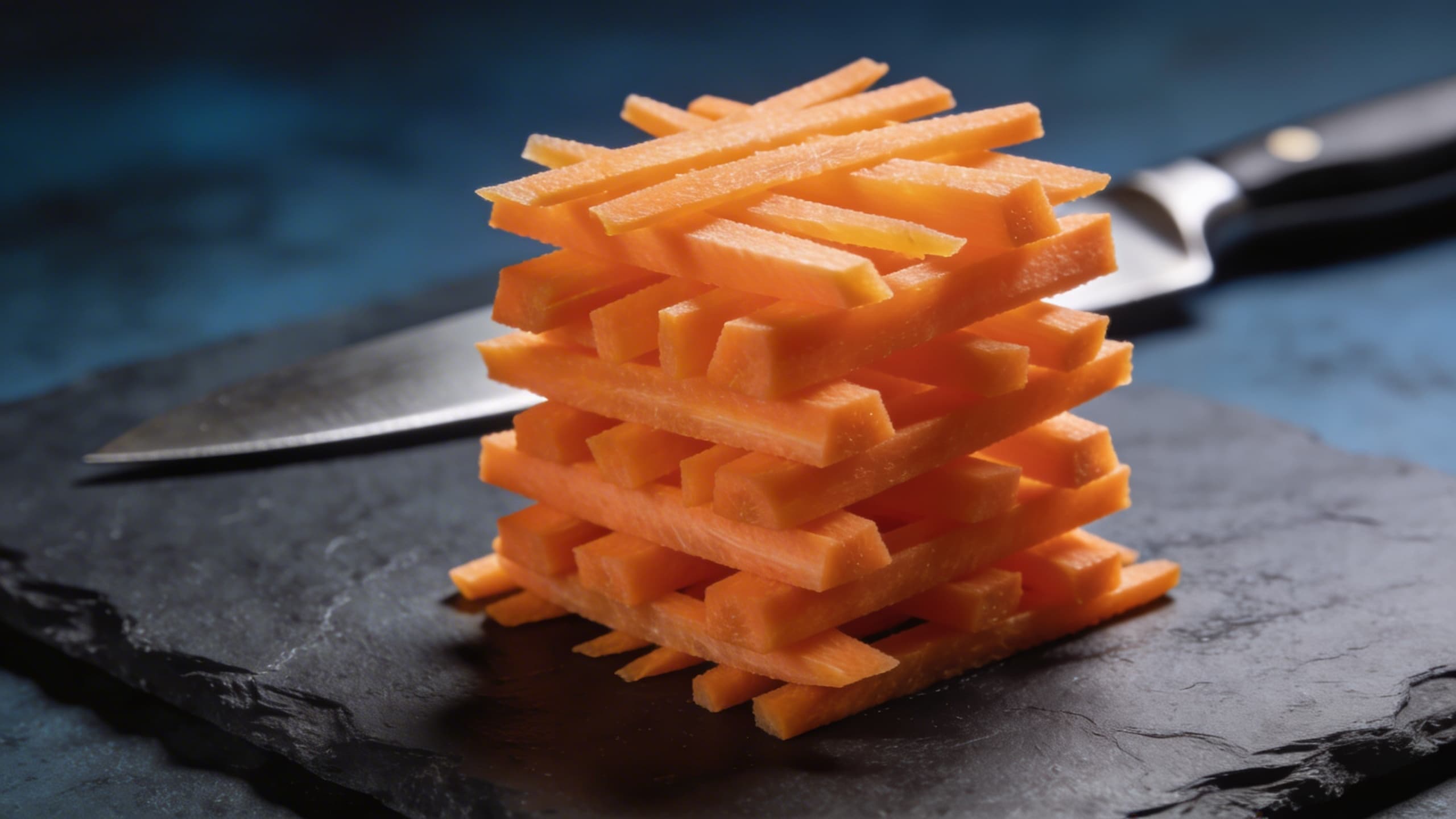
The Perfect Julienne
Before you can get to a brunoise, you need a perfect julienne. This is where most people rush and lose a fingertip.
Pro Tip: When doing a chiffonade of basil or sage, roll the leaves tightly into a "cigar" before slicing. Use a rocking motion with the tip of the knife staying on the board. This prevents the "sawing" motion that bruises delicate herbs.
5. The Messy Station Trap
A cluttered workspace is a dangerous workspace. If you’re cutting on a board surrounded by onion peels, stray herbs, and three different bowls, your focus is split.
Key Takeaway: Mise en place isn't just about organization; it’s about safety. Clear your board after every vegetable. Use a "bench scraper" to move food—never use the edge of your knife, as it dulls the blade and increases the risk of a slip.
Jimbob’s Tool Recommendations
If you want to stop being a patient and start being a pro, you need the right gear:
- The Knife: An 8-inch Japanese Carbon Steel Chef's Knife. It holds an edge longer than stainless steel.
- The Board: A heavy wood or high-quality synthetic board. Never cut on glass or marble—it’s like ice skating for knives.
- The Hone: A ceramic honing rod to realign the edge between professional sharpenings.
Keep your station clean, your grip tight, and your blades terrifyingly sharp. The pit doesn't lie, and neither does a clean cut.
Keep it classy, keep it smoky.
#knifeskills #culinarysafety #michelintechnique #bbqlife