

The Edge of Precision: DIY Knife Sharpening for the Fusion Kitchen
Mastering the molecular apex of your blades with everyday household items.

Let’s be honest: there’s nothing more humbling than a dull knife. You’re standing there, trying to execute a delicate brunoise for a classic French soffritto or attempting to slice through a beautifully smoked brisket with a bark as thick as a Michelin guide, and your blade just... slides. It’s the culinary equivalent of wearing a tuxedo with flip-flops.
I learned this lesson the hard way. Long before the precision of my current kitchen, I was a young cook with more ambition than equipment. I thought I could brute-force my way through a crate of heirloom tomatoes with a blade that had the structural integrity of a butter knife. One slip, one "I don't need a whetstone" ego trip later, and I had a permanent souvenir on my eyebrow. The scar is a reminder: precision isn't a luxury; it’s a safety requirement.
If you’re tired of "sawing" your food instead of slicing it, but you aren't ready to drop $200 on a professional Japanese stone set, this is for you. We’re going to turn your kitchen drawer into an armory using science, physics, and a little bit of backyard ingenuity.
The Physics of the Edge: Why Your Knife is Failing
Before we fix it, we have to understand the "burr." When you sharpen a knife, you aren't just rubbing metal; you’re realigning the molecular apex of the blade. A dull knife is actually "rolled" over at the microscopic level. In my French-Italian fusion world, where we balance the acidity of a gastrique with the richness of a carbonara, the knife must be an extension of your intent.
Did You Know? A sharp knife is actually safer than a dull one. A sharp blade bites into the surface of the food immediately, whereas a dull blade requires downward pressure that leads to slips, tears, and—if you're like 19-year-old me—trips to the ER.
The DIY Angle Guide: The "Matchbook" Method
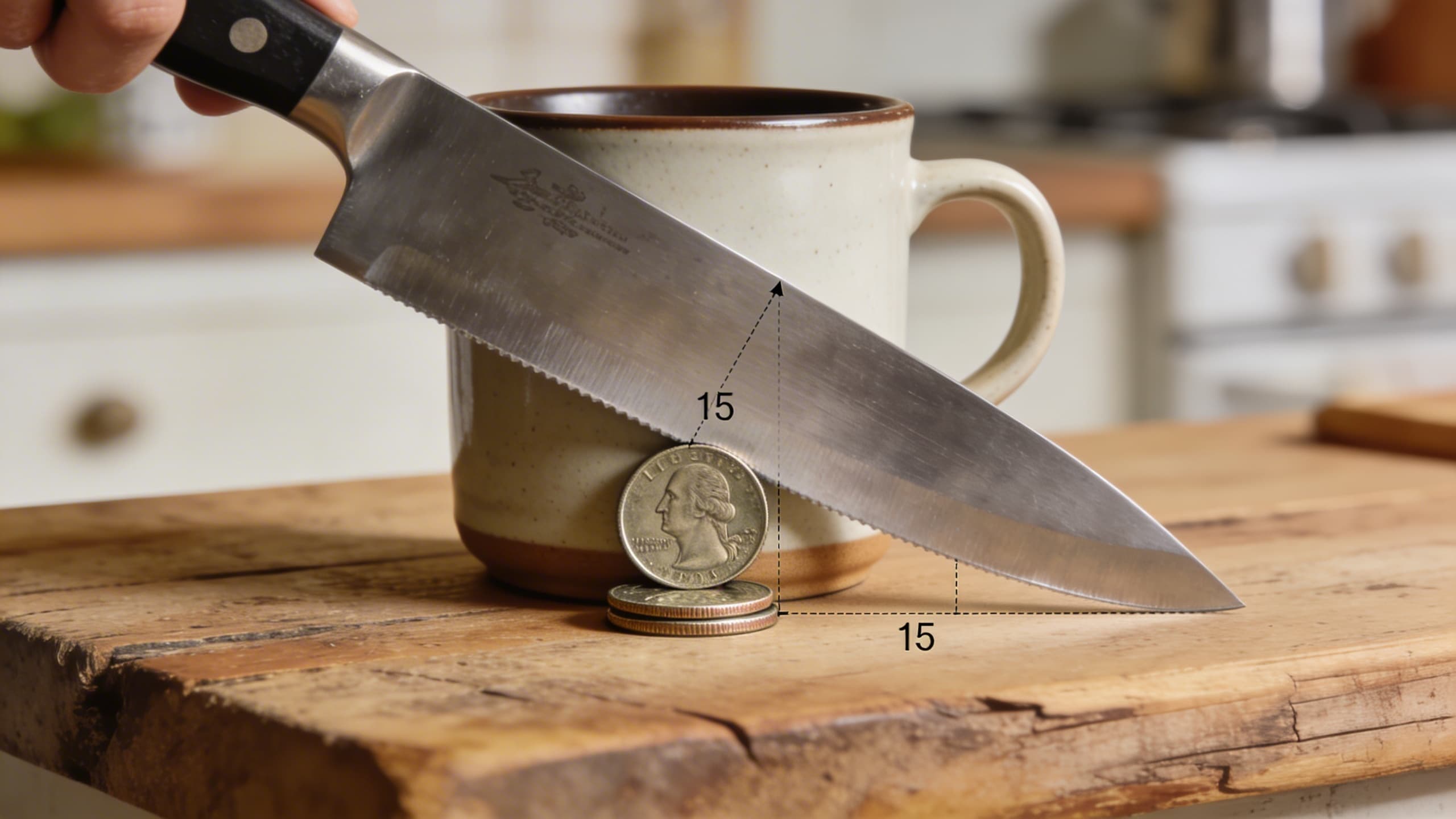
The biggest hurdle for home cooks is maintaining a consistent 15 to 20-degree angle. Without it, you’re just making the metal thinner without making it sharper.
3 "No-Gear" Hacks for a Razor Edge
If you don't have a whetstone, don't panic. You have precision tools hiding in your house right now.
1. The Ceramic Mug Trick
The unglazed ring on the bottom of a standard ceramic coffee mug is essentially a 1000-grit sharpening stone.
- Flip the mug over.
- Hold your knife at a 15-degree angle (use the matchbook trick!).
- Draw the blade across the ceramic ring in a sweeping motion, from heel to tip.
- Repeat 10 times per side.
2. The Sandpaper "Scary Sharp" Method
If your edge is truly gone, grab some high-grit sandpaper from the garage (400, 800, and 2000 grit). Wrap it around a flat piece of wood or a marble pastry board. This "lapping" technique is used by high-end woodworkers to get a mirror finish.
3. The Leather Belt Strop
After you sharpen, you must "strop." This removes the microscopic burr. Take a leather belt, pull it taut, and drag the blade away from the edge (spine first). This is the secret to that "hair-shaving" sharpness.
Pro Tip: If you can’t slice through a piece of paper vertically without it snagging, your edge isn't finished. The paper test is the ultimate truth-teller in the kitchen.
5 Daily Drills for Blade Mastery
You don't need a three-hour sharpening session. You need these 60-second daily habits to maintain that Michelin-level performance.
- The Hone-Before-You-Tone: Use your honing rod (the steel stick) every single time you pull the knife out. It doesn't sharpen, but it realigns the edge.
- The Fingernail Bite: Gently (GENTLY!) rest the edge of the blade on your thumbnail at an angle. If it slides, it’s dull. If it "bites" the surface, you're ready for service.
- The Tomato Skin Test: Can you slice a translucent sheet of tomato using only the weight of the knife? If you have to press down, go back to the ceramic mug.
- The Board Check: Stop cutting on glass or marble. It’s a crime against metallurgy. Use wood or high-quality plastic only.
- The Hand-Wash Only Rule: The dishwasher is where precision goes to die. The high-heat cycle and rattling against other cutlery will ruin your edge in one wash.
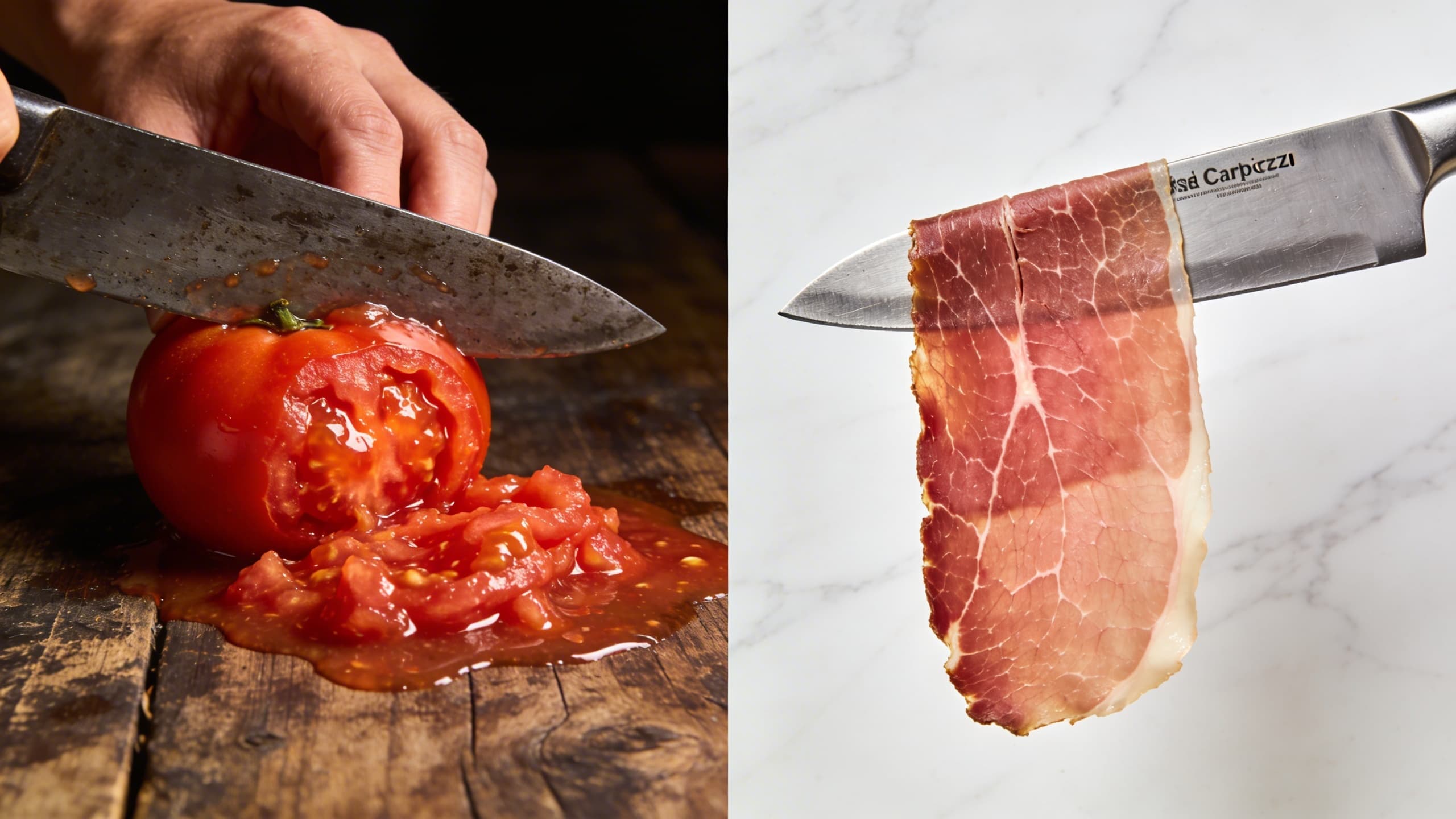
Key Takeaway: A sharp knife changes the way you cook. It changes the texture of your vegetables, the sear on your proteins, and the confidence in your hands. Don't wait for a scar to learn the lesson—give your blades the respect they deserve.
Keep it classy, keep it smoky.