

The Edge of Excellence: 5 Sharpening Blunders Turning Pros into Amateurs
How to avoid the dull mistakes that ruin your prep and your reputation.

The High-Stakes Ritual: Why Your Edge is Your Reputation
Most people think a dull knife is just an inconvenience. In my world—where a paper-thin Carpaccio di Manzo meets the smoky intensity of a wood-fired kitchen—a dull knife is a liability. It’s the difference between a clean, surgical separation of muscle fibers and a ragged, bruised mess that looks like it was prepped with a lawnmower blade.
I learned this the hard way. Early in my career, during a high-speed prep session for a fusion banquet, I was using a "chef's knife" that had the structural integrity of a butter knife and the edge of a spoon. I pushed too hard on a stubborn shallot, the blade slipped, and I caught a direct hit to my brow. That scar is my permanent reminder: the knife doesn't lie, and it never forgets.
If you want to move beyond "home cook" territory and into the realm of precision engineering, you need to stop treating your knives like disposable tools and start treating them like high-performance machinery.
1. The "Pull-Through" Trap: A Review of Convenience vs. Quality
Let’s be blunt: those $20 pull-through sharpeners you find at the grocery store are the fast food of the culinary world. Sure, they’re convenient, but they’re stripping away your blade’s soul.
These devices use V-shaped tungsten carbide blades that literally shave metal off your knife in jagged strips. They don’t sharpen; they "re-profile" with zero finesse. If you’re using a high-carbon Japanese steel blade or a delicate French paring knife, a pull-through sharpener is a death sentence. It creates a "toothy" edge that might feel sharp for five minutes but will fail the moment it hits the resistance of a raviolo dough.
Warning: Never, under any circumstances, put a high-end Damascus or Japanese carbon steel knife through a motorized or pull-through sharpener. You are essentially sandblasting a Ferrari.
2. The Misunderstood Honing Rod
I see it every day: someone grabbing a honing steel and whacking their knife against it like they’re in an 80s action movie. First of all, stop. Second of all, a honing rod does not sharpen your knife.
Think of your blade’s edge like a row of tiny teeth. Over time, those teeth get bent out of alignment. Honing simply pushes them back into a straight line. If the teeth are gone (the knife is actually dull), you can hone until your arms fall off and you’ll still be crushing your tomatoes instead of slicing them.
3. The Angle Agnostic: Consistency is King
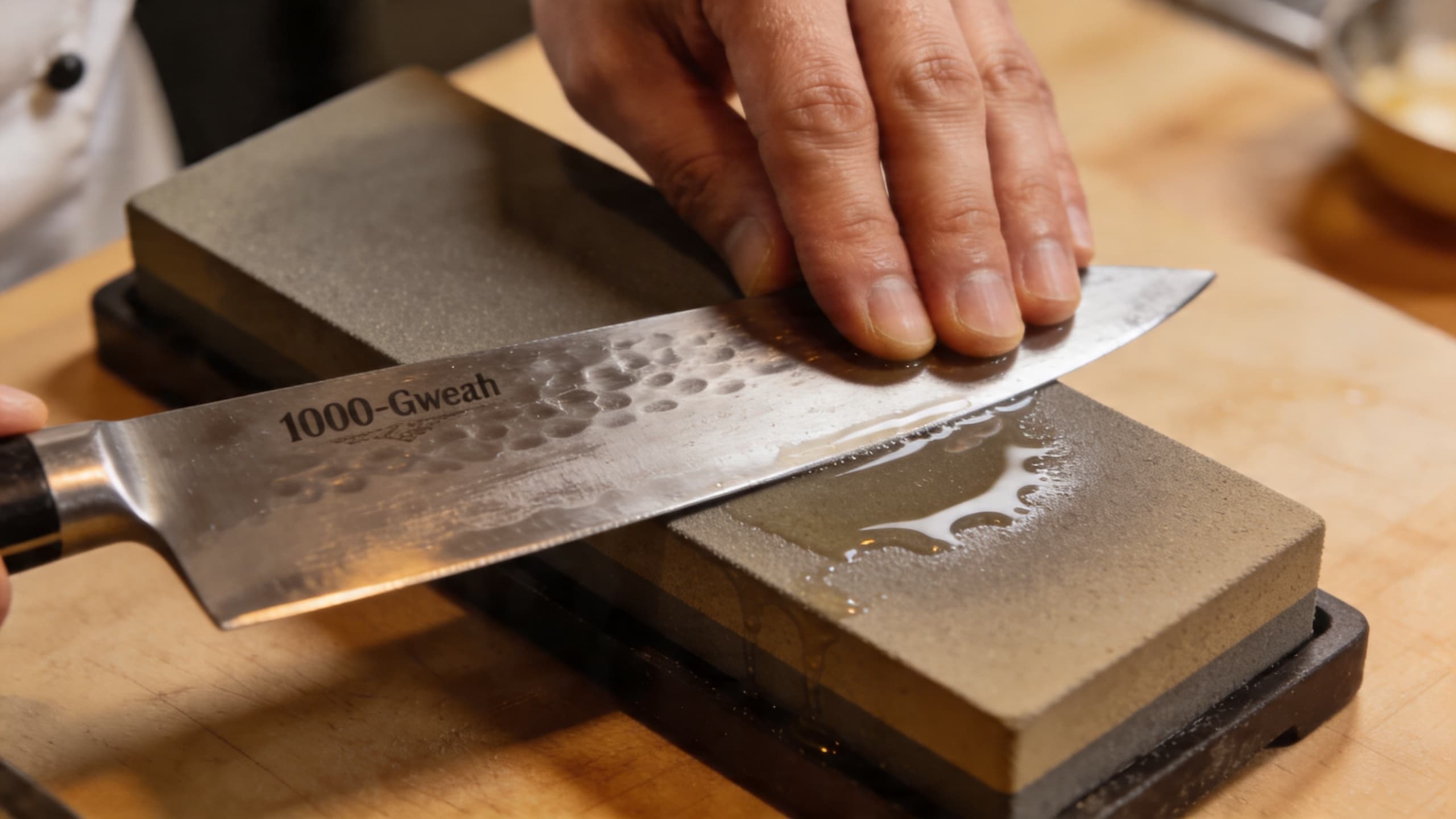
The biggest blunder? Changing your angle mid-stroke. Whether you’re aiming for a 15-degree Japanese edge or a 20-degree Western bevel, the moment you wobble, you’re rounding off the edge you just worked so hard to create.
Pro Tip: If you’re struggling to find the angle, place two quarters on your whetstone and rest the spine of your knife on them. That’s roughly 15 degrees—the sweet spot for precision fusion prep.
4. The Dry Stone Disaster
Whetstones are called "whet" for a reason. Sharpening dry creates friction heat that can actually ruin the temper of your steel, making it brittle. More importantly, without water (or oil, depending on the stone), the "slurry"—that beautiful, muddy mix of stone grit and metal particles—can’t form. That slurry is what actually does the microscopic polishing.
5. Skipping the Grit Ladder
Going straight from a coarse 400-grit stone to a 6000-grit polishing stone is like trying to sand a rustic barn door with fine-grit furniture polish. You need the middle steps. A 1000-grit stone is your workhorse; it sets the edge. The higher grits are just for the "Michelin-star" finish that allows you to slice through cold-smoked duck breast without feeling a hint of resistance.
Great cooking is about technique, not complexity. And technique starts with the edge.
My Daily Razor-Ready Ritual
You don't need an hour. You need five minutes of discipline. This is how I ensure my station is ready for the high-viscosity demands of French-Italian fusion.
- The Soak: While I’m drinking my first espresso, my 1000/6000 grit combo stone is soaking in water until the bubbles stop.
- The 1000-Grit Reset: I give each side of the blade 10-15 controlled passes. I’m looking for the "burr"—a microscopic lip of metal that tells me I’ve reached the apex of the edge.
- The 6000-Grit Polish: This is where the magic happens. Light pressure, long strokes. I’m removing the burr and polishing the edge to a mirror finish.
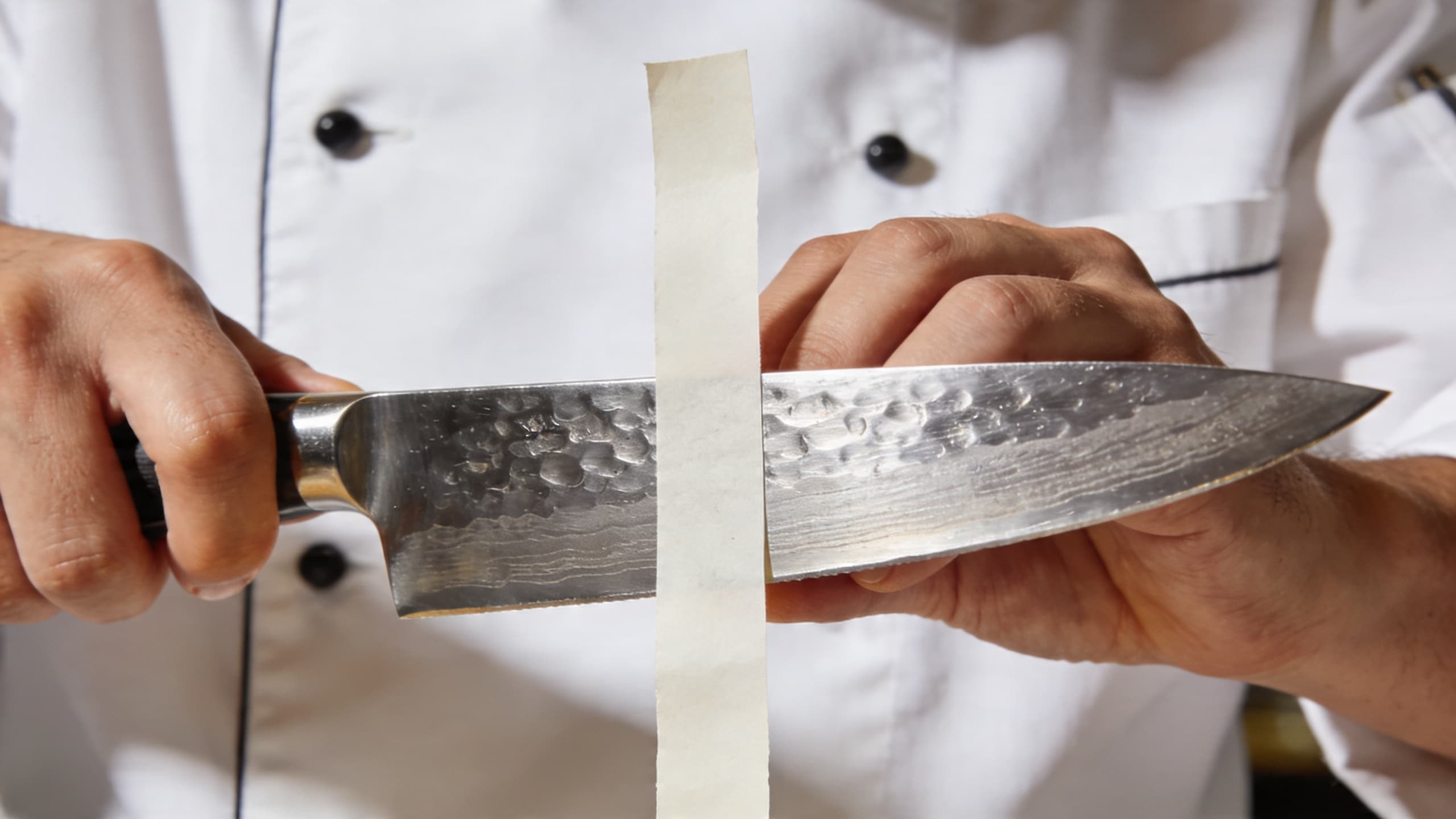
- The Paper Test: If the knife doesn't glide through a piece of newspaper with a whisper, it isn't ready for my kitchen.
- The Strop: A few passes on a leather strop (or the back of a clean denim apron in a pinch) to align those final microscopic fibers.
The Ultimate Review: Whetstones vs. Guided Systems
If you are serious about your craft, invest in a high-quality whetstone set.
| Method | Precision | Speed | Longevity of Blade |
|---|---|---|---|
| Whetstone | Elite | Slow (at first) | Maximum |
| Guided System | High | Medium | High |
| Pull-Through | Low | Fast | Low (Destructive) |
Key Takeaway: Precision in the pit starts with precision at the bench. A sharp knife requires less force, which means more control and fewer scars. Don't be the amateur with the expensive ingredients and the dull blade. Keep it classy, keep it sharp.
#knifeskills #cheftech #whetstone #culinaryprecision #bbqprep