

The Edge of Excellence: 5 Sharpening Blunders Sabotaging Your Precision
Why your dull steel is ruining your fusion game (and how to fix it).

If you’ve ever tried to julienne a shallot for a delicate French gastrique only to have your knife slide off the skin like a politician ducking a question, we need to have a tactical intervention. Precision isn’t just a mindset; it’s a physical property of your steel. In my early days, I thought "sharp" was a suggestion. One scarred brow and several mangled briskets later, I realized that a dull blade is the most dangerous—and insulting—tool in a serious kitchen.
When we’re blending the surgical finesse of a Parisian larder with the rugged demands of an oak-fired pit, your edge has to be multi-lingual. It needs to shave a radish paper-thin and then glide through a 14-pound packer brisket without tearing the bark. Most home cooks are sabotaging their own potential before the first cut is even made.
Let’s recalibrate your steel frequency. Here are the five most common blunders I’ve witnessed (and committed) that turn a high-performance blade into a glorified butter knife.
1. The "One Angle Fits All" Fallacy
The biggest mistake is treating a Japanese Santoku like a German Chef’s knife. They aren’t the same species. Western steel is generally softer (56-58 HRC) and requires a steeper, more durable angle—typically 20 degrees. Japanese blades are harder (60+ HRC) and can support a much finer, 15-degree edge.
Did You Know? A 5-degree difference might sound like a rounding error, but in terms of cutting geometry, it’s the difference between a scalpel and a wedge. If you sharpen your Japanese carbon steel at 20 degrees, you’re essentially driving a tractor on a Formula 1 track.
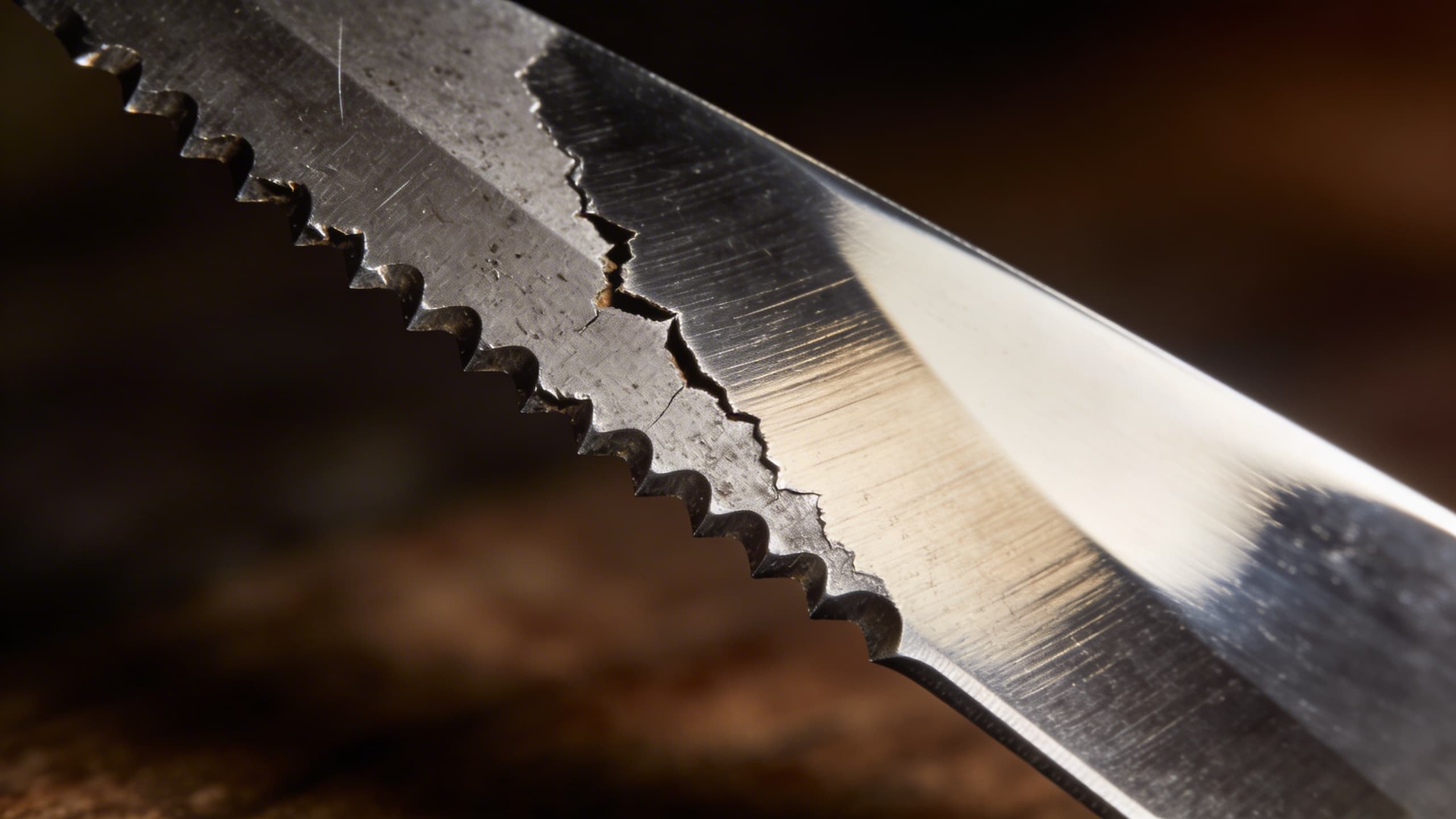
2. The "Dry Stone" Disaster
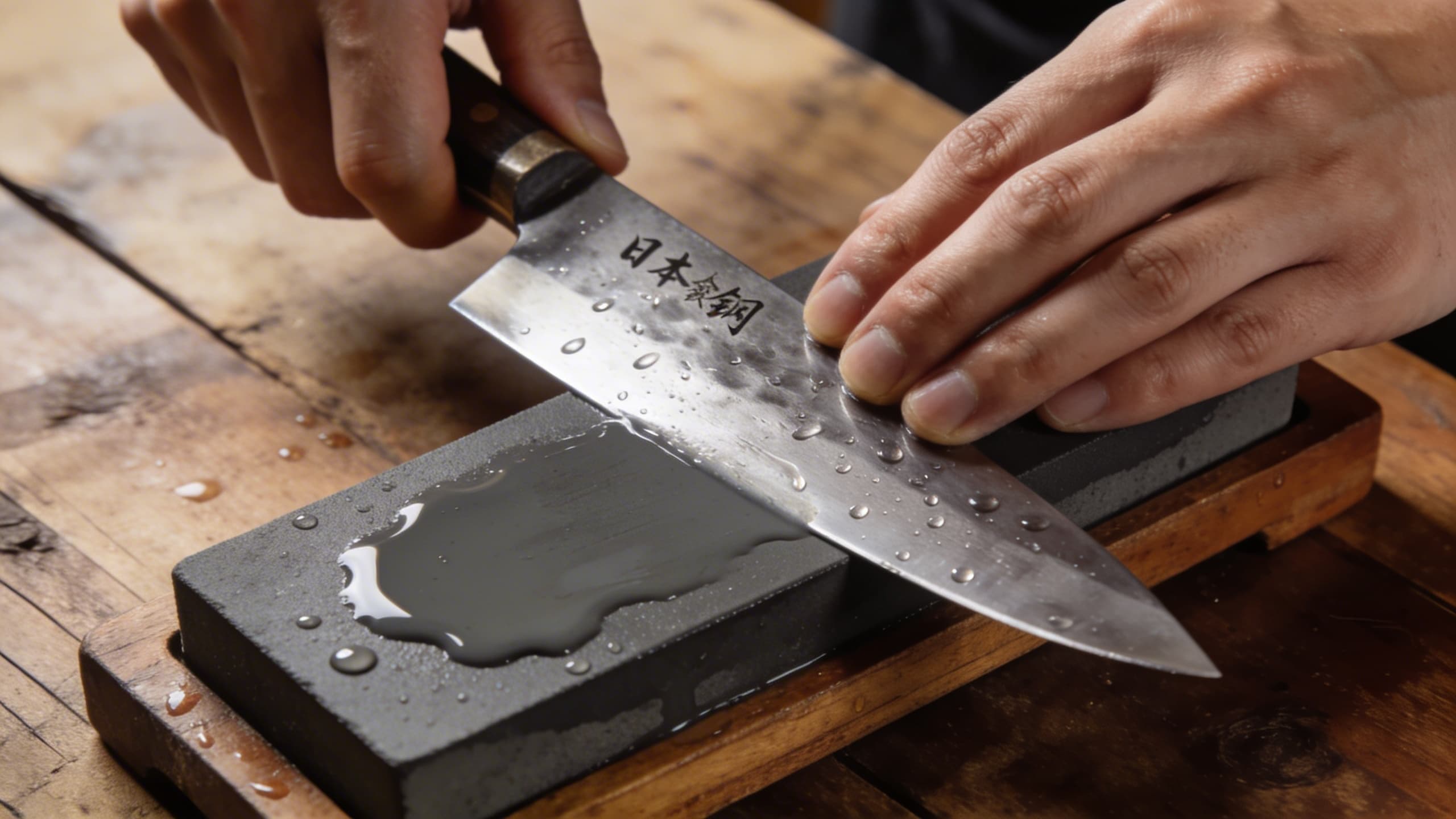
I’ve seen people pull out a whetstone and start grinding away like they’re sharpening a lawnmower blade. Unless you’re using a diamond plate, that stone needs lubrication. Water isn't just for cleaning; it creates the "slurry"—that muddy mixture of stone particles and steel shavings that actually does the heavy lifting.
I once tried to 'quick-fix' my favorite petty knife on a dry stone during a busy service. The friction heat literally blued the steel, ruining the temper. I didn't just lose an edge; I lost the soul of the knife.
3. Ignoring the Burr
Sharpening is the process of removing metal until two planes meet. When they meet, they form a "burr"—a microscopic wire edge that folds over the side. If you don't feel for that burr along the entire length of the blade before switching sides, you aren't sharpening; you're just making your knife thinner and equally dull.
4. The Honing Rod Hallucination
Let’s get one thing straight: a honing rod (that steel stick in your knife block) does NOT sharpen your knife. It realigns the edge. If your knife is actually dull, hitting it with a steel rod is like trying to fix a flat tire by polishing the hubcap.
Pro Tip: For high-end Japanese steel, skip the ribbed steel rods entirely. They can actually chip the hard, brittle edge. Use a ceramic rod or, better yet, a leather strop loaded with polishing compound to keep that fusion-ready edge screaming sharp.
5. The "Push-and-Pray" Technique
Consistency is the soul of precision. Most people vary their angle as they stroke across the stone, creating a rounded "convex" edge that won't bite into the food. You need to lock your wrist and move your entire body.
Key Takeaway: Use the "Coin Trick." Stacking two pennies on your stone gives you a roughly 15-degree guide. Keep that gap consistent, and you'll find the edge you've been looking for.
The Instant Fix: The Paper Test
Tonight, before you prep dinner, take a piece of standard printer paper. Hold it at the top and try to slice through it using only the weight of the knife. If it snags or tears, you’re not cooking with precision—you’re wrestling with your ingredients.
Spend twenty minutes with a 1000-grit stone and a 6000-grit finishing stone. When that blade glides through a ripe tomato or a smoked duck breast with zero resistance, you’ll understand why we obsess over the details.
Keep it classy, keep it smoky.
#knifeskills #cheftech #whetstone #bbqprecision #kitchengear