

Knife Skills That Saved My Brows (and Will Save Yours): 5 Precision Cuts for Fusion Prep Without the ER Visit
Avoid the ER and master the 15-degree edge for professional-grade prep.

The first thing you notice about my face—besides the incredibly well-maintained beard—is a jagged little lightning bolt of a scar sitting right above my left eyebrow. Most people think I got it in a high-stakes kitchen brawl or maybe a particularly aggressive encounter with an offset smoker.
The truth? It was a bag of shallots and a dull, $10 grocery store knife back in my early days.
I was rushing through prep for a shallot confit, trying to look like the culinary school valedictorian I was on paper, while ignoring the most basic law of kitchen thermodynamics: a dull blade is a dangerous projectile. The knife slipped on the waxy skin of the shallot, caught the cutting board at a weird angle, and launched itself upward like it had a grudge. I didn't even feel the cut at first—just the warmth of the blood hitting my station.
That scar is a permanent reminder that precision isn't just about making food look stunning; it’s about keeping your anatomy intact. If you want to master French-Italian fusion without a side of medical debt, you need to treat your steel with the same respect you give a prime brisket.
The 15-Degree Gospel: Why Your Edge Matters
In the world of high-end BBQ and fusion, we often talk about the "bark" or the "crust." But you can't achieve that level of texture if your knife is bruising your ingredients instead of slicing them. Most Western knives come with a 20-degree bevel, which is sturdy but lacks the surgical precision needed for delicate herb work or translucent vegetable carpaccio.
I’ve recalibrated my entire kit to a 15-degree bevel. This is the sweet spot for Japanese carbon steel and high-end German alloys. It gives you an edge so sharp it practically whispers through a bell pepper.
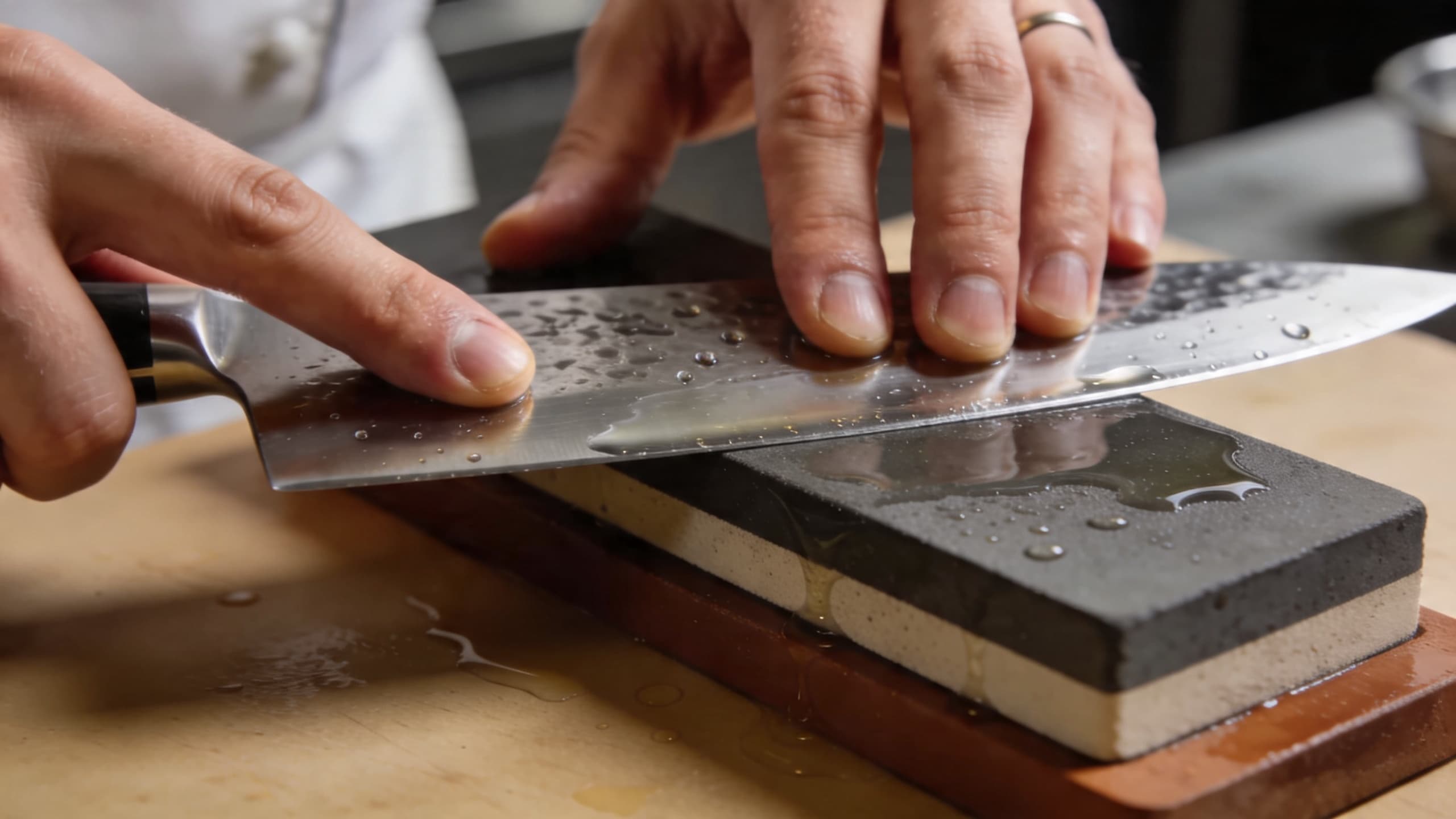
Tip: To find a 15-degree angle without a protractor, take a matchbook. If you rest your knife spine on the height of a standard matchbook while the edge touches the stone, you’re roughly at 15 degrees.
Actionable Sharpening Steps:
- The Soak: If using a whetstone, soak it until the bubbles stop. Dry stones lead to jagged edges.
- The Constant Pressure: Apply even pressure on the "push" stroke and release on the "pull."
- The Burrs: Feel for the "burr"—that tiny lip of metal that forms on the opposite side. If you don't feel it, you haven't sharpened enough.
- The Strop: Finish on a leather strop or a high-grit ceramic rod to align those microscopic teeth.
The Pivot-Slice: The Secret to Fusion Efficiency
Once your edge is lethal, you need the technique to match. In my kitchen, we don't "chop." Chopping implies a vertical impact that crushes cell walls and releases moisture prematurely. We Pivot-Slice.
This technique is essential when you're prepping a fusion mirepoix—think fennel, ginger, and shallots. By keeping the tip of the knife in contact with the board and using a circular, rocking motion, you maintain total control.
Pro Tip: The "Claw" is non-negotiable. Tuck your fingertips in and use your knuckles as a guide for the blade. If your fingernails are visible, you’re playing a dangerous game of chance.
5 Precision Cuts for Your Fusion Arsenal
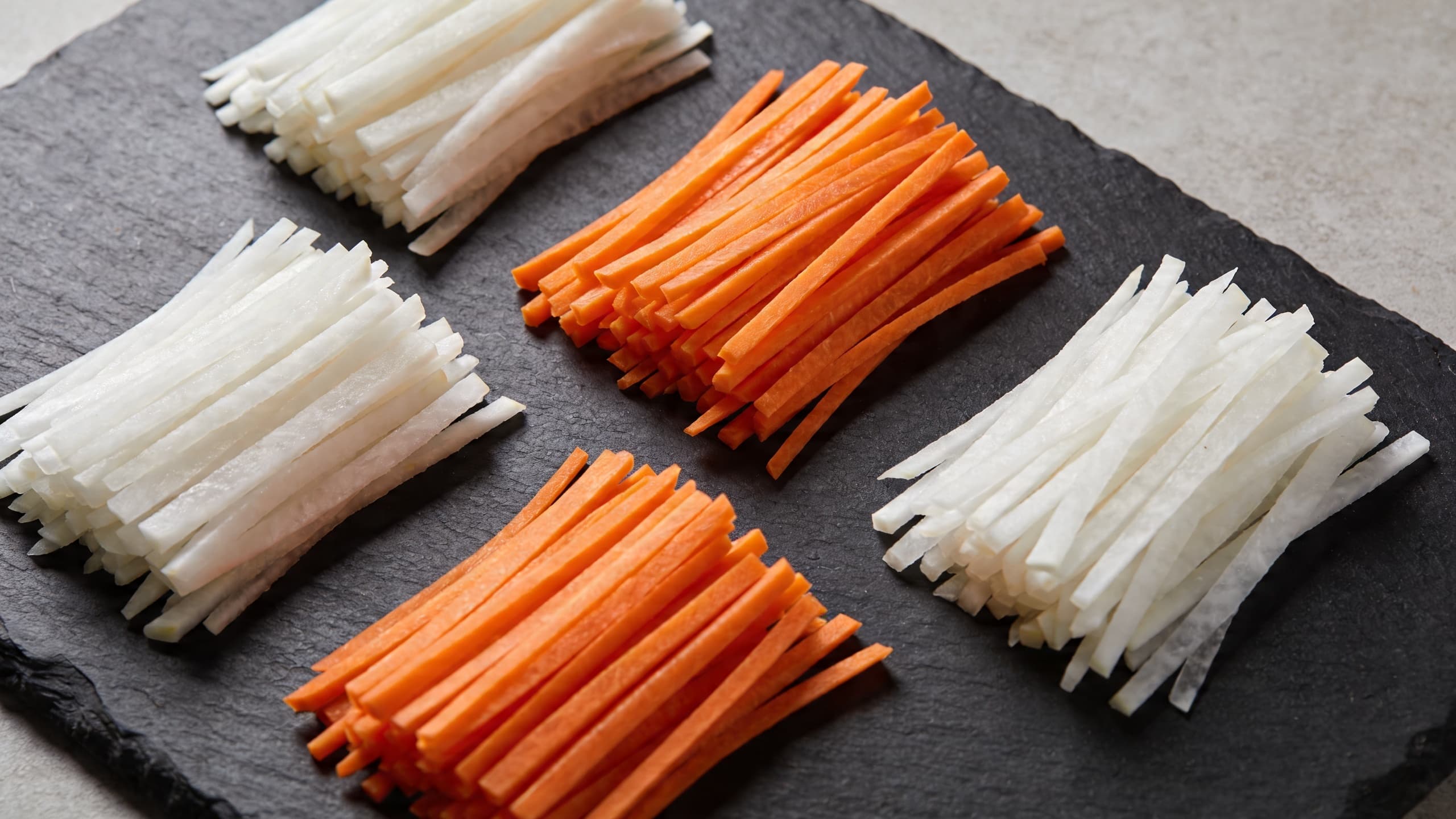
- The Julienne (The Matchstick): Perfect for green papaya in a BBQ slaw or ginger for a soy-reduction glaze. Aim for 1/8 inch by 1/8 inch by 2 inches.
- The Brunoise (The Tiny Cube): Taking that julienne and turning it into 1/8 inch cubes. This is how you get that Michelin-star aesthetic in your salsas.
- The Chiffonade (The Ribbon): Roll your basil or mint leaves like a cigar and slice thin. This prevents the bruising that turns herbs black.
- The Batonnet (The Small Stick): 1/4 inch by 1/4 inch. Essential for smoked root vegetables that need to cook evenly.
- The Paysanne (The Country Cut): 1/2 inch squares, but thin. This is the soul of a rustic Italian minestrone with a smoky twist.
The Physics of the Slice
Why does this matter for your flavor profile? When you use a dull knife or poor technique, you’re essentially "mashing" your vegetables. This causes oxidation and makes your aromatics taste bitter. A clean, 15-degree slice preserves the structural integrity of the ingredient, keeping the juices inside until they hit the heat of your pan or smoker.
Great cooking is about technique, not complexity. A sharp knife is the bridge between a home cook and a chef.
Final Thoughts from the Pit
I learned the hard way so you don't have to. That scar above my eye is a badge of honor now, but it was a mark of arrogance then. Respect the steel, maintain your bevel, and keep your knuckles tucked.
Your mise en place should be a rhythmic, meditative process, not a race to the ER. Keep it sharp, keep it classy, and for the love of all things smoky, keep your fingers out of the way.
Key Takeaway: Precision cutting isn't just about looks—it’s about flavor preservation and safety. Invest in a whetstone, master the 15-degree angle, and always use the claw grip.
#knifeskills #culinarytechnique #chefhacks #bbqprep