

Knife Skills Showdown: Slicing Through French-Italian Fusion Like a Pro
Precision Cuts for the High-Stakes Fusion Kitchen

Let’s be honest: the first time you hold a chef’s knife, you feel like a samurai. The second time, usually after realizing your "julienne" looks more like a pile of wood chips, you feel like a fraud. But by the third time—if you’re anything like me—you might just find yourself in the back of a taxi holding a sterile gauze pad to your face, wondering where it all went wrong.
Precision is the heartbeat of French-Italian fusion. When you’re marrying the structural integrity of a hand-rolled pappardelle with the aggressive, smoky bark of a 14-hour brisket, the way you prep your aromatics isn't just about aesthetics—it’s about thermodynamics. If your brunoise is uneven, your shallots will caramelize at different rates, leaving your red wine reduction tasting like a mixture of sweetness and regret.
The Eyebrow Incident: A Lesson in Hubris
Every scar tells a story, and the one bisecting my left eyebrow is a classic. I was nineteen, fueled by espresso and the misplaced confidence of a culinary student who had just mastered the "pinch grip." I was working on a mountain of leeks for a Vichyssoise, trying to impress a sous-chef with my speed.
I wasn't looking at the blade; I was looking at the clock.
A dull knife requires more force. More force leads to less control. The blade hit the slippery, cylindrical surface of the leek, glanced off, and decided my face was a better target than the cutting board.
Did You Know? According to emergency room data, knife-related injuries account for nearly 40% of all kitchen-related accidents. Most of these aren't caused by "scary" sharp knives, but by dull blades that slip under pressure.
The lesson? Speed is a byproduct of precision, not a substitute for it. If you can’t do it slow and perfect, you have no business doing it fast and dangerous.
The Big Three: French Technique, Italian Soul
In the world of fusion, we use French cuts to elevate Italian ingredients. Here are the three pillars you need to master:
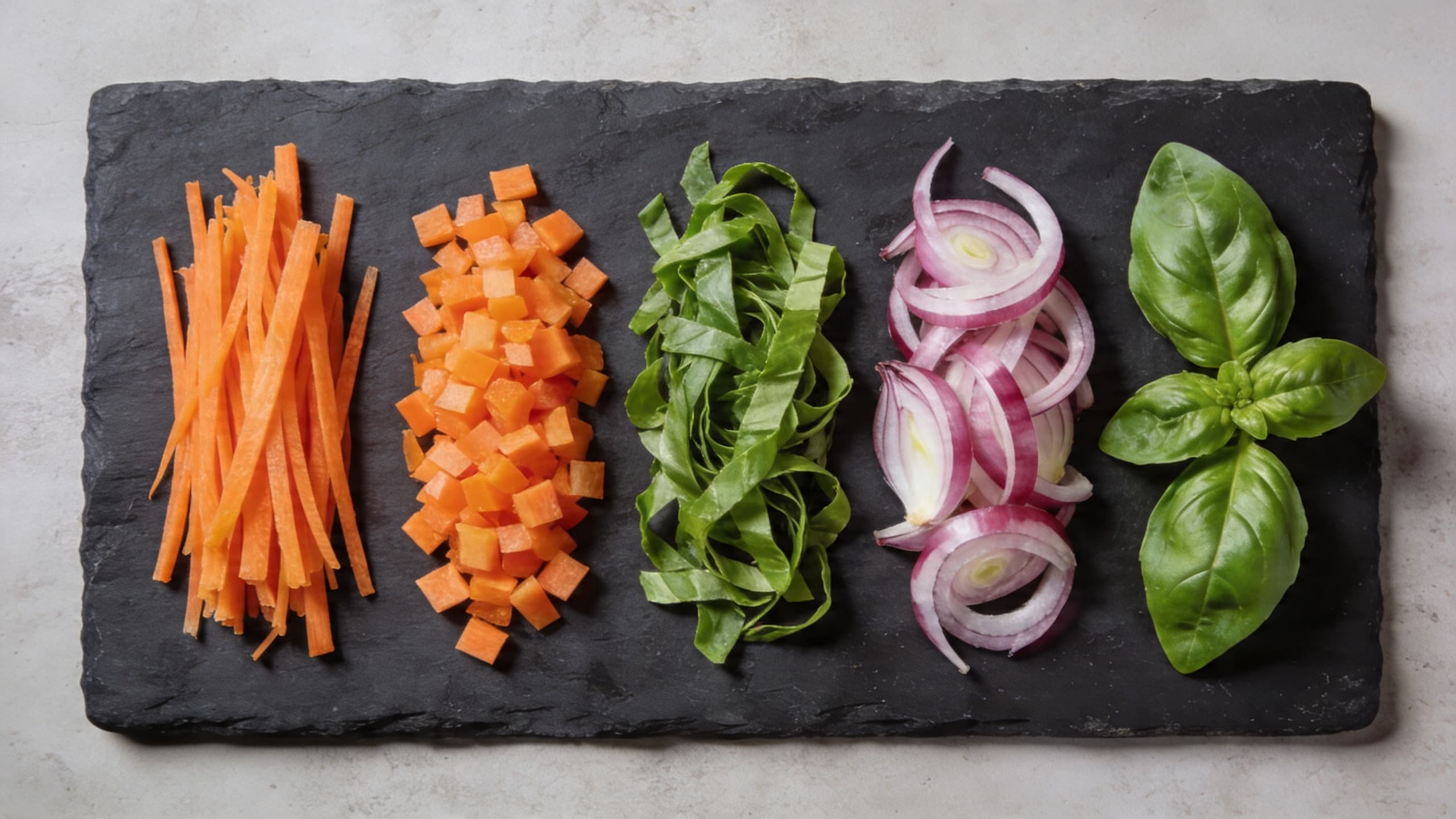
1. The Julienne (The Matchstick)
This is the foundation. You’re looking for 1/8 x 1/8 x 2-inch strips. In my kitchen, we use this for bell peppers that get a quick cold-smoke before being tossed into a carbonara. The uniform size ensures every bite has the same smoky crunch.
2. The Brunoise (The Tiny Cube)
Take your julienne strips, bunch them up, and cut them into 1/8-inch cubes. This is the "gold standard" for a soffritto. When these hit a hot pan with a bit of wagyu tallow, they melt into the sauce, providing flavor without distracting from the texture of the meat.
3. The Chiffonade (The Ribbon)
Specifically for leafy greens and herbs like basil or sage. Stack the leaves, roll them tightly like a cigar, and slice thin ribbons. It’s the only way to garnish a smoked pomodoro without bruising the delicate herbs and turning them black.
Great cooking is about the intersection of physics and flavor. If your cuts are uneven, your cook is uneven. Period.
5 Foolproof Drills to Save Your Fingers
If you want to stop "hacking" and start "slicing," you need to rewire your muscle memory. Here are five drills I use to calibrate my team.
Drill 1: The "Claw" Commitment
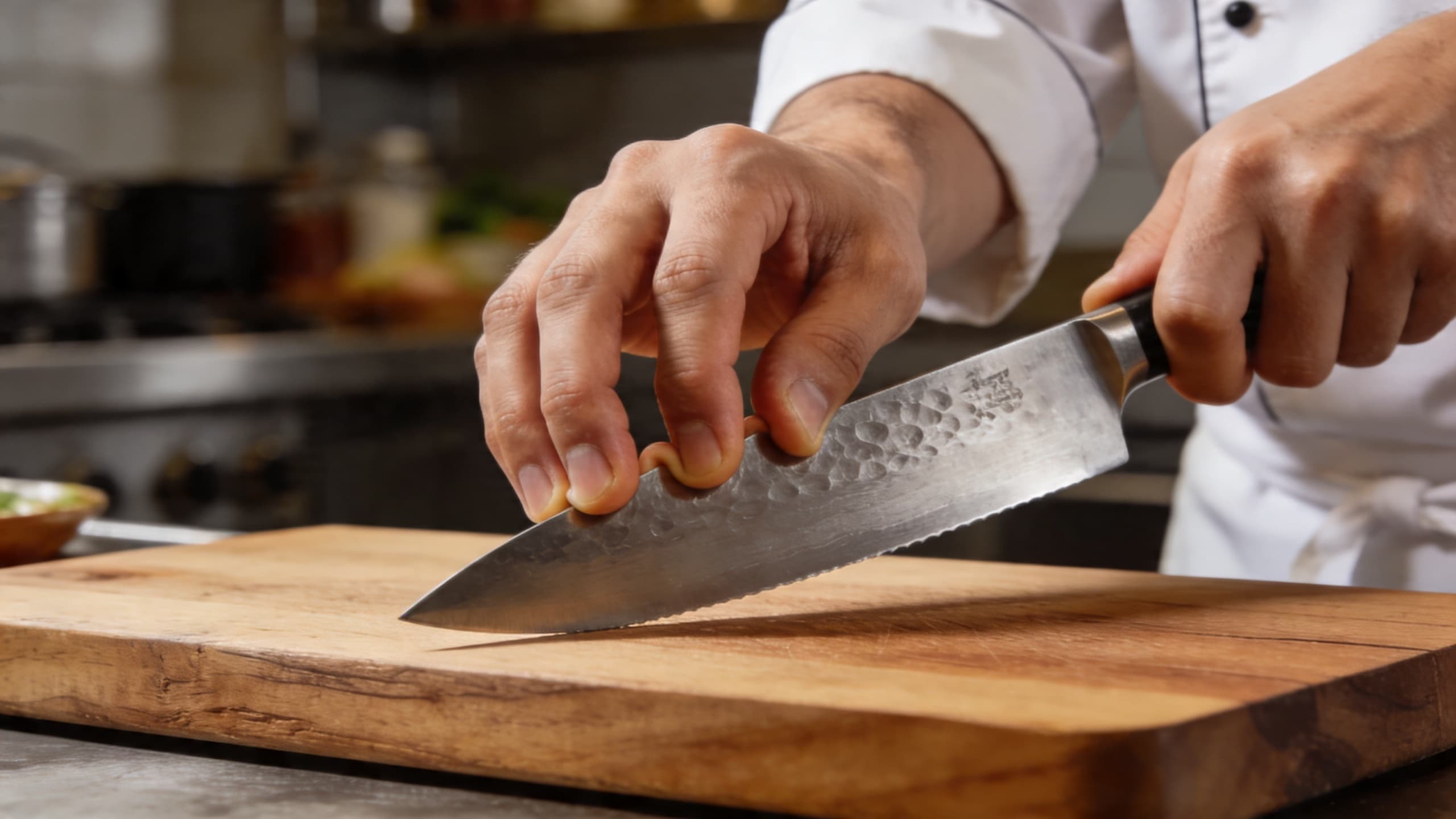
The Problem: Fingers splayed out, inviting the blade to tea. The Fix: Place your non-cutting hand on the board. Tuck your fingertips in toward your palm, using your knuckles as a guide for the blade. The Drill: Slice a bag of celery. Your goal isn't speed; it’s keeping the side of the blade in constant contact with your knuckles without ever lifting the tip of the knife off the board.
Drill 2: The Horizontal Shallot Interrogation
The Problem: Shallots rolling away like they’re escaping a crime scene. The Fix: Slice the shallot in half lengthwise first. Place the flat side down. The Drill: Make three horizontal cuts toward the root (but not through it), then vertical cuts, then dice. This creates a perfect brunoise with zero stability issues.
Drill 3: The "Rocking" Potato
The Problem: Lifting the knife too high and losing your center of gravity. The Fix: Keep the tip of the knife on the board. Use a circular, rocking motion. The Drill: Take a large Russet potato, square it off into a rectangle, and practice your julienne strips using only the back half of the blade while the tip stays anchored.
Drill 4: The Herb "No-Bruise" Ribbon
The Problem: Sawing back and forth on basil until it looks like wet grass. The Fix: One clean, downward stroke. No sawing. The Drill: Practice chiffonade on a bunch of flat-leaf parsley. If the board is green when you’re done, you’re pressing too hard. If the board is clean, you’ve mastered the edge.
Drill 5: The "Dull Blade" Detection
The Problem: Using a knife that’s basically a spoon with an attitude. The Fix: Honing vs. Sharpening. The Drill: Every time you pull your knife out, give it 5 passes on a honing steel at a 20-degree angle. If it won't slice through a tomato skin with zero downward pressure, it’s time for the whetstone.
Key Takeaways for the Fusion Pit
Key Takeaway:
- Sharpness is Safety: A sharp knife goes where you want it; a dull knife goes where the ghost of your mistakes takes it.
- Stability is King: Always create a flat surface on your ingredient before you start your precision cuts.
- The Grip Matters: Pinch the blade between your thumb and forefinger for maximum leverage and control.
Mastering these skills won't just save you a trip to the ER; it will transform your cooking from "backyard hobbyist" to "Michelin-adjacent." Keep your knives sharp, your knuckles tucked, and your brows intact.
Keep it classy, keep it smoky.
#knifeskills #chefhacks #bbqlife #culinaryprep