

Knife Skills 101: Avoiding the Cuts That Scar (Literally) in French-Italian Fusion Prep
Precision, Physics, and Why Your Dishwasher is a Murderer

Pull up a stool, Chef. Forget the $400 brisket for a second; let's talk about the piece of steel currently mangling your shallots. Most home cooks approach their knife block with a mix of reverence and total neglect, treating a dull blade like a stubborn relative—you know it’s a problem, but you’d rather just work around it.
In the high-stakes world of French-Italian fusion, where we’re oscillating between the surgical precision of a brunoise and the rustic, heavy-handed soul of a wood-fired ragu, your knife is your primary interface with reality. If that interface is blunt, your food—and your fingers—are in immediate danger.
The Physics of the "Slip"
We’ve all been there. You’re trying to halved a San Marzano tomato or slice into a crusty baguette, and the blade just... skates. It’s a terrifying micro-second where physics betrays you. A dull knife requires force, and force is the enemy of control. When you have to push, the moment that blade encounters a soft spot or a slick surface, it’s going to travel. And usually, it travels toward your knuckles.
Did You Know? A sharp knife is actually "safer" because it bites into the cellular structure of the food immediately. A dull knife acts like a blunt instrument, crushing fibers rather than severing them, which leads to uneven cooking and lost nutrients (literally bleeding out on the board).
The Eyebrow Incident: A Lesson in Hubris
Early in my career, I thought I could "power through" a prep shift with a chef's knife that had the edge of a butter spreader. I was working on a reduction that required about forty pounds of mirepoix. I was exhausted, the blade was sliding, and I was using my shoulder to compensate for the lack of an edge. I went to slice a particularly round, stubborn onion, it rolled, the knife slipped, caught the board, and the handle kicked up with such velocity it clipped me right in the supraorbital ridge.
I didn't lose the eye, but I did lose half an eyebrow and gained a permanent reminder that the pit doesn't lie, and neither does the stone. If you don't respect the edge, the edge won't respect you.
My 15-Minute Whetstone Ritual
I don't use electric sharpeners. They’re the "fast food" of the culinary world—aggressive, inconsistent, and they eat away more metal than necessary. I stick to the stones. It’s meditative, technical, and frankly, the only way to get that Michelin-level finish.
- The Soak: I use water stones. Submerge them until the bubbles stop. If it's still bubbling, it's still thirsty.
- The Angle (The 15-Degree Rule): For most fusion work, I aim for a 15-degree angle. Think of it as the thickness of two pennies stacked under the spine of the blade.
- The Burp (The Buris): You aren't done with the coarse side until you feel that "burr"—a tiny lip of metal curling over the edge. No burr, no edge.
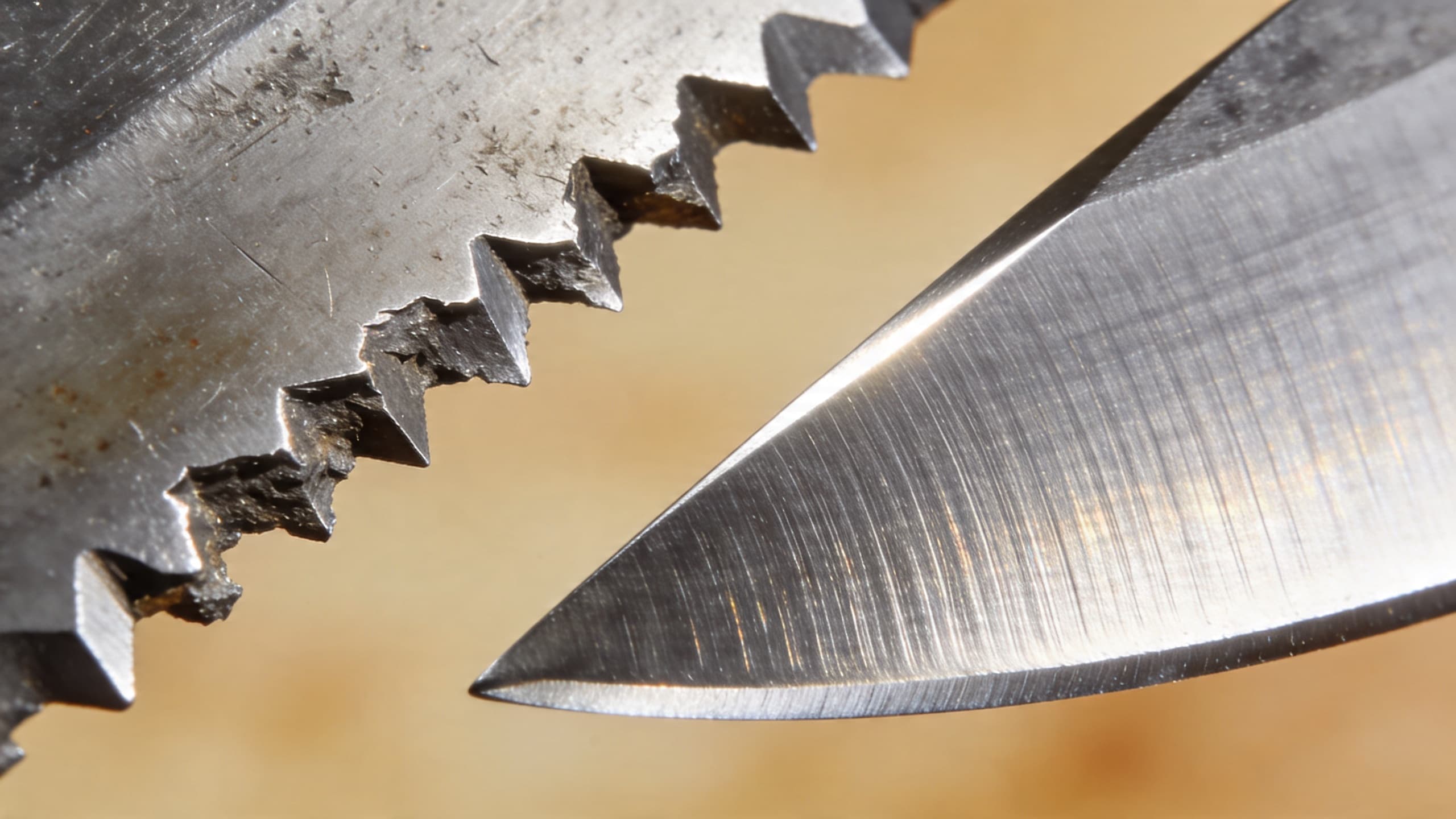
- The Polish: Flip to the fine grit (3000+) to smooth out the microscopic serrations. This is where the "fusion" happens—where the blade becomes smooth enough to glide through delicate basil without bruising the leaves.
5 Actionable Fixes for Your Precision Prep
If your knife skills feel more like a demolition derby than a ballet, check yourself against these five common blunders.
1. The "Death Grip" Syndrome
Stop choking the handle. If your forearm is cramping, you’re doing it wrong. Use the "Pinch Grip"—thumb and forefinger on the blade itself, just past the bolster. It moves the center of gravity into your hand, giving you 100% more control.
2. The "Guillotine" Fallacy
Home cooks love to chop straight down. Thud. Thud. Thud. That’s how you dull a knife in ten minutes. Use a rocking motion or a push-cut. The blade should always be moving forward or backward as it goes down.
Pro Tip: Imagine the blade is a saw with invisible teeth. Even the sharpest knife performs better with a slight slicing motion rather than raw downward pressure.
3. The "Glass Board" Nightmare
If you are using a glass or marble cutting board, I need you to go to the kitchen, pick it up, and put it in the recycling bin. Right now. Those surfaces are harder than your steel. Every time you cut, you’re essentially smashing your edge against a rock. Stick to end-grain wood or high-quality rubber.
4. The Dishwasher Death Trap
The dishwasher is where knives go to die. The high-heat cycles warp the tempering of the steel, and the aggressive detergents pit the metal. Hand wash, hand dry, immediately.
5. Ignoring the "Hone"
Sharpening (removing metal) and Honing (realigning the edge) are different. Use your ceramic honing rod every single time you pull that knife out. It keeps the "teeth" of the edge standing straight.
The Nutritional Edge
Why is this in the "nutrition" category? Because precision affects bioavailability. When you crush a clove of garlic with a dull knife, you’re causing massive cellular trauma, releasing all the sulfurous compounds at once. When you slice it paper-thin with a razor-sharp blade, you preserve the integrity of the ingredient, controlling the flavor release and keeping the essential oils in the food, not on your board.
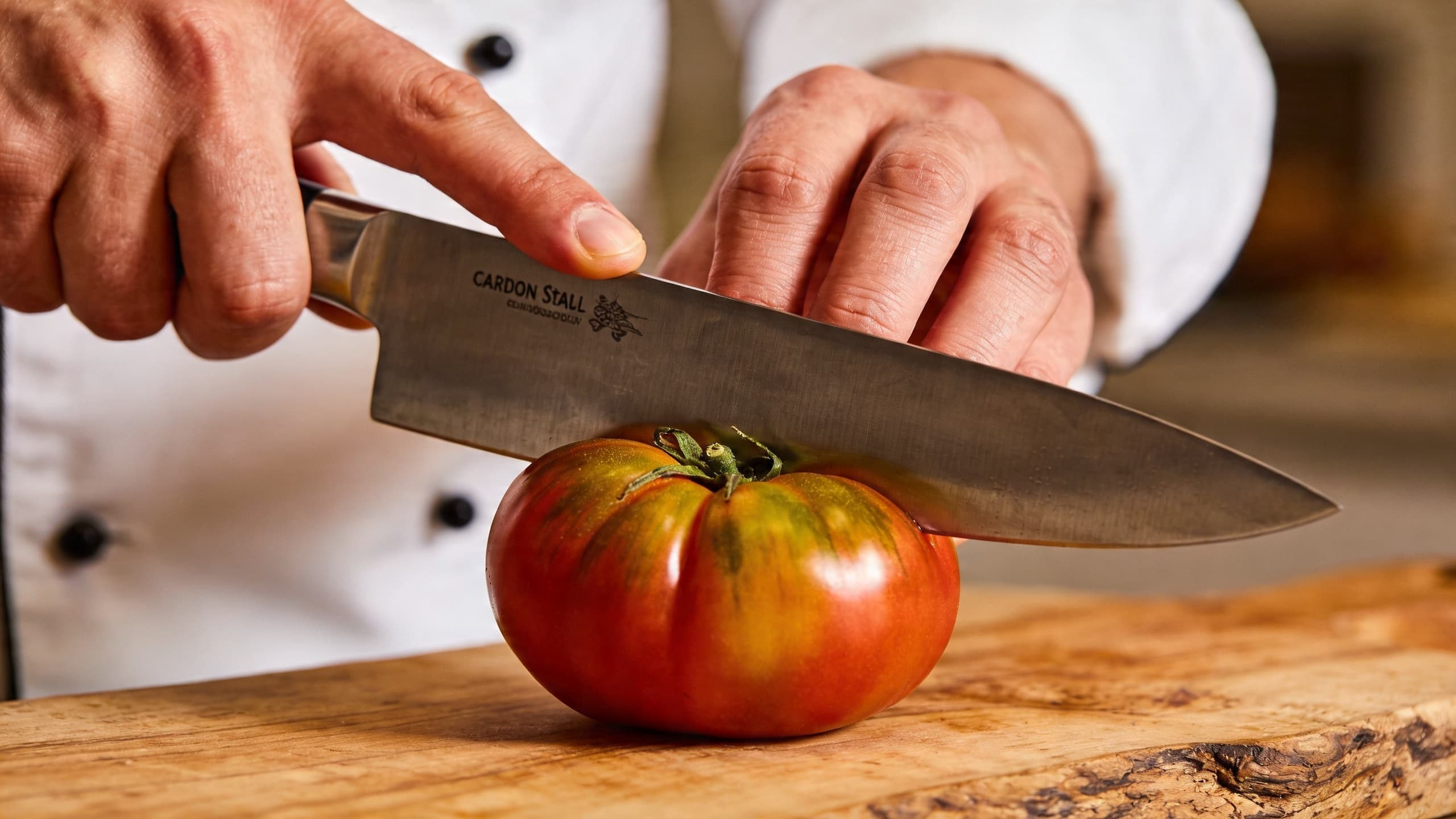
Great cooking isn't about the complexity of the recipe; it's about the integrity of the prep. A sharp knife is the difference between a dish that's 'fine' and a dish that's stunning.
Keep it classy, keep it smoky, and for the love of all things holy, keep it sharp.
#knifeskills #culinarytechnique #chefsecrets #fusioncooking