

Knife Sharpening Rituals: How a Chef's Daily Edge Tune-Up Transforms French Cuts for Italian Fusion
Precision Sharpening for Better Flavor and Nutrition

If you’ve ever tried to julienne a leek for a delicate velouté with a blade as dull as a butter knife, you know the true meaning of culinary heartbreak. It’s not just about the frustration; it’s about the physics. A dull blade doesn’t slice; it crushes. When you crush a vegetable, you’re rupturing cell walls prematurely, losing precious moisture and—more importantly—nutrients. In the world of French-Italian fusion, where the precision of a brunoise meets the rustic soul of a wood-fired ragù, the edge of your knife is the gatekeeper of quality.
My obsession with the "perfect edge" isn't just professional; it's quite literally written on my face. During my early days in a high-pressure kitchen, I was rushing through a prep shift with a knife that hadn't seen a whetstone in weeks. I was trying to force a blade through a stubborn butternut squash. The knife slipped, caught the cutting board, and kicked back. I ended up with a permanent souvenir—a jagged scar through my left eyebrow. It was a brutal lesson: a dull knife is a dangerous knife.
The Thermodynamics of the Edge
Maintaining your knives isn't just about safety; it's a vital part of your kitchen's nutritional ecosystem. When a blade is truly sharp, it glides through proteins and produce with minimal resistance. This precision preserves the structural integrity of the ingredient. Think about it: a clean cut on a piece of Wagyu for a fusion carpaccio keeps the fats intact and the texture silky. A jagged cut leads to oxidation and a loss of that "melt-in-your-mouth" viscosity we strive for.
1. The 15-Degree Rule
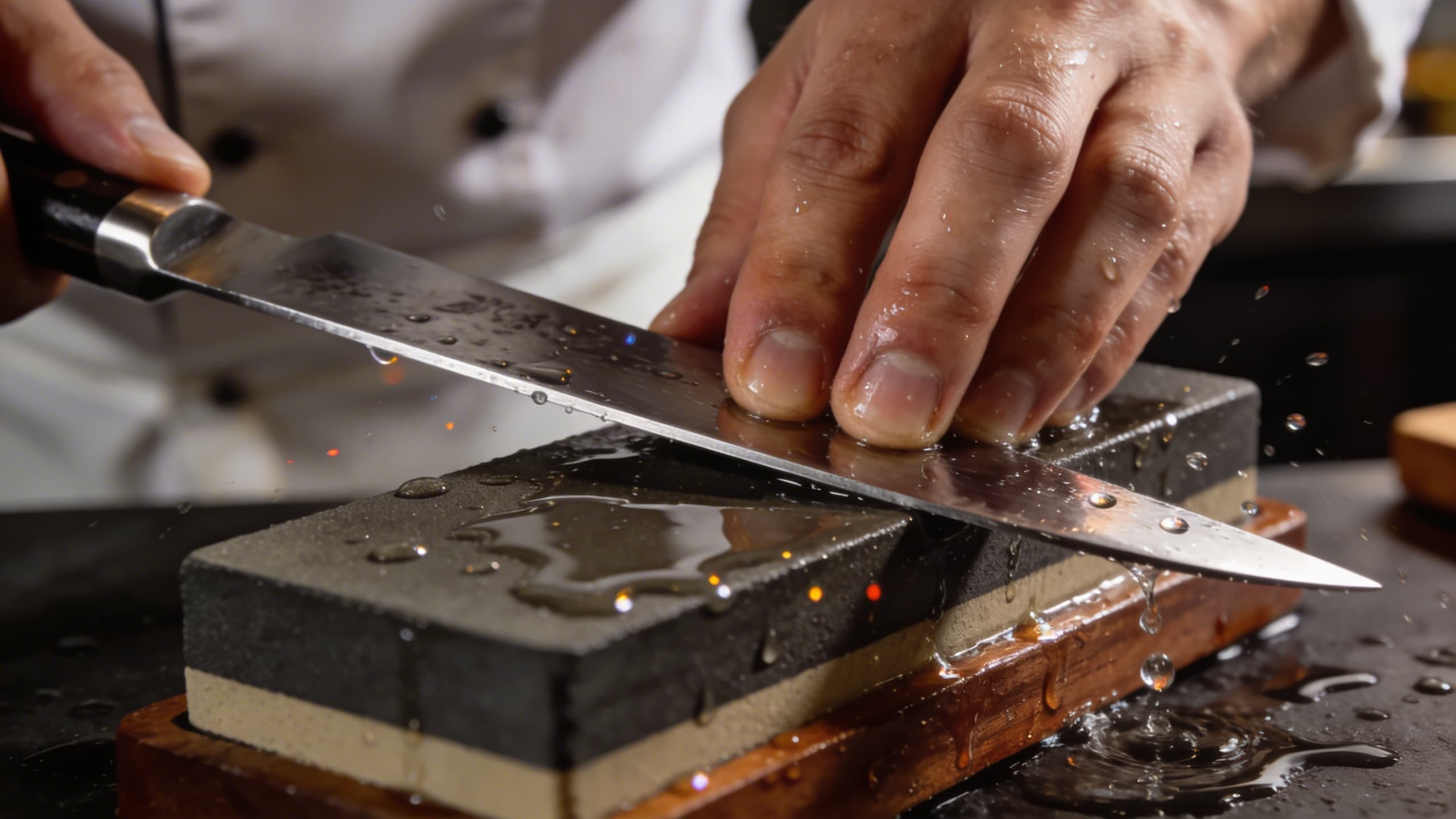
Most modern high-end knives, especially Japanese carbon steel or thinner French blades, perform best at a 15-degree angle. This creates a "razor" edge that is essential for the delicate cuts required in fusion cooking.
Pro Tip: To find 15 degrees without a protractor, start at 90 degrees (vertical), halve it to 45, halve that to 22, and drop just a bit further. Consistency is more important than absolute perfection.
2. The Whetstone Ritual
Forget those pull-through sharpeners; they are the fast food of the knife world—cheap, effective for a second, but ultimately damaging. A dual-grit whetstone (1000/6000) is your best friend. The 1000-grit side "resets" the edge, while the 6000-grit side polishes it to a mirror finish.
3. The "Burr" is Your Guide
As you sharpen, you’ll feel a tiny ridge of metal forming on the opposite side of the edge. This is called the burr. Once you feel it along the entire length of the blade, it’s time to switch sides. If you don't find the burr, you aren't actually sharpening; you're just rubbing metal on a rock.
Did You Know? Sharper knives actually make food taste better. By cleanly slicing through cells rather than tearing them, you prevent the release of bitter enzymes in vegetables like onions and garlic.
4. Honing vs. Sharpening
Sharpening removes metal to create a new edge. Honing (using that long steel rod) simply realigns the existing edge. Think of it like this: sharpening is the major engine overhaul; honing is the daily oil check. Hone your knife every single time you take it out of the block.
5. The Paper Test
The ultimate validation. A properly sharpened knife should slice through a single sheet of printer paper with zero effort and a clean, silent "zip." If it snags, you’ve got a micro-chip or a dull spot that needs attention.
A knife is an extension of the chef's hand. If the hand is precise but the tool is blunt, the soul of the dish is lost in the friction.
Why Sharpening is a "Nutrition" Technique
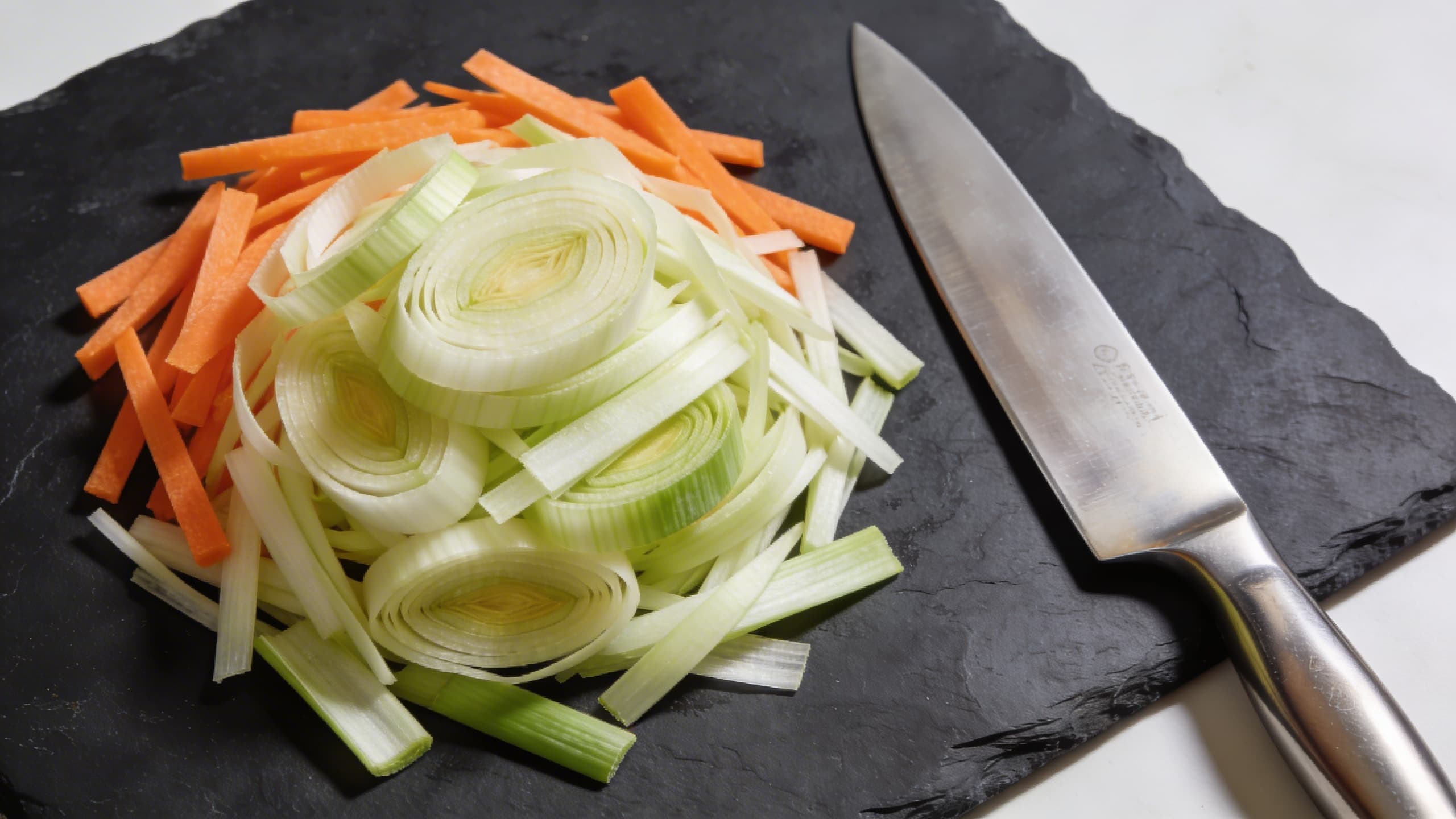
It sounds like a stretch, but hear me out. When you can prep faster and more efficiently, you are more likely to cook with fresh, whole ingredients. A sharp knife makes the "chore" of dicing five pounds of mirepoix for a smoked lamb neck osso buco feel like a meditative ritual rather than a manual labor sentence.
Furthermore, the "cleaner" the cut, the less surface area is exposed to air, which slows down the degradation of vitamins. In my kitchen, we treat sharpening as a sacred "Mise en Place" before the fire even gets started.
Key Takeaway: Your knife edge is the first step in the digestion process. A clean cut ensures the best texture, flavor, and nutrient density reaches the plate.
Final Thoughts: Don't Fear the Stone
Sharpening can be intimidating, but it’s a skill that pays dividends for a lifetime. Start slow, keep your angles consistent, and remember my eyebrow. Precision isn't just about looking like a pro; it's about respecting the ingredients and the people you're feeding.
Keep it classy, keep it smoky, and for heaven's sake, keep it sharp.