

Choux Pastry Disasters Decoded: 5 Fixes from a Battle-Tested Playbook
Mastering the puff through thermodynamics and a little bit of grit.

If you’ve ever pulled a tray of what were supposed to be majestic Gougères out of the oven only to find a collection of sad, cheesy pancakes, welcome to the club. Choux pastry is the ultimate test of a chef’s patience and precision. It’s a high-wire act where steam is your only safety net, and if your dough consistency is off by even a fraction, the laws of physics will happily humiliate you in front of your dinner guests.
In my early days, I treated Choux like a backyard grill—guessing the heat and "eyeballing" the moisture. The result? A tray of Zeppole so dense they could have been used as doorstops. But after years of French-Italian fusion experimentation, I’ve realized that mastering the "Puff" isn't about luck; it's about understanding the thermodynamics of your dough.
The Science of the Steam Engine
Unlike bread or cake, Choux pastry doesn't rely on yeast or baking powder. It’s a steam-leavened dough. You are essentially building a delicious, edible pressure vessel. When that high-moisture dough hits a hot oven, the water turns to steam, inflating the pastry, while the eggs provide the structural integrity to hold that shape until the flour sets.
1. The "Pan-Sear" Pitfall: Under-drying the Roux
The first mistake happens before an egg even touches the pan. You have to cook that flour and water mixture (the panade) until it forms a film on the bottom of the pot. If you don't cook out enough moisture here, you won't be able to add enough eggs later.
Tip: Look for a thin, starchy film on the bottom of your saucepan. That’s the signal that the starches have gelatinized and are ready to absorb the richness of the eggs.
2. The Egg Avalanche: Consistency is King
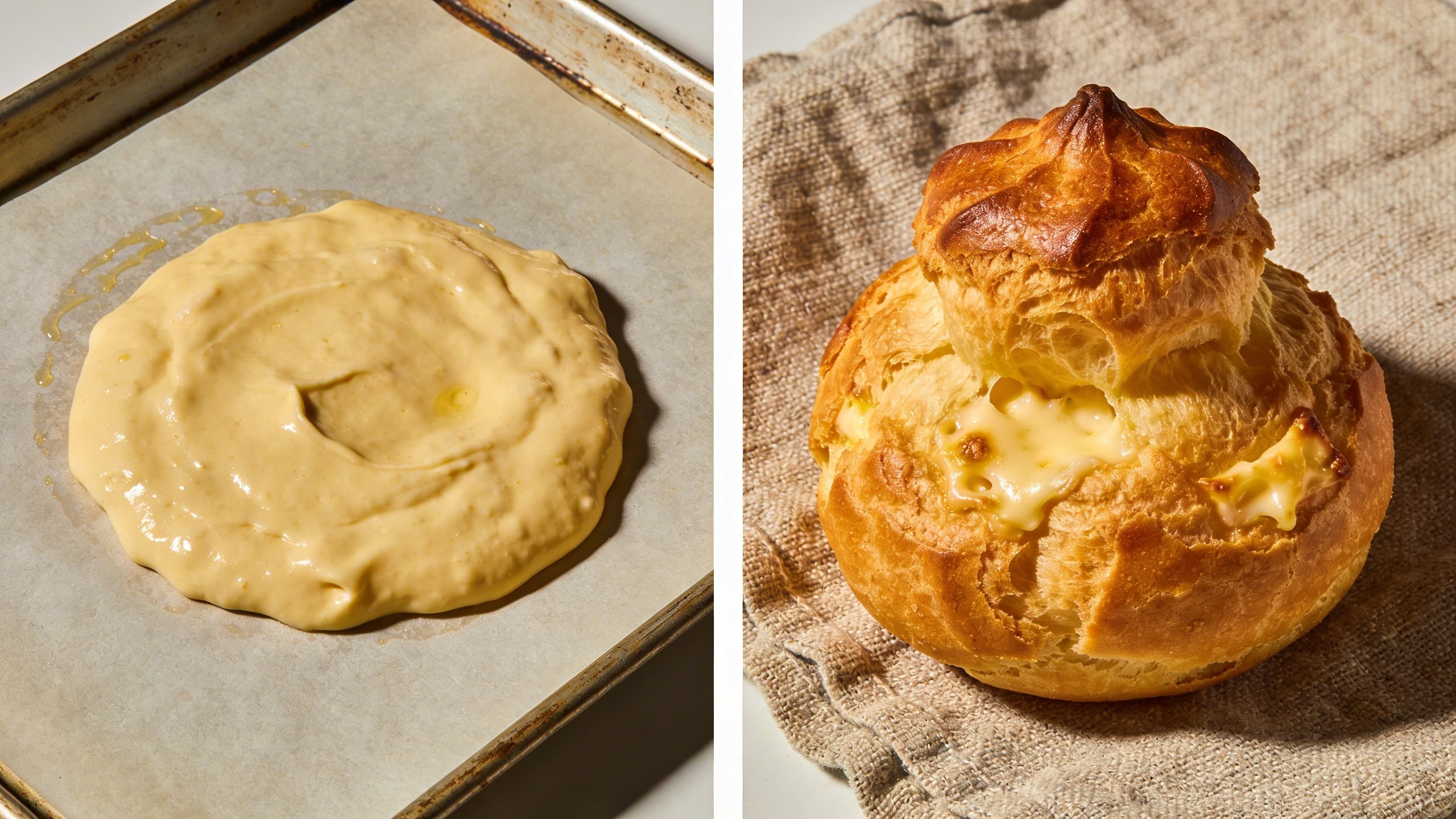
This is where most home cooks lose the battle. If you follow a recipe that says "add 4 eggs" blindly, you’re playing Russian roulette. The size of the eggs, the humidity in your kitchen, and how much you dried the roux all change how many eggs you actually need.
The dough should fall from your spatula in a slow, heavy 'V' shape. If it stays clumped, it's too dry. If it runs, start over.
How to Fix a Runny Dough
If you’ve added too many eggs and your dough looks like pancake batter, do not just stir in raw flour. You have to make a small separate batch of "dry" roux (flour, water, butter) and slowly incorporate it into your runny mess until the consistency corrects.
3. The "Peeking" Penalty: Thermal Shock
I get it. You want to see if they’re rising. But opening that oven door in the first 15 minutes is the fastest way to collapse your empire. The steam inside the pastry needs constant, high heat to solidify the walls.
Warning: Opening the oven door early releases the steam and drops the pressure, causing your puffs to cave in like a cheap tent in a windstorm.
4. The Gougère Gremlin: Too Much Cheese
We’re doing French-Italian fusion here, so the temptation to dump a mountain of Pecorino or Gruyère into the dough is real. But cheese is heavy and fatty. Too much of it weighs down the protein structure of the eggs, leading to a "leaden" puff.
Pro Tip: Fold your cheese in at the very last second, and keep it finely grated. Large chunks are anchors that your steam engine can't lift.
5. The Cooling Collapse: The "Prick" Technique
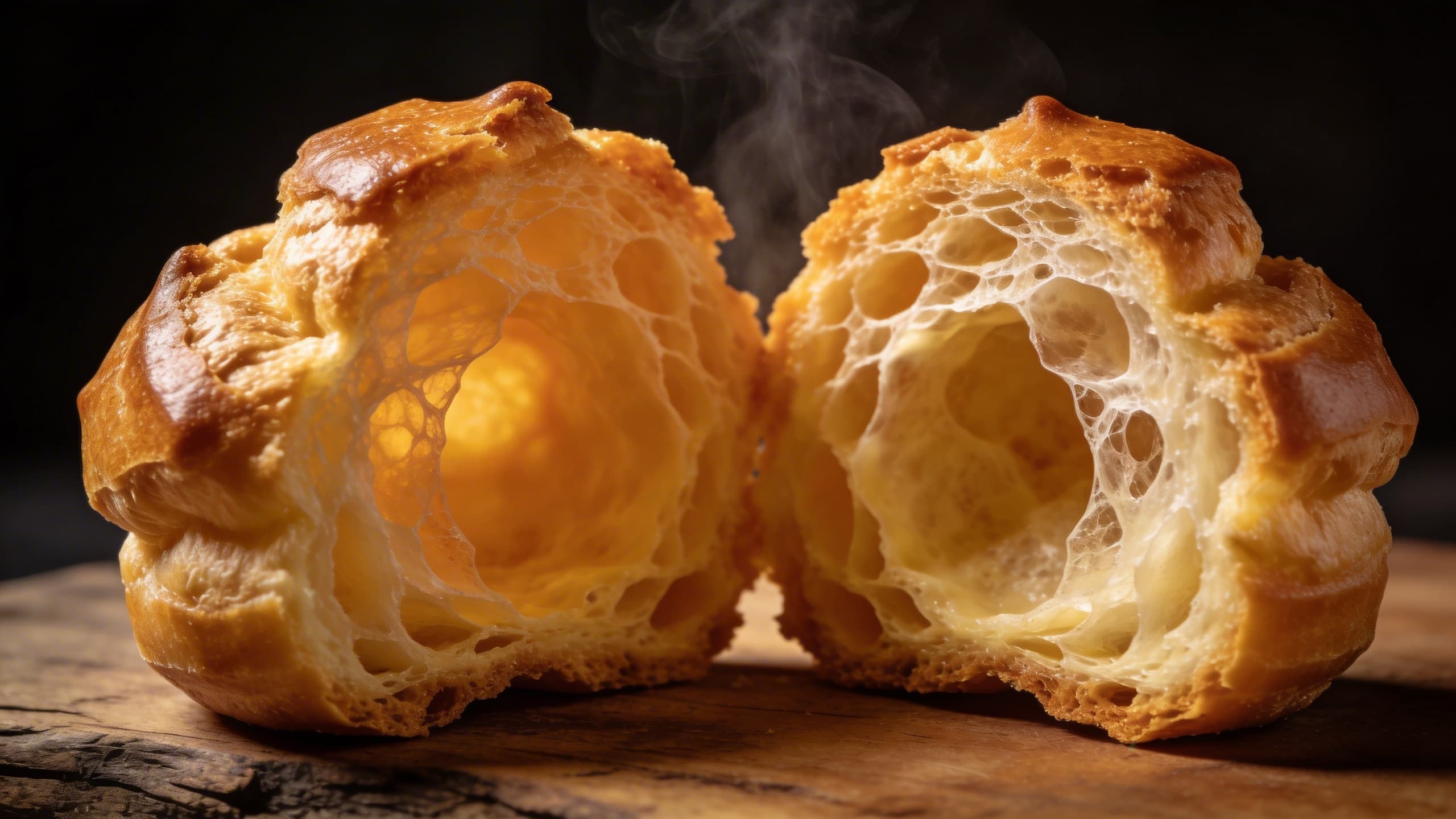
Even a perfect puff can fail after it leaves the oven. As the air inside cools, it shrinks. If the steam can't escape, it turns back into water and softens the walls from the inside out.
- Remove the tray from the oven 5 minutes before they are done.
- Use a toothpick or a small knife to prick a tiny hole in the side of each puff.
- Return them to the oven for the final 5 minutes with the door slightly ajar.
Key Takeaway: Precision in the prep leads to soul in the final bite. Treat your Choux with the respect of a Michelin saucier, but don't forget that at the end of the day, it's just fancy fried (or baked) dough. Keep it classy, keep it smoky.