

Chasing the Perfect Smoke Ring: My Scarred Journey from Ghostly Gray to BBQ Glory
Engineering the Halo Effect with Science and Soul

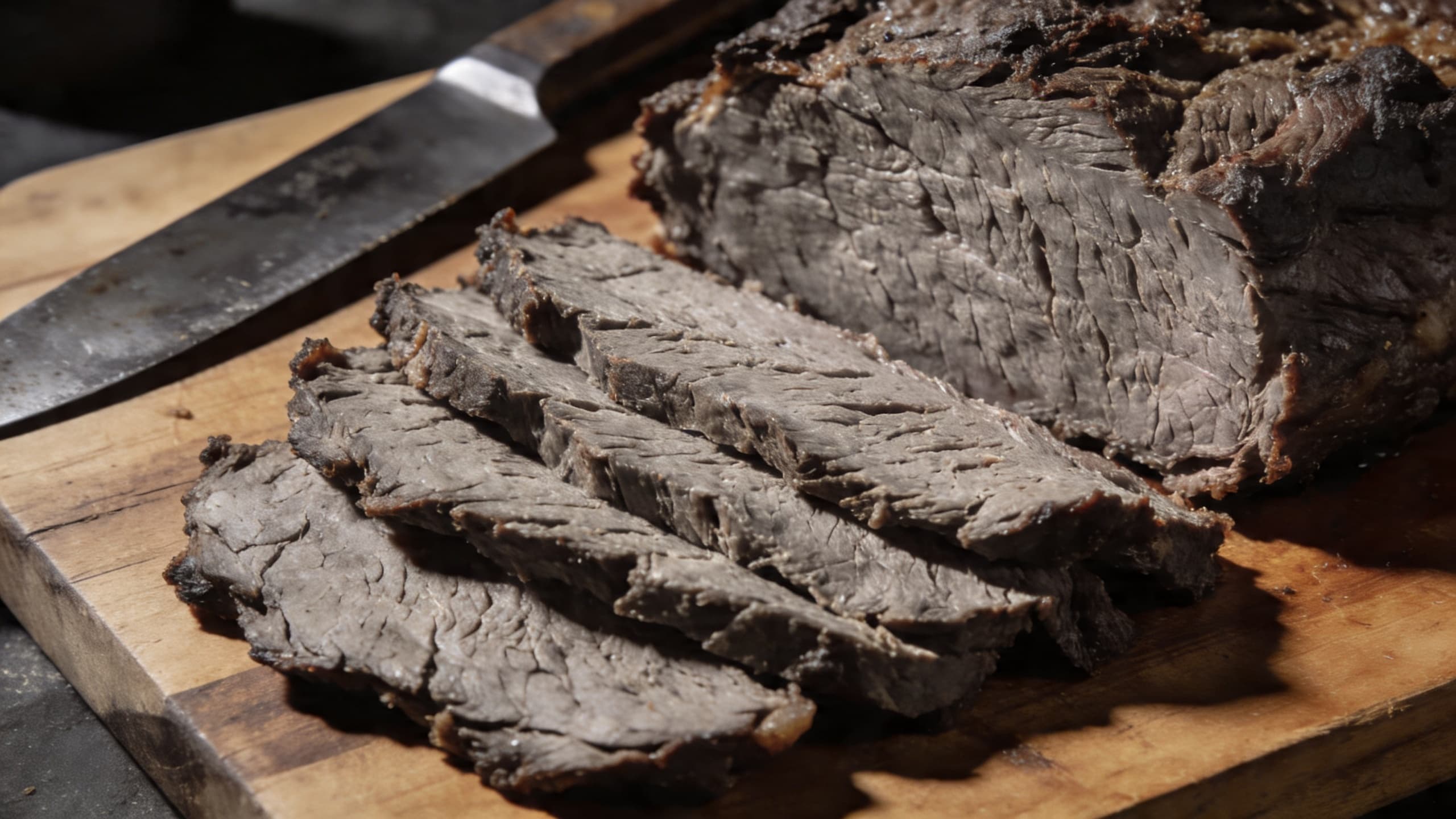
There is a specific, heart-stopping moment in the life of every pitmaster when the knife slides through a brisket flat, and the meat falls away to reveal... absolutely nothing. Just a uniform, ghostly gray slab of protein that looks more like it was boiled in a hospital basement than bathed in the righteous blue smoke of a Post Oak fire.
I’ve been there. In fact, my journey to the "Halo Effect" wasn't a straight line; it was a jagged path of scorched eyebrows and French-Italian fusion experiments that went sideways faster than a broken hollandaise. I remember one particular evening, trying to apply a delicate red wine gastrique reduction to a cold-smoked tri-tip. I was so focused on the viscosity of the sauce that I completely ignored the thermodynamics of the meat. I ended up with a steak that tasted like a campfire but looked like a wet sidewalk.
That "eyebrow-raising mishap" I mentioned? Let’s just say that when you’re trying to "speed up" the combustion of wet hickory chunks with a kitchen blowtorch while leaning too close to the firebox, you learn very quickly that facial hair is a non-renewable resource in the short term.
The Chemistry of the Crimson Halo
Before we fix your pit, we have to talk science. The smoke ring isn't actually "smoke" at all. It’s a chemical reaction between nitrogen dioxide (NO2) and carbon monoxide (CO) from your wood fire and the myoglobin in the meat. When these gases hit the moist surface of the meat, they dissolve and form nitric oxide, which "locks" the pink color of the myoglobin before the heat can turn it gray (metmyoglobin).
The smoke ring is the soul's signature on the meat. It doesn't add flavor, but it tells the world you respected the fire.
5 Pitfalls Sabotaging Your Smoke Ring
If your meat is coming out looking like a rainy Tuesday in London, you’re likely falling into one of these five traps. Here is how we engineer our way back to glory.
1. The "Bone Dry" Surface Error
Nitrogen dioxide is a bit of a diva; it needs a ride to get into the meat. If the surface of your brisket or ribs is bone dry, the gases simply bounce off. In my early fusion days, I thought a dry "pellicle" was the only goal. I was wrong.
Tip: Keep it Tacky Use a spray bottle with a 50/50 mix of apple cider vinegar and water (or a light beef stock) every 45 minutes. Moisture acts as a solvent for the NO2, pulling it deeper into the muscle fibers.
2. The "Room Temp" Myth
You’ve heard it a thousand times: "Let the meat come to room temperature before cooking." In the world of BBQ science, this is heresy. Myoglobin loses its ability to react with nitric oxide once the meat hits about 140°F (60°C). Starting with cold meat gives you a longer window for that reaction to occur.
Pro Tip: Cold Start Protocol Move your meat directly from the refrigerator to the smoker. That extra 30-40 degrees of "climb" time is exactly when the magic happens. It’s the difference between a 1mm ring and a 6mm stunner.
3. The "Dirty Smoke" Disaster
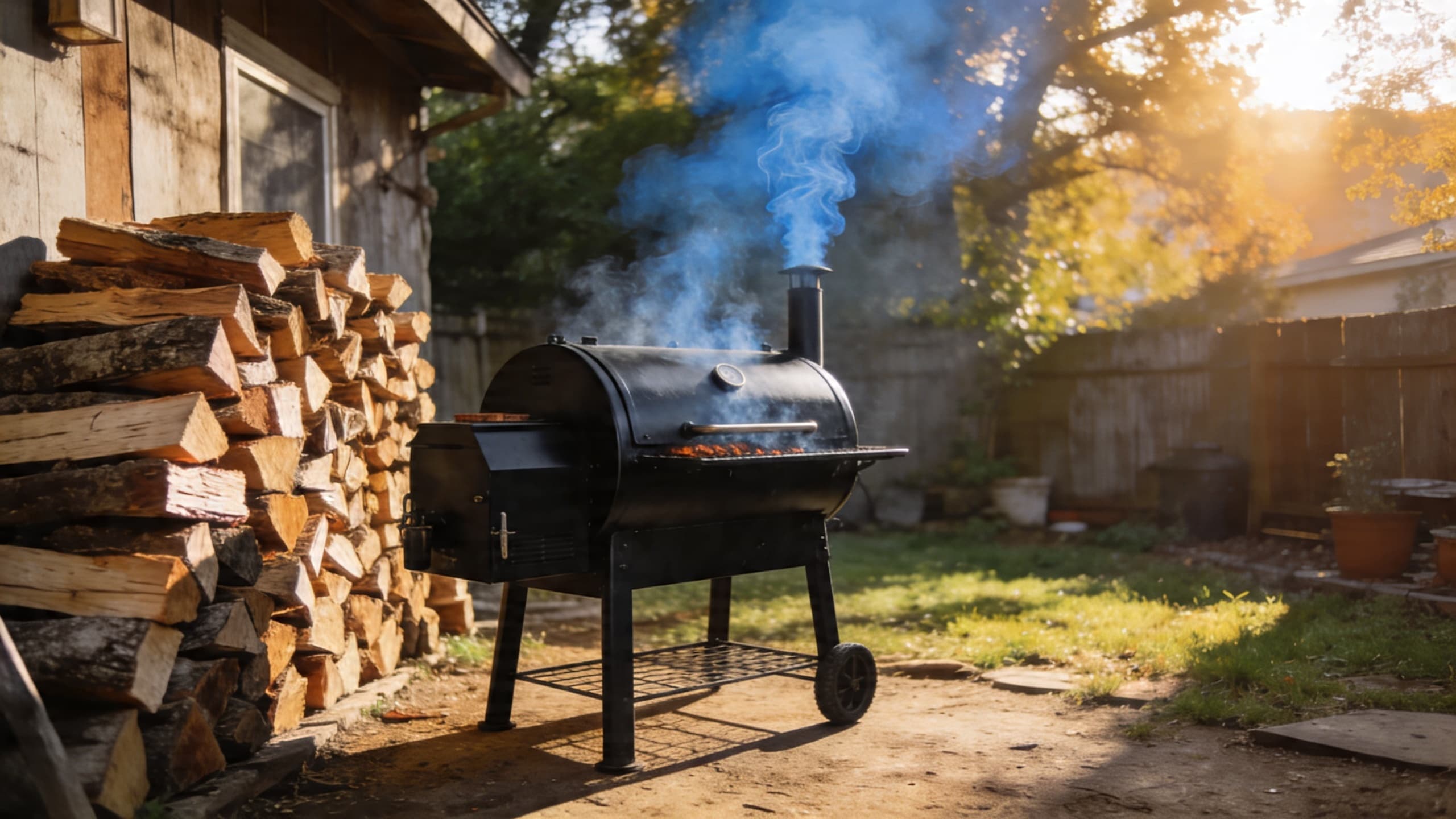
If your smoke is thick, white, and billowing like a Victorian factory, you aren't making BBQ; you’re making creosote-flavored disappointment. Thick smoke actually prevents the gas exchange needed for a ring and leaves a bitter film.
Warning: The Blue Standard You want "thin blue smoke." This indicates complete combustion and the presence of the gases we actually need. If you can’t see through the smoke, your fire is starving for oxygen.
4. Excessive Fat Caps
I love lipid-driven flavor as much as any Michelin chef, but a half-inch of hard fat is an impenetrable fortress. Nitrogen dioxide cannot penetrate fat to reach the myoglobin-rich muscle underneath.
Key Takeaway: Precise Trimming Trim your fat cap to an even 1/4 inch. This is enough to baste the meat as it renders but thin enough for the smoke gases to migrate through and create that iconic pink border.
5. Using the Wrong Fuel Source
Not all wood is created equal. If you’re using kiln-dried wood chips from a big-box store, they often lack the moisture and organic compounds necessary to produce significant nitrogen dioxide.
Did You Know? Briquettes actually produce more nitrogen dioxide than pure lump charcoal because of the additives used to bind them. If you’re struggling for a ring on a ceramic grill, try mixing in a few high-quality briquettes with your lump charcoal and fruitwood.
The Fusion Finish
In my kitchen, we don't just stop at the ring. Once you've engineered that perfect 1/4-inch crimson halo, that's when the French-Italian technique comes out to play. Imagine that perfectly smoked brisket, sliced thin, and served over a bed of taleggio-infused polenta with a drizzle of huckleberry gastrique.
The smoke ring provides the visual "pop" that signals high-end execution, while the acidity of the gastrique cuts through the heavy lipids of the beef. It’s a high-performance calibration of flavor and aesthetics.
Precision is the foundation, but the smoke is the soul. Don't settle for gray.
Summary Checklist for Your Next Burn:
- Cold Meat: Straight from the fridge to the rack.
- Moisture: Spritz regularly to keep the surface receptive.
- Airflow: Ensure the fire is breathing so the smoke stays blue.
- Trim: Don't let a thick fat cap block your progress.
- Patience: The ring is set in the first 3 hours; don't rush the start.
Keep it classy, keep it smoky. And for the love of all things culinary, watch your eyebrows.