

7 Sneaky Ways Acidity Can Sabotage Your Smoked Meats—And the Fusion Fixes to Save Your Bark
Precision pH Management for the Modern Pitmaster

Let’s have a moment of professional honesty: most backyard pitmasters treat acidity like a blunt instrument rather than a scalpel. They douse a beautiful brisket in a vinegar-heavy spritz or soak a delicate pork shoulder in a citrus marinade until the protein structure looks like it went through a paper shredder. I know this because I’ve been that guy.
Early in my career, before the Le Cordon Bleu discipline took hold, I thought "more tang" equaled "more flavor." I once served a smoked leg of lamb that had been marinating in a highly acidic balsamic reduction for 24 hours. The result? A grainy, mushy mess that had the structural integrity of wet cardboard. My mentor at the time didn't even taste it; he just pushed it back at me and said, "Jimbob, you didn't cook this, you chemically dissolved it." That was the day I realized that pH balance is the invisible hand that either elevates your BBQ to Michelin status or sends it straight to the bin.
1. The "Mushy Protein" Trap: When Marinating Goes Wrong
The most common way acidity sabotages your meat is through over-denaturing. When the pH level of your marinade drops too low (meaning it’s too acidic), it doesn't just "tenderize" the meat; it begins to break down the connective tissue and muscle fibers into a slurry.
In French-Italian fusion, we value texture as much as taste. If you're smoking a delicate cut like a picanha or a pork loin, a long soak in lime juice or cider vinegar is a death sentence.
Tip: Limit acidic marinades to 2-4 hours for tough cuts and under 30 minutes for delicate proteins. If you want the flavor without the structural collapse, use zest instead of juice.
2. The Smoke Barrier: pH and the Smoke Ring
Here is a bit of food science for your next dinner party: smoke absorption is highly dependent on the surface pH of the meat. If your meat is too acidic on the outside—perhaps from a heavy vinegar spritz applied too early—it can actually inhibit the formation of the nitrogen dioxide reaction that creates that beautiful pink smoke ring.
I learned this the hard way during a high-stakes catering gig. I was trying to be "innovative" by spritzing with a pure Verjus (unripe grape juice). The meat tasted like a dream, but it looked ghostly gray. No ring. No visual soul.
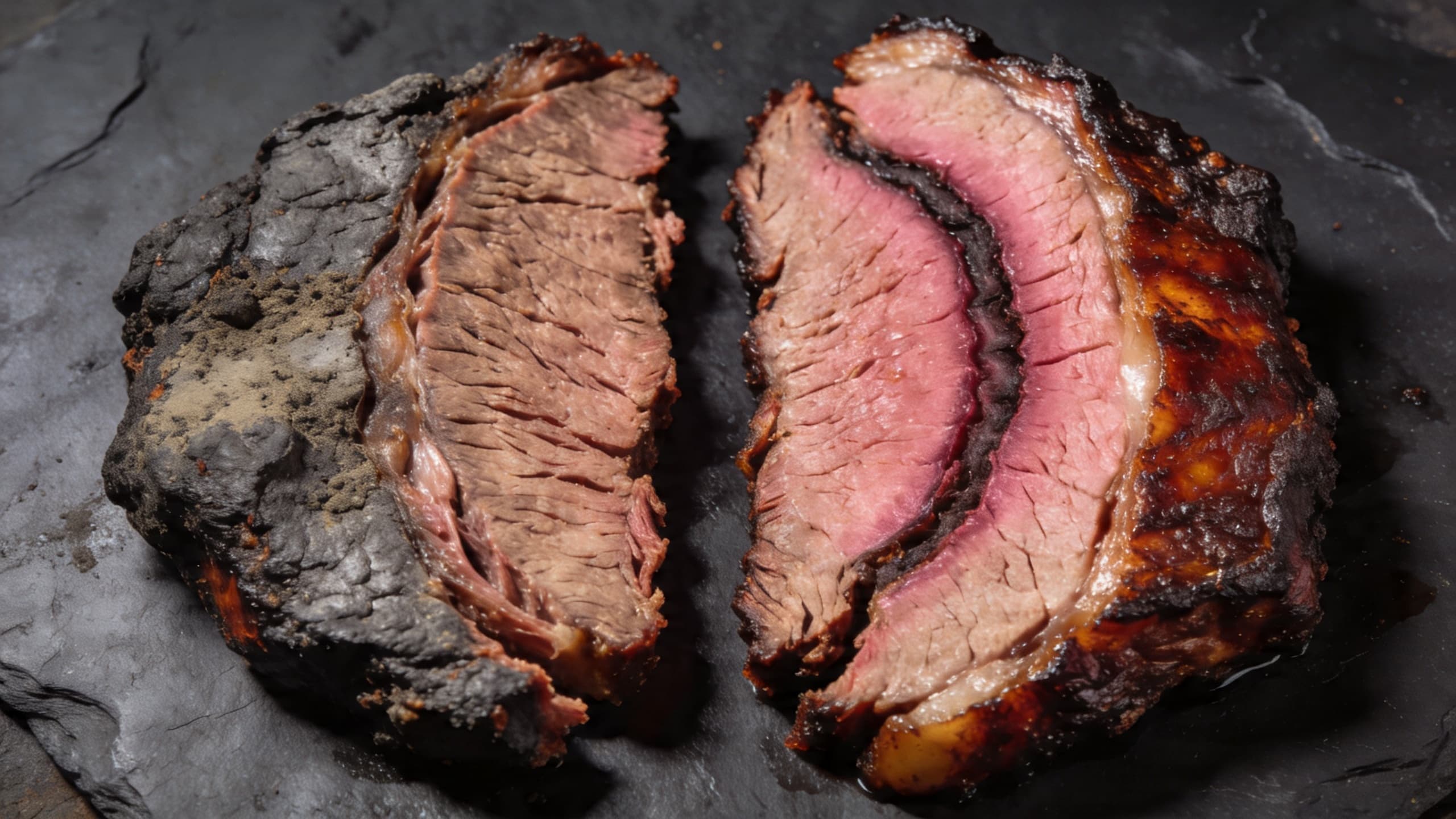
3. The Bitter Bark Syndrome
Acidity, when subjected to 12 hours of smoke, can undergo a transformation. Specifically, certain acids in fruit juices can concentrate and turn unpleasantly bitter or metallic when they interact with the phenols in wood smoke.
Instead of a bright, zingy finish, you end up with a bark that tastes like a copper penny. The fix? The Italian "Agrodolce" approach. You must balance that acidity with a high-viscosity sugar component—think honey or a reduced fig balsamic—applied only in the final stages of the cook.
Great cooking is about technique, not complexity. Acidity should be a highlight, not a heist.
4. The Emulsion Collapse in Sauces
If you’re attempting a fusion sauce—perhaps a smoked lemon-butter emulsion (Beurre Blanc) to go over wood-fired trout—adding your acid too quickly or at the wrong temperature will break the fat bonds instantly.
I have a scar just above my left eyebrow from a pressurized siphon that exploded because I tried to force a highly acidic, cold-smoked vinaigrette into a warm fat base. It wasn't my finest moment, but it taught me that temperature and pH must be introduced like a slow dance, not a wrestling match.
5. The Dehydration Effect
While we often think of acid as "juicy," it can actually have a dehydrating effect on the surface of the meat if applied too early in the rub. Salt and acid together draw moisture out of the muscle cells through osmosis. If you apply a heavy "wet rub" with vinegar and let it sit overnight, you aren't infusing moisture; you're curing the meat.
6. The "Metallic" Interaction with Foil
If you’re a fan of the "Texas Crutch" (wrapping your meat in foil), be extremely careful with acidic liquids inside that wrap. High acidity reacts with aluminum. Not only does it degrade the foil, but it can impart a literal tinny taste to your expensive Wagyu brisket.
Pro Tip: If you must use an acidic braising liquid during the wrap, use butcher paper instead of foil. It’s breathable and non-reactive, preserving the integrity of your bark.
7. The Late-Stage Saboteur
The final way acid ruins BBQ is through timing. Many people spritz from the moment the meat hits the grate. This cools the surface and prevents the Maillard reaction (browning) from occurring.
The French-Italian Fix: Precision Balancing
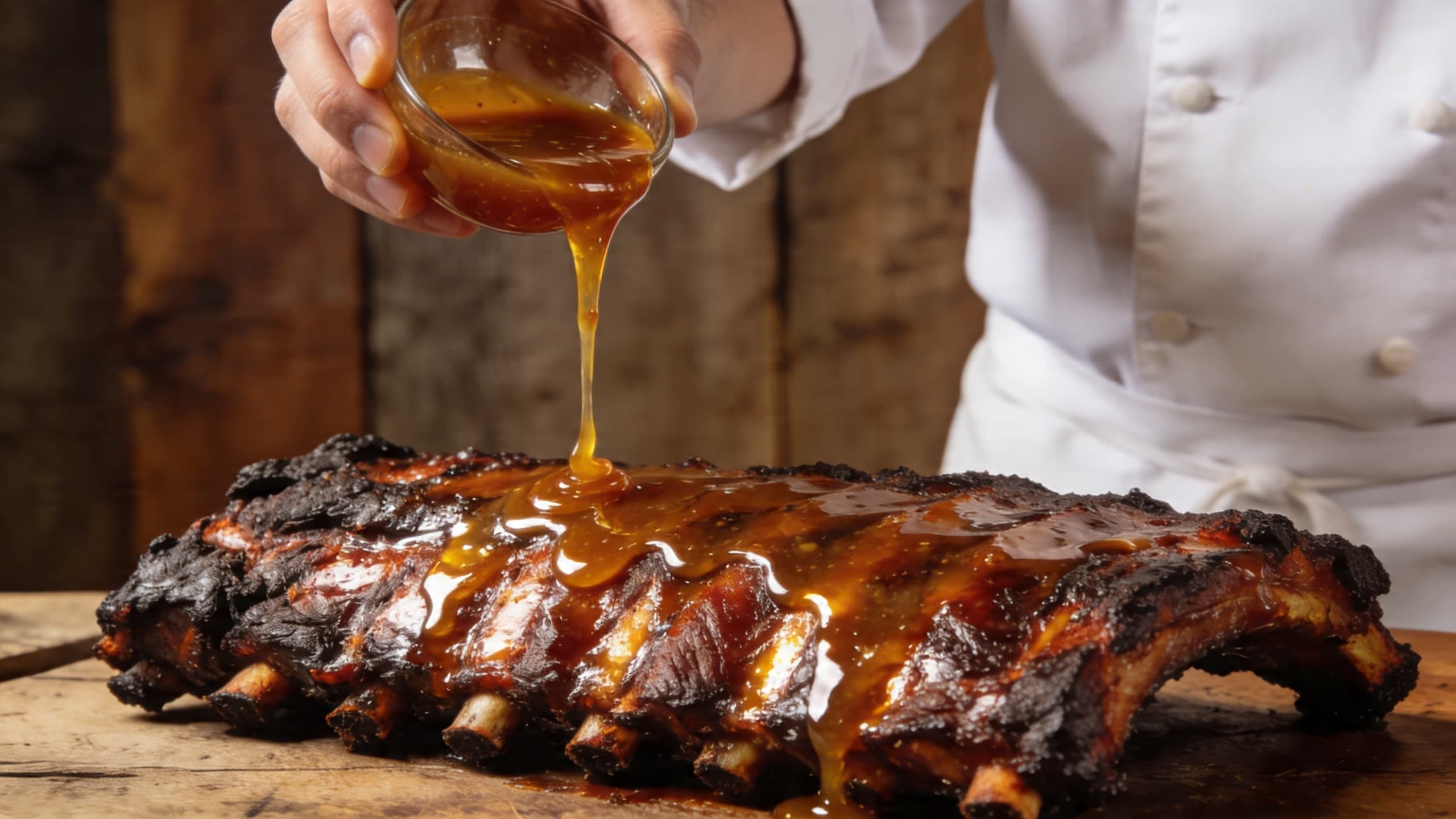
To fix these issues, we look to the mother sauces. Instead of raw vinegar, I use a Gastrique—a French technique where sugar is caramelized before being deglazed with vinegar. This rounds out the sharp edges of the acid, giving you all the brightness without the chemical aggression.
- The 3:1 Rule: For every part acid in your glaze, use three parts fat or sugar to buffer the pH.
- The Finish, Not the Start: Apply your acidic components in the last 20% of the cook time.
- The Emulsion Buffer: Incorporate acids into a fat-heavy base (like a garlic-herb butter) to protect the meat fibers.
Key Takeaway: Acidity is the "brightness" of a dish, but in the pit, it's also a chemical reactant. Respect the pH, and your smoke ring will respect you back.
#bbqscience #culinarytechnique #frenchitalianfusion #pitmastertips