

6 Hilarious French-Italian Fusion Fails I've Survived (And the Exact Techniques to Dodge Them Forever)
How to avoid the most common (and embarrassing) technical blunders in high-end BBQ fusion.

The line between a Michelin-starred fusion masterpiece and a culinary crime scene is thinner than a sheet of hand-rolled pappardelle. When you're trying to marry the rigorous reduction techniques of a French saucier with the rustic soul of Italian pasta and the primal intensity of an offset smoker, things can go sideways faster than a grease fire in a small galley.
I’ve spent fifteen years recalibrating the intersection of wood-fire and fine dining, and trust me, my path was paved with broken emulsions and "experimental" briskets that tasted more like a campfire than a delicacy. If you’re ready to stop guessing and start mastering the structural integrity of high-end fusion, let’s dissect the six most hilarious (and painful) fails I’ve survived—so you don't have to.
1. The "Syrup" Situation: Over-Reduced Gastriques
In my early days, I thought "more reduction equals more flavor." I once spent six hours on a Smoked Cherry and Balsamic Gastrique intended for a duck breast. By the time I plated, the viscosity was so high it essentially turned into artisanal dental cement. The guests weren't eating; they were performing extractions.
The fix? You have to account for the "carry-over thickening." As a sauce cools on a room-temperature plate, its viscosity increases significantly.
Tip: Always pull your reduction off the heat when it’s one shade thinner than your desired final result. Use the "spoon test": it should coat the back of a cold metal spoon but still flow with a slight nudge.
2. The Smoke-Logged Pasta: Overstaying the Infusion
There is a dark temptation to smoke everything. I once tried to "cold-smoke" fresh fettuccine dough. I left it in the chamber for forty minutes, thinking I’d get a subtle woody note. Instead, I produced pasta that tasted like an ashtray wrapped in semolina. The delicate wheat profile was completely obliterated by creosote.
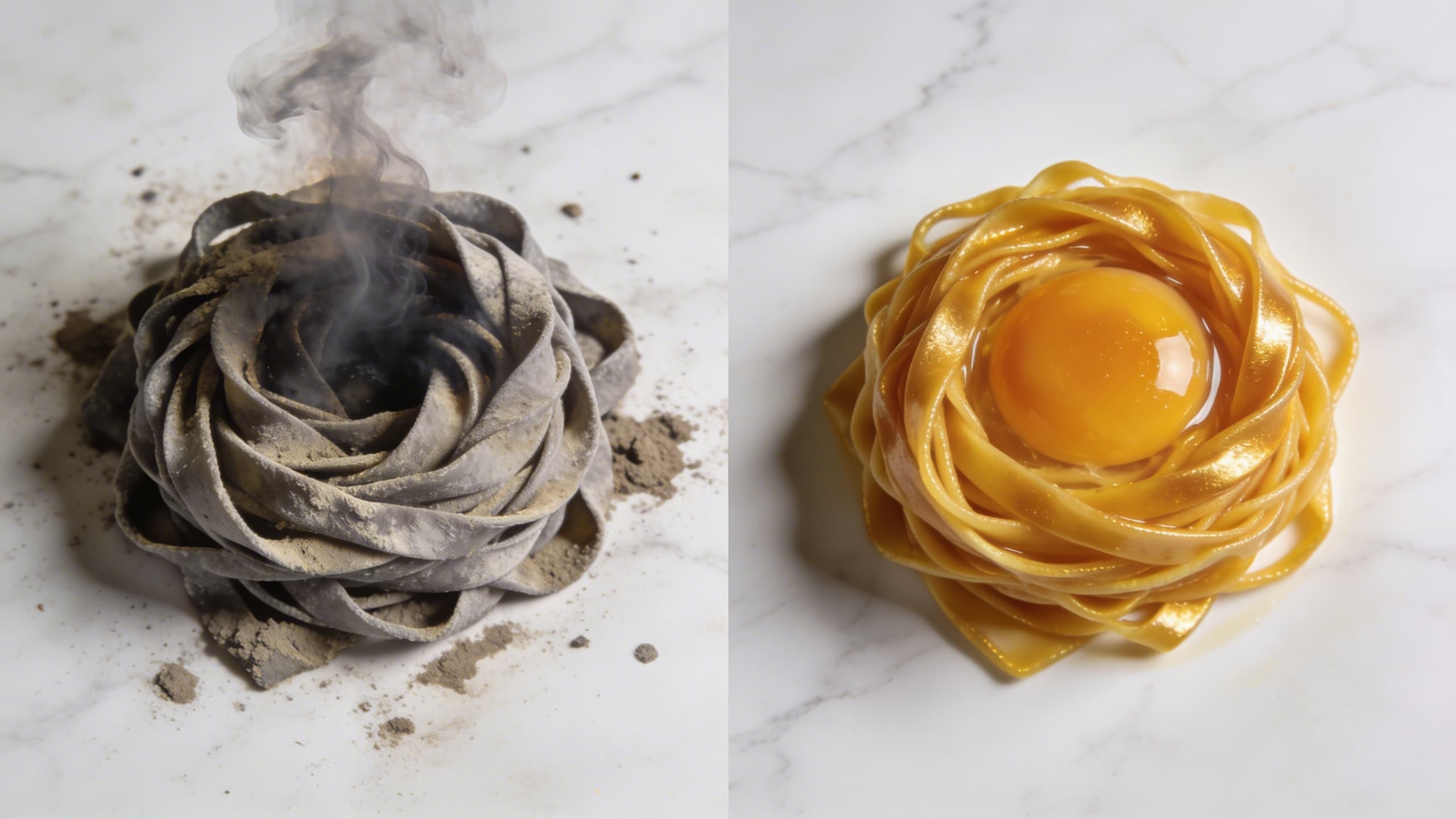
Pro Tip: When working with porous starches like pasta or rice, smoke the fat or the liquid, not the dry ingredient. Smoke your butter or your cream for 10-15 minutes max, then emulsify that into your sauce. This gives you a "clean" smoke profile without the bitterness.
3. The "Rubber Band" Gnocchi: Heat Control Chaos
French technique dictates a delicate touch; BBQ demands high-velocity heat. When I first tried to finish gnocchi in a wood-fired oven at 700°F, I created literal bouncing balls. The exterior carbonized before the interior could even think about fluffing up.
Great fusion isn't about smashing two styles together; it's about respecting the thermal limits of your ingredients.
4. The Mismatched Smoke Timings
Nothing kills a French-Italian vibe faster than a protein that’s ready three hours before the risotto. I once had a beautiful 48-hour short rib finish way ahead of schedule. I tried to "hold" it in a warm oven, and by the time the saffron risotto hit the plate, the rib had the structural integrity of wet cardboard.
Key Takeaway: Use a high-precision thermometer like a Thermapen, but more importantly, understand your "stall" times. If your meat finishes early, wrap it in butcher paper and a heavy towel, then place it in a dry cooler. It will hold temperature and improve in texture for up to 4 hours.
5. The Emulsion Explosion: Acid vs. Fat
French cooking loves butter; Italian cooking loves acid (vinegar, lemon, wine). In a moment of madness, I tried to mount a heavy lemon-reduction with cold smoked lard. Because the acid wasn't properly tempered, the emulsion broke instantly, leaving me with a pool of yellow water and floating blobs of smoky fat. It looked like a science experiment gone wrong.
Warning: Never add high-acid reductions directly to cold fats. Whisk your acid into a small amount of warm stock first to create a "bridge," then slowly emulsify your fats into that mixture.
6. The "Buried" Truffle: Flavor Overload
I once thought putting truffle oil into a heavy BBQ rub was a "Michelin-star moment." It wasn't. The heavy hickory smoke fought the truffle, and the result was a flavor profile that can only be described as "expensive dirt."
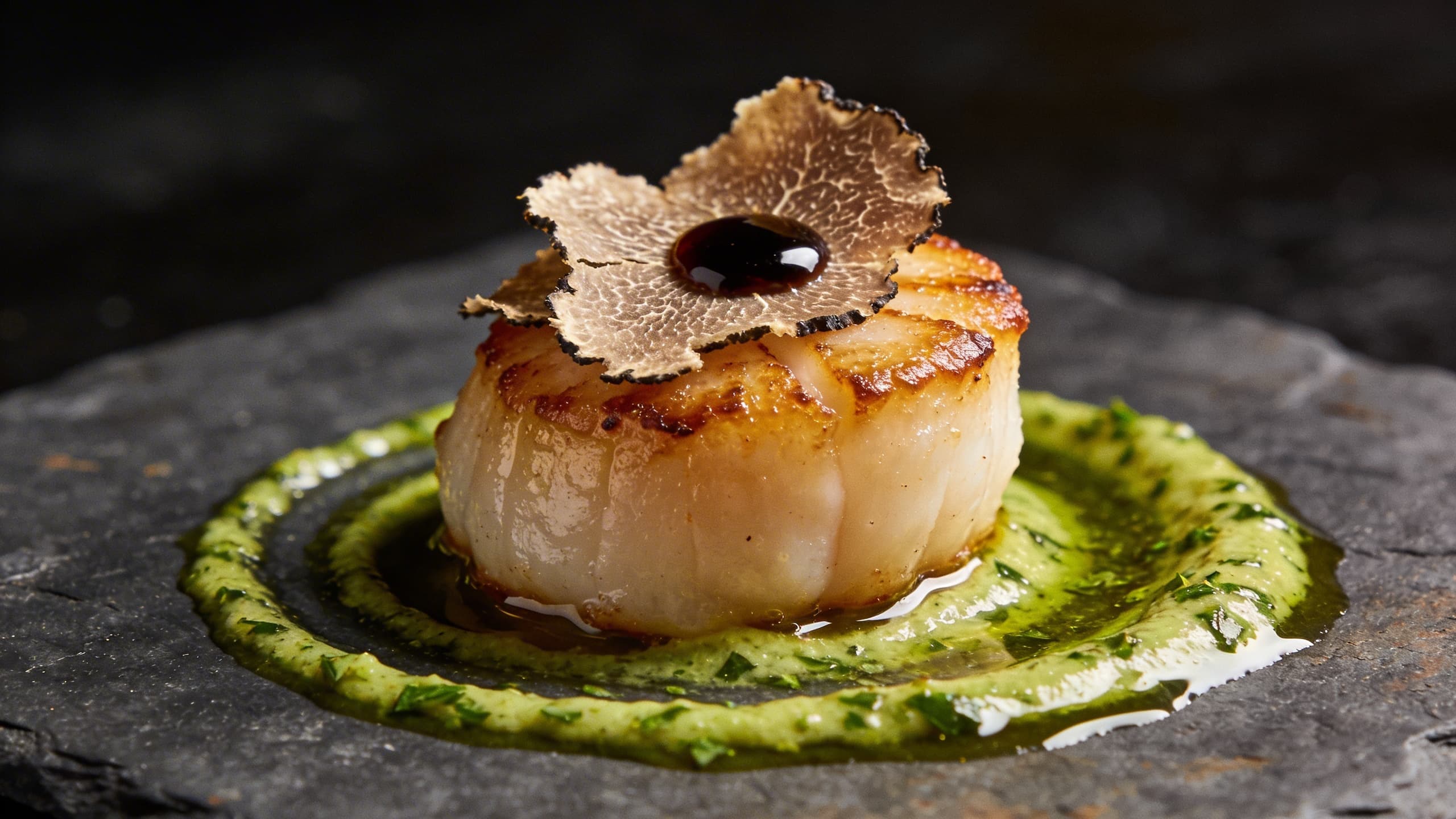
Pro Tip: Truffles and high-intensity smoke are natural enemies. If you want that earthy depth, use a very neutral wood like Alder or Fruitwood, and save the truffle for the very last second as a fresh shaving—never cook it into the pit.
Final Thoughts on Fusion Precision
The pit doesn't lie, and neither does a broken sauce. Mastering this style requires you to be part scientist and part pitmaster. Don't fear the butter, but definitely fear the over-reduction. Keep it classy, keep it smoky, and for the love of all things holy, keep your gnocchi out of the 700-degree pizza oven.
Key Takeaway: Precision technique is the foundation, but a sense of humor and a deep smoke ring are the soul of great food. If you fail, laugh, take a note, and recalibrate.