

5 Sneaky Saboteurs Ruining Your Wood-Fired Sauces—and the Dead-Simple Fixes I've Battle-Tested
Precision Technique Meets Live-Fire Soul

Most home cooks treat wood-fired cooking like a blunt instrument—throw it on the grates, hope for a char, and douse it in something bottled to hide the evidence. But when you’re operating at the intersection of a Parisian saucier’s precision and a pitmaster's soul, the sauce isn't an afterthought; it’s the thermodynamic bridge between the smoke and the plate.
I’ve spent fifteen years obsessing over the viscosity of a reduction while an offset smoker roared in the background, and let me tell you: the wood fire is a jealous mistress. It doesn't just cook your food; it chemically alters your sauces in ways a stovetop never could. If you aren't careful, that elegant French-Italian fusion you’re aiming for ends up tasting like a campfire's gym socks.
1. The Carbon Trap: Dirty Smoke vs. Clean Flavor
The biggest saboteur isn't your recipe; it's your fire management. In French cuisine, we prize the purity of a fonds de veau. In the pit, we prize the "blue smoke." When you combine them, any instability in your fire leads to creosote—that bitter, acrid soot—hitching a ride on the fats in your sauce.
Warning: If your smoker is belching thick white smoke, keep your sauce pans far away. That white smoke is loaded with incomplete combustion products that will turn a delicate cream-based sauce into a bitter mess within minutes.
The Fix: Wait for the "Thin Blue." Only introduce your sauce components to the heat when the fire is running hot and efficient. You want the flavor of the wood's soul, not its exhaust.
2. The Evaporation Escalation
In a professional kitchen, we control reductions with surgical heat. In a wood-fired environment, the radiant heat is often three times more intense. I once tried to hold a leek velouté near the firebox of my offset. I turned my back for two minutes to check a brisket, and I returned to find a salty, gummy paste that looked more like industrial caulk than a five-star sauce.
I’ve seen grown chefs cry over a broken emulsion, but nothing matches the silent horror of watching a $40 reduction turn into wood-fired taffy because you underestimated the draft.
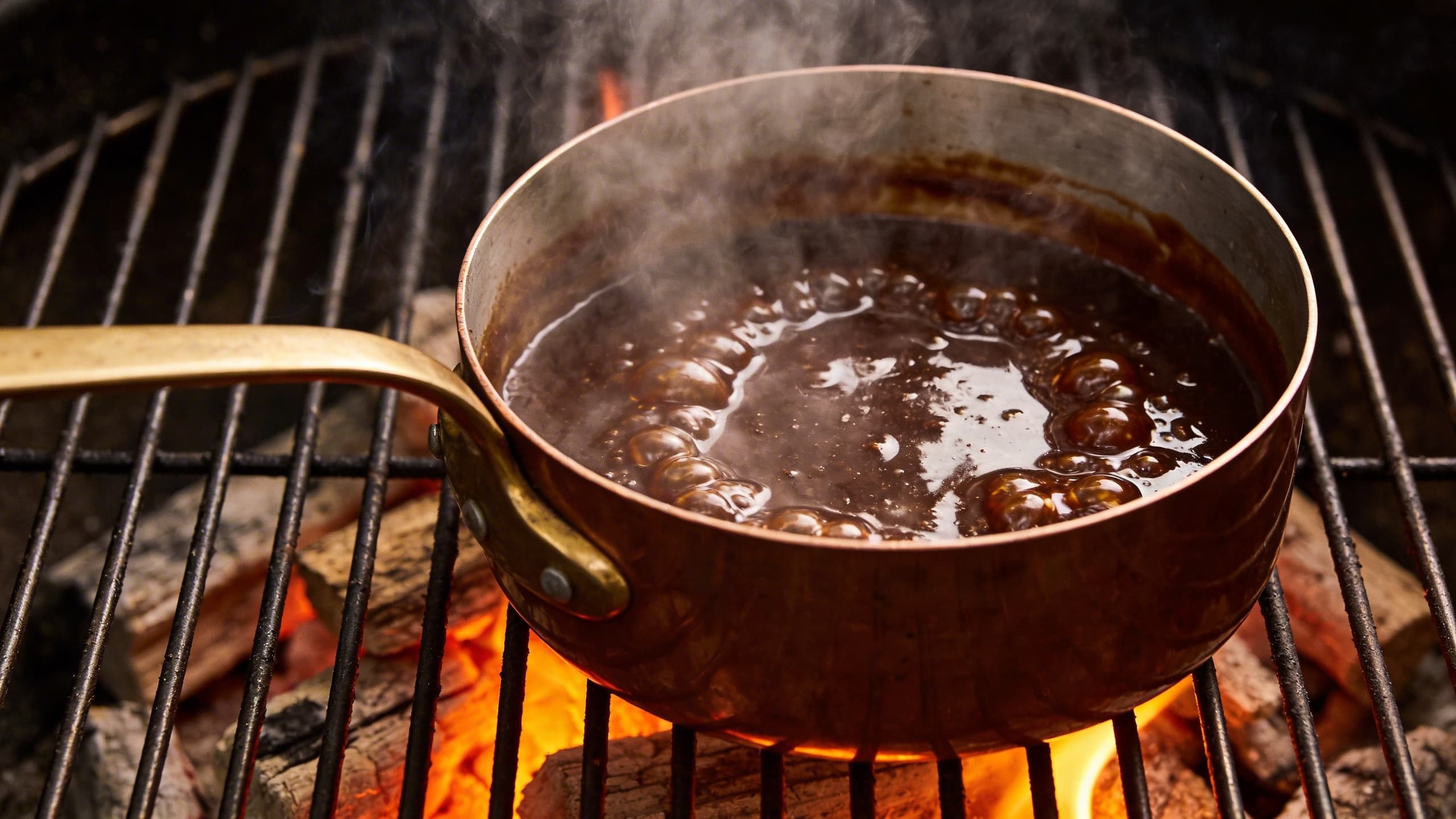
The Fix: Use the "Zone Defense." Never place your sauce directly over the hottest coals. Use the ambient heat of the hearth or the cool side of the smoker. If you're reducing, do it 20% faster than you think you need to, and always have a "rescue liquid" (a splash of clean stock or room-temp water) ready to kill the reduction instantly.
3. The Emulsion Shatter (The Thermodynamic Cliff)
French-Italian fusion relies heavily on butter emulsions—think Beurre Blanc meets a rich Marcella Hazan style tomato base. These are delicate molecular structures. Wood fires provide "wild heat" that fluctuates. If that sauce hits 175°F (79°C), the protein solids in the butter will separate, and you’ll be left with a pool of yellow oil and a sad, grainy sediment.
Pro Tip: When finishing a sauce with cold butter (monter au beurre) in a wood-fired environment, do it entirely off the heat. The residual heat of the pan and the smoke-kissed liquid is more than enough to achieve that glossy, high-viscosity finish.
4. The Ash Infusion (The Unwanted Texture)
Precision plating and wood ash do not mix. It sounds obvious, but the draft created by a wood fire is a literal wind tunnel for fine grey ash. Nothing ruins the "Michelin moment" faster than a gritty texture in a silky reduction.
The Fix: The "Lid Logic." If you aren't actively trying to infuse smoke flavor into the liquid, keep a lid on it. If you are looking for that smoke kiss, use a wide, shallow pan to increase surface area, but only for 10-15 minutes max. Anything longer and you're just collecting debris.
5. The Acidity Vanishing Act
Smoke is naturally "heavy" and "sweet" (thanks to the vanillin in the wood). It masks acidity. I’ve balanced sauces to perfection in the kitchen, only to have them taste flat and flabby once they’ve spent time in the smoker.
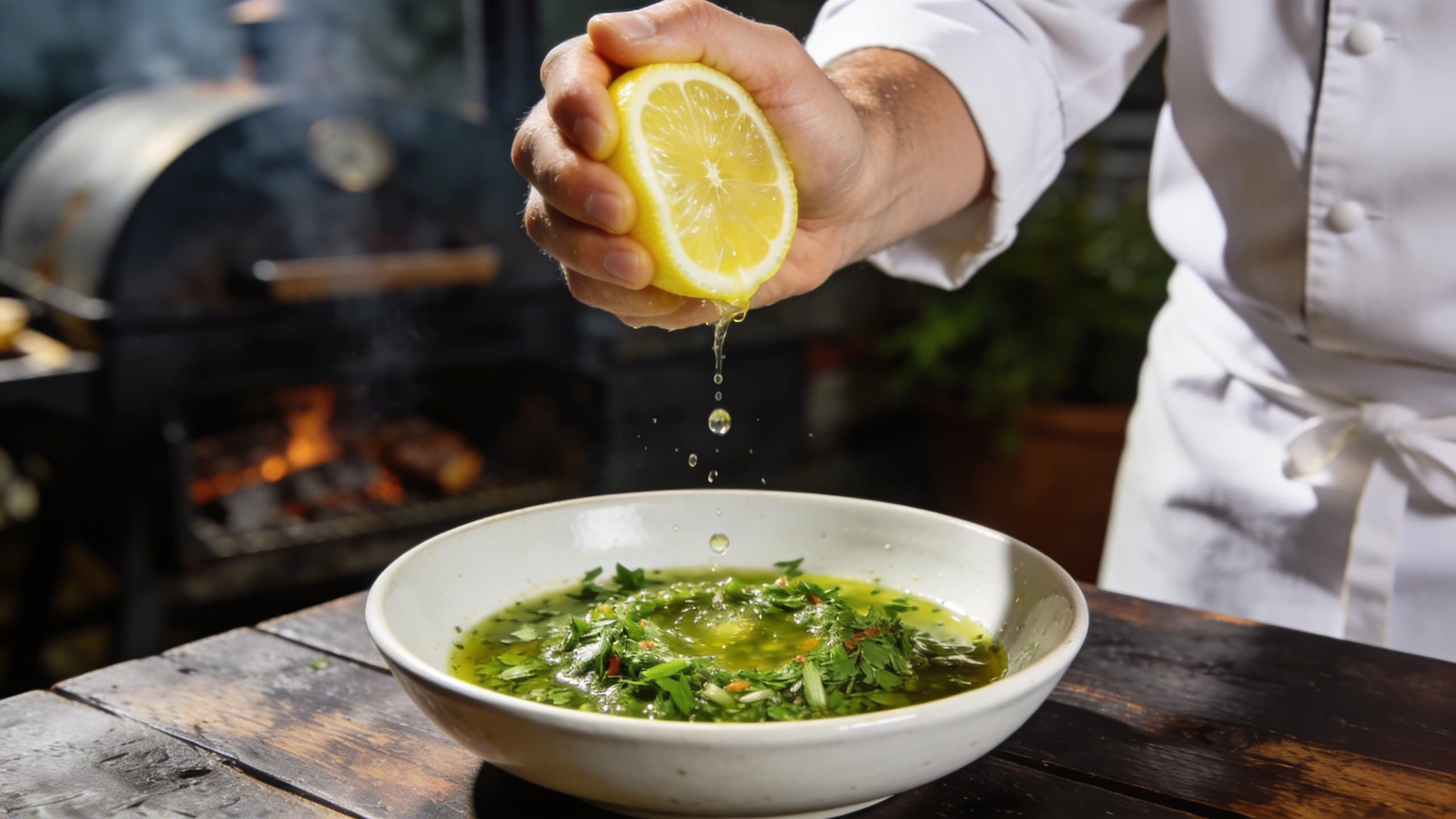
Key Takeaway: Wood-fired sauces require an "Acidity Overdrive." You need to punch up the lemon juice, verjus, or high-quality vinegar by about 15-20% to cut through the heavy phenols of the smoke.
The Seasonal Superfood Perspective: Smoke as a Nutrient Lock
While we’re talking technique, let’s talk nutrition. We often think of BBQ as "heavy," but wood-fired saucing is a secret weapon for seasonal superfoods. By using the high-intensity, short-duration heat of a wood fire to blister seasonal peppers or tomatoes for a coulis, you’re caramelizing natural sugars without the need for added refined fats.
You’re getting deep, complex flavors from the wood itself, which means you can dial back the salt and heavy creams. A wood-fired roasted red pepper sauce, emulsified with just a touch of high-quality olive oil and finished with fresh oregano, provides a massive hit of Vitamin C and antioxidants with a flavor profile that feels like a cheat meal.
Keep it classy, keep it smoky, and for the love of all things holy, keep your velouté away from the firebox.
#bbq #saucescience #frenchnewave #pitmastertips