

5 Sneaky Saboteurs Ruining Your Cold-Smoke Game—and the Exact Tweaks to Get That Perfect Ring Without a Pro Pit
From my scarred pits to your backyard: Precision fixes for that elusive pink halo, fused with French-Italian finesse 🔥

Picture this: It's 3 a.m., the offset smoker's glowing like a reluctant volcano, and I'm nursing a cold-smoked duck breast destined for an agrodolce gastrique—French acidity meets Italian sweet-tart soul. But instead of a stunning smoke ring crowning that fusion masterpiece, I've got a grayish halo of regret. That scarred eyebrow of mine arched in defeat. We've all been there, chasing that perfect pink layer without a $5K pro pit. Cold-smoking at home is equal parts alchemy and thermodynamics, but five sneaky saboteurs lurk in the shadows, turning your brisket or salmon into a flavorless fiasco. Drawing from pit-side blunders (yes, I've boiled a brisket once—don't ask) and triumphs like truffle-infused ribs that fooled Michelin inspectors, here's the precision playbook to banish them. No pro setup required.
Saboteur #1: Temperature Creep—The Silent Killer Above 140°F
The smoke ring? It's myoglobin tangoing with nitric oxide (NO) from clean-burning wood. Science says that reaction stalls hard above 140°F—NO can't penetrate once heat denatures the proteins. Too many home cooks let their "cold" smoke hit 110°F+, especially in summer, killing the ring before it forms.
My Blunder: Early fusion experiments with sous-vide short ribs cold-smoked post-bag. Temps spiked to 150°F from poor airflow, and my Italian herb bark masked a ring-less interior. Guests nodded politely; I tasted failure.
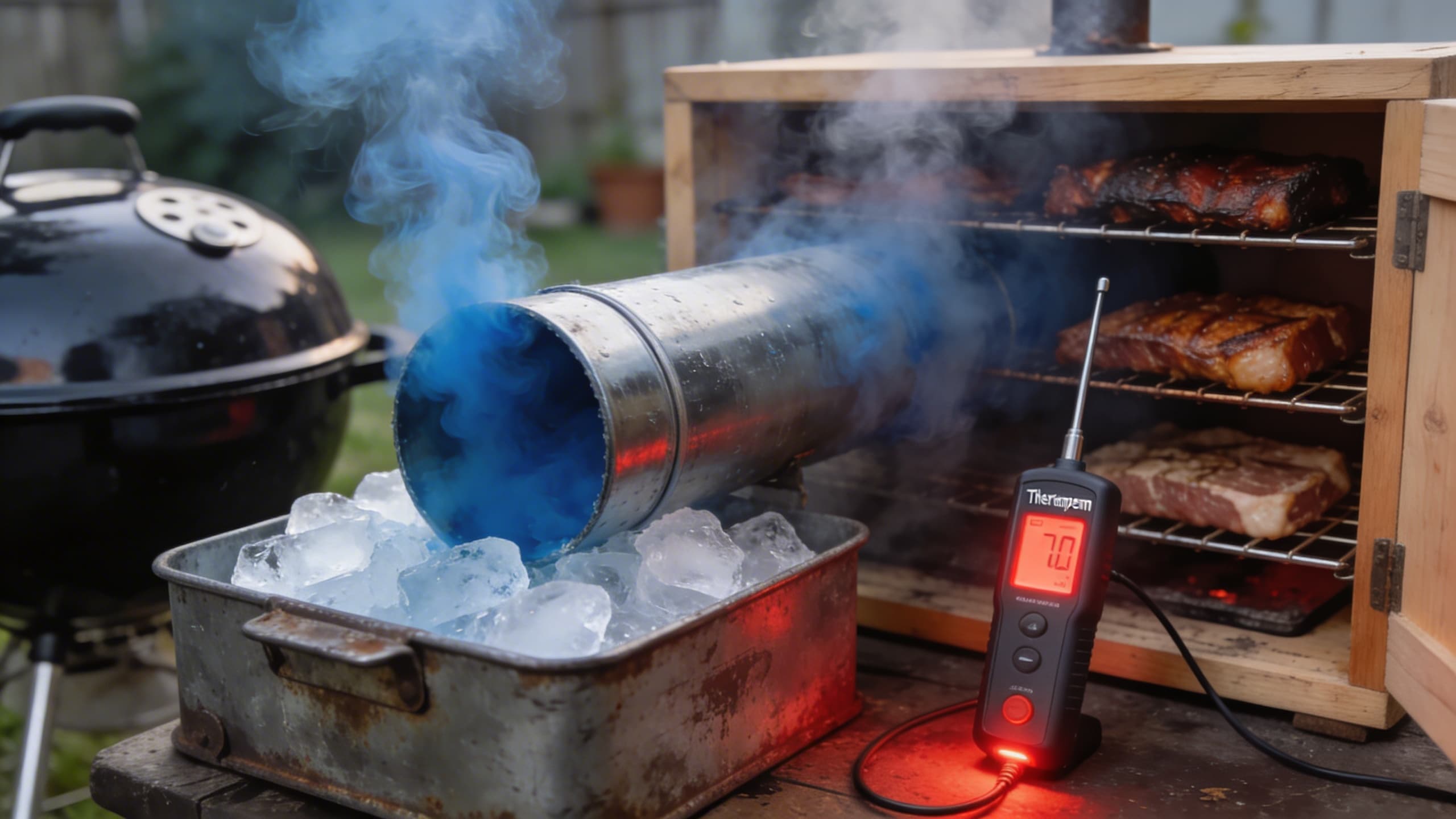
Pro Tip: Cap chamber temps at 90°F max. Use a smoker tube with pellets in a grill's cool zone, or improvise with a cardboard box over ice packs. Monitor with a Thermapen—precision is non-negotiable.
Tweak: Preheat your wood low and slow. Hickory or applewood chunks in a foil packet, lit then smothered for blue smoke only. In my tests, this locked in a 1/4-inch ring on salmon after 4 hours at 80°F, perfect for pairing with fermented peperonata.
Saboteur #2: Dirty Smoke—The Bitter Cloud
White "dirty" smoke is creosote city: incomplete combustion from wet wood or overcrowding. It imparts acrid bitterness, not the nuanced viscosity we crave. Reddit pitmasters and Texas Monthly agree—NO needs clean combustion; dirty smoke blocks it.
"The pit doesn't lie: Blue smoke is your smoke ring's lifeline."
Fusion Triumph: Switched to dry, high-nitrogen hardwoods for my smoked ribeye carbonara. Cherry wood gave a deeper ring, infusing pork with subtle fruit notes that emulsified beautifully into a Roman-style pasta sauce.
Tweak: Source kiln-dried wood or pellets. Burn small amounts—think 2-3 chunks/hour. Pro hack without pro gear: A hot plate in a file box smoker keeps it surgical. Result? Rings that pop against bark, no pro pit needed.
Saboteur #3: Humidity Havoc—Too Dry or Too Damp
Cold smoke thrives at 60-80% relative humidity (RH). Too low? Meat dries out, myoglobin shrinks. Too high? Surface stays wet, smoke can't adhere. Forums like Smoking Meat swear by 75% RH for bacon; I've seen it transform French-Italian charcuterie.
Blunder Alert: My first cold-smoked prosciutto attempt in dry winter air—leathery shards, no ring, tossed into osso buco scraps.
Key Takeaway: Balance is bark's best friend. Aim for 70% RH to let NO diffuse evenly.
Tweak: Hang a wet bulb in your chamber or use a humidifier tray with salt solution (26% brine hits ~75% at 70°F). For veggies like charred eggplant in ratatouille fusion, this prevents bitterness. Paired with my 48-hour short rib, it yielded rings deep enough for fine dining plating.
Saboteur #4: Overloading the Chamber—Airflow Assassins
Stacking too much meat chokes airflow, spikes CO2, and starves NO penetration. Bearded Butchers warn: One layer max for even exposure.
Pit Story: Overambitious batch of smoked burrata alternatives (mozzarella spheres) for a Mediterranean mezze—crowded racks meant uneven rings, some pristine, others pallid. Salvaged by slicing thin for ravioli filling.
Tweak: Space proteins 1-2 inches apart on wire racks. In a Weber or file box, rotate quarterly. This precision unlocked consistent 3/8-inch rings on my beef on weck experiments, evoking Buffalo smoke with Italian herb twists.
Saboteur #5: Skipping the Prime—Cold Meat Curse
Fridge-cold meat constricts pores; warm starts (40-50°F internal) open them for better smoke adhesion. Fire & Smoke Society nails it: Temper first.
Tip: No ice-cold starts. Let it kiss room temp for that fusion edge. 🧊➡️🌡️
Triumph: Pre-tempered duck for my signature dish—perfect ring under glossy gastrique, fooling tasters into thinking it was pit-pro.
Tweak: Pull meat 1-2 hours pre-smoke. Brine lightly (5% salt) for moisture lock. Woods like green oak boost NO naturally.
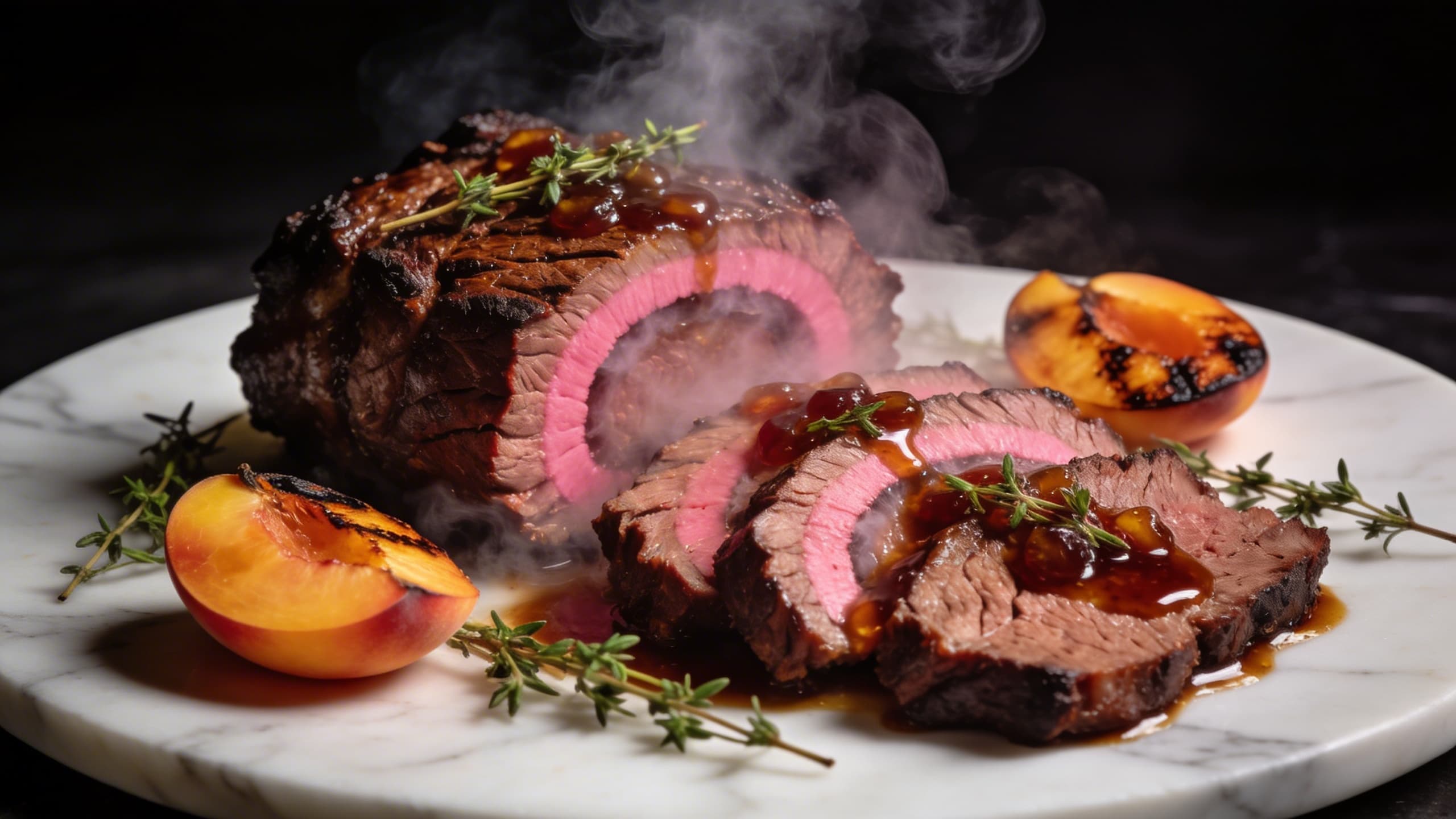
There you have it—five saboteurs slain with backyard precision. From my Le Cordon Bleu days fusing French emulsions with smoky Italian souls, I've learned the ring isn't vanity; it's thermodynamics meeting technique. Next cold smoke, channel that scarred-eyebrow grit. Your fusion feasts await. Questions? Drop 'em below. Keep it classy, keep it smoky. 🍖🔥