

5 Sneaky Saboteurs of Perfect Knife Skills (And the Drills to Fix Them)
How to stop hacking your ingredients and start engineering your cuts.

If your prep station currently resembles a low-priority crime scene of jagged onions and bruised herbs, we need a tactical intervention in your ergonomics. Precision isn't just a buzzword I picked up in a Parisian basement; it’s the difference between an emulsion that holds and a vinaigrette that surrenders. In the high-stakes collision of French finesse and Italian soul, your knife is the conductor’s baton—and most of you are playing out of tune.
I’ve spent fifteen years managing the thermodynamics of flavor, but my journey started with a lot more blood and a lot less "Michelin-star moment." I used to think a sharp blade was a permit for speed. I was wrong. Speed is a byproduct of mechanics, and mechanics are frequently sabotaged by five sneaky habits that turn a $300 Japanese carbon steel blade into a glorified spoon.
1. The "Hammer" Grip: A Structural Failure
The most common disaster I see is the "death grip." You’re holding that knife like you’re about to fight a medieval war, not slice a shallot. When you wrap all four fingers around the handle and place your index finger along the spine, you lose all lateral stability.
Tip: Use the "Pinch Grip." Choke up on the blade. Your thumb and the side of your index finger should pinch the bolster (where the blade meets the handle). This moves the balance point into your hand, giving you surgical control.
The Drill: The Blind Coin Balance
Place a small coin on the spine of your knife while you practice slow, rhythmic slices through a potato. If the coin falls, your wrist is wobbling. The goal is a steady, vertical plane that would make a Swiss watchmaker weep with joy.
2. The "Guillotine" Mentality: Ignoring the Draw
French technique dictates a "rocking" or "push-pull" motion, but I see too many cooks slamming the blade straight down like a guillotine. This doesn't just dull your edge; it crushes the cellular structure of your ingredients. If you’re chopping basil and it turns black, you’ve committed a "Guillotine" felony.
Great cooking is about technique, not complexity. If you can't respect the fiber of a leek, you'll never master the soul of a brisket.
3. The "Lazy" Non-Dominant Hand (The Claw)
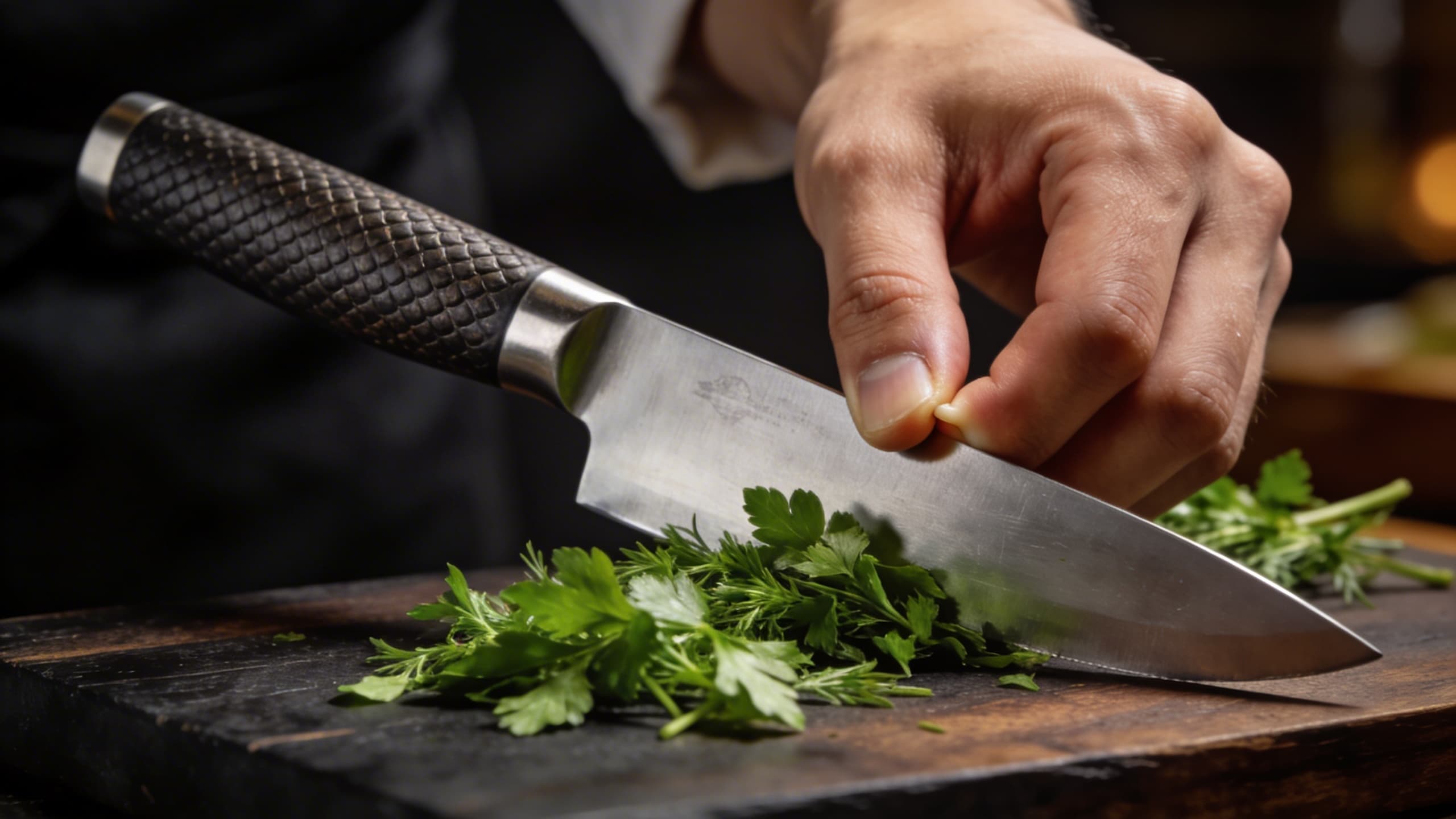
Your knife hand gets all the glory, but your "guide hand" does all the work. If your fingertips are exposed, you aren't a chef; you're a walking insurance liability. The "Claw" isn't just for safety—it’s your measuring tape. Your knuckles should act as a vertical guide for the blade.
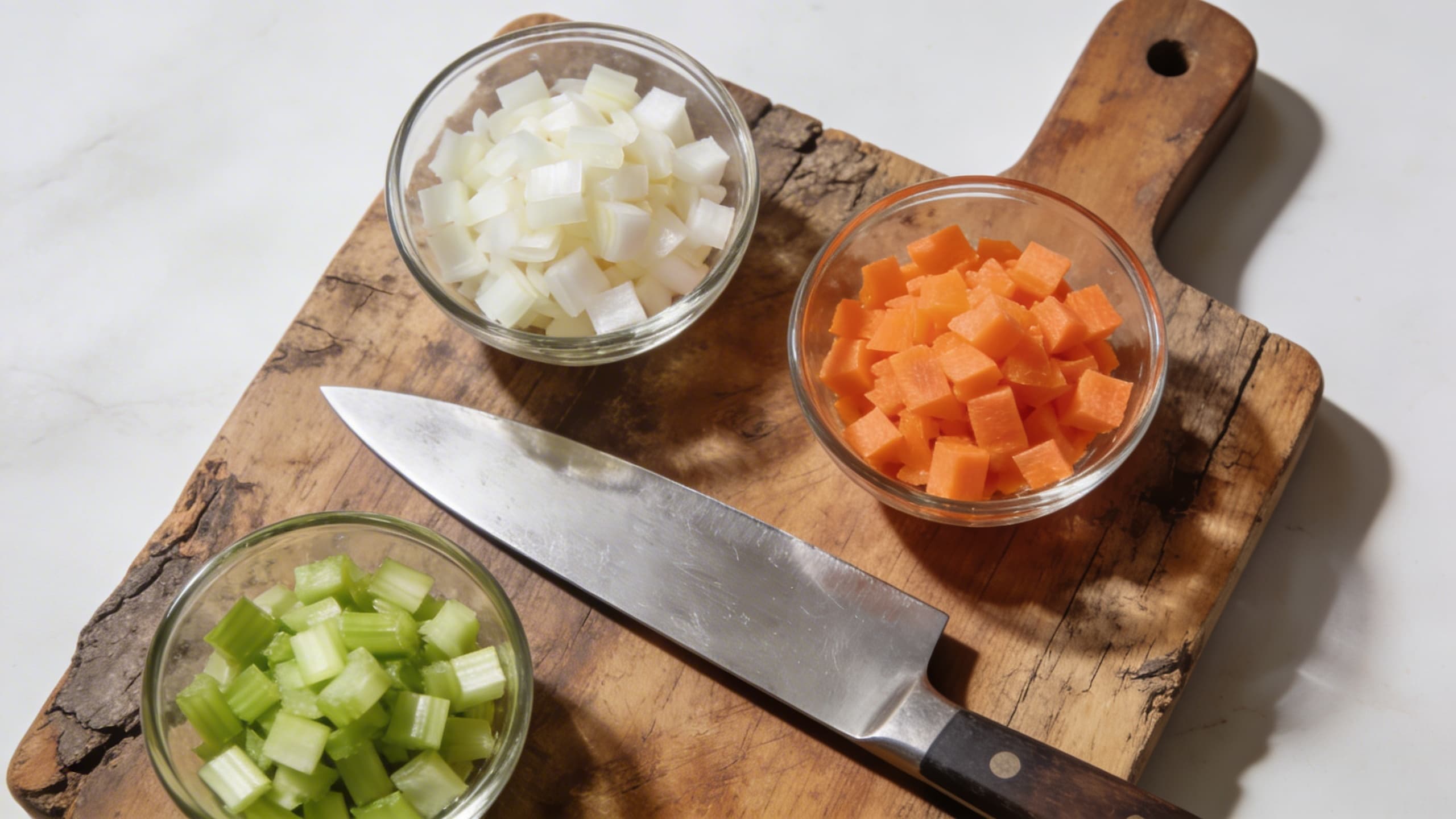
Pro Tip: When executing a fine brunoise for a French-Italian soffritto, keep your middle knuckle slightly ahead of the others. The flat of the blade should rest against that knuckle, allowing you to "feel" the thickness of the slice without looking.
4. The "Dull Blade" Delusion
"I’m careful, so a dull knife is safer." This is the most dangerous lie in the kitchen. A dull blade requires more force, and more force leads to catastrophic slips. A sharp knife follows your command; a dull knife follows its own chaotic path.
5. Board Chaos: The Friction Saboteur
If your cutting board is sliding around like a puck on ice, your precision is zero. Stability is the foundation of every French mother sauce and every Italian ragu.
Did You Know? A damp paper towel or a silicone mat under your board isn't just a "hack"—it’s a safety requirement. If the board moves 1mm during a high-speed slice, that’s the difference between a perfect julienne and a trip to the ER.
The Quirky Drills for Mastery
To turn my "scarred brow" into a badge of mastery, I didn't just cook—I engineered my movements. Here are two drills that will recalibrate your muscle memory:
- The Sourdough Paper Test: Take a piece of scrap paper and try to "slice" it using only the weight of the knife and a long, drawing motion. If it tears, your edge is gone or your angle is wrong.
- The Grape Skin Surgical: Try to peel a grape using only your chef's knife. It forces you to manage the "viscosity" of the blade's movement against a delicate surface.
Key Takeaway: Precision knife skills are 10% talent and 90% repetitive mechanics. Stop rushing the result and start obsessing over the process. Once the mechanics are flawless, the speed will find you.
Keep it classy, keep it smoky. And for the love of all things holy, keep those fingers tucked.
#knifeskills #cheftech #culinaryprecision #bbqscience