

5 Rookie Mistakes That Ruin Your Home Smoker's Soul (And My Hard-Won Fixes)
Precision Pit Care for the Serious Fusion Chef

The smell of post oak and the surgical precision of a reduction simmering on a copper saucier—that is my happy place. But let’s be honest: before I was pulling perfect, jiggly briskets and infusing duck breast with the nuance of a cold-smoke kiss, I was a disaster. I’ve had batches of ribs that tasted like an ashtray and chicken skin so rubbery it could have been used as a gasket for a French press.
Most people think great BBQ is just about the meat and the wood. They’re wrong. It’s about the physics of the pit. If your smoker’s "soul"—its ability to maintain clean, blue smoke and stable thermodynamics—is compromised by neglect or rookie errors, no amount of Wagyu fat or fancy dry rub can save you.
Here are the five most common ways I’ve seen (and lived through) home smokers being systematically destroyed, and the precision fixes to get your rig back to Michelin standards.
1. The "Seasoning" Myth: Creosote is Not Flavor
Early in my journey, I thought a thick, black coating inside the smoker was a sign of a "seasoned" pit. I treated it like a cast-iron skillet. Big mistake. That flaky, bitter, black gunk is actually creosote—a byproduct of incomplete combustion and poor airflow.
When that stuff builds up, it doesn't add "soul"; it adds a bitter, acrid tang to your food that ruins the delicate balance of a French-Italian fusion dish. Imagine trying to taste the subtle notes of a smoked rosemary butter when your smoker is exhaling the ghost of a thousand dirty fires.
Tip: Every 3-4 cooks, take a plastic putty knife and scrape down the interior walls and the lid. You aren't looking for a mirror finish, but you need to remove the "alligator skin" flakes before they fall onto your food.
2. The Grease Fire Waiting to Happen
In a high-end kitchen, grease management is a matter of life and death (and health inspections). At home, it’s the difference between a beautiful 12-hour smoke and a molten metal nightmare. I once ignored the drip tray on my offset for three consecutive pork shoulder cooks. During the fourth, the rendering fat hit its flashpoint. I didn't get pulled pork; I got a localized sun in my backyard.
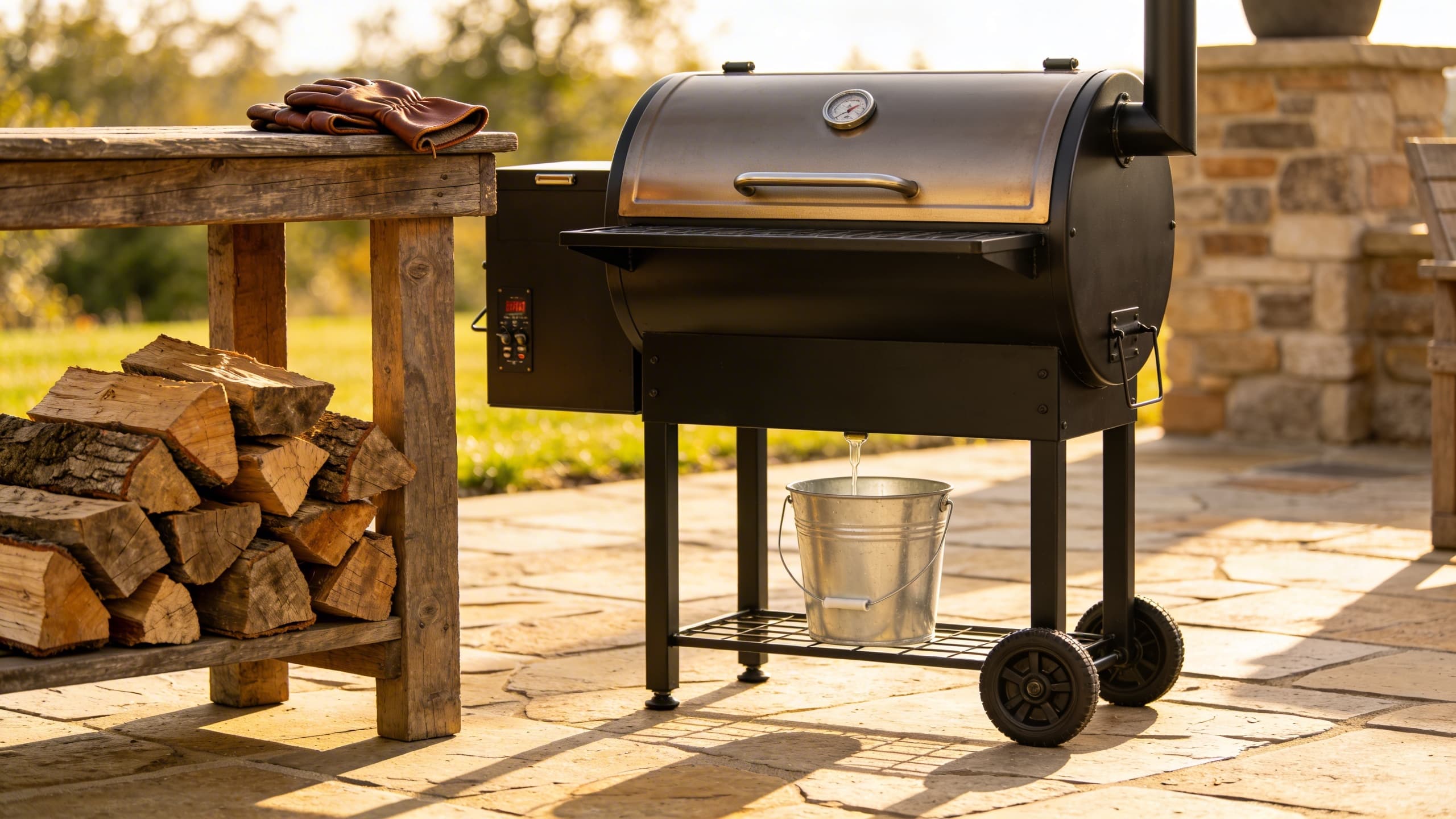
Pro Tip: Use disposable foil liners or a dedicated grease bucket, but the real secret is the "Water Pan Heat Sink." Placing a pan of water between the fire and the meat not only regulates temperature but catches the majority of the rendering fat before it can polymerize on your smoker's floor.
3. Ignoring the Airflow Architecture
If you want to understand the soul of a smoker, look at the intake and the chimney. I’ve seen rookies "choke" their fire by closing the dampers to lower the temperature. This creates "dirty smoke"—that thick, white, billowing cloud that makes meat taste like a campfire accident.
In my fusion logic, I treat the firebox like a delicate sauce reduction. You need constant, steady energy. If the fire is too hot, don't kill the air; reduce the fuel. Smaller, hotter fires produce the thin blue smoke that allows the natural sweetness of the wood to penetrate the protein without overwhelming it.
Great BBQ isn't about the quantity of smoke; it's about the quality of the air moving through the chamber.
4. The Neglected Probe and Thermostat
Precision is non-negotiable. If you are relying on that cheap, analog dial thermometer built into the lid of your smoker, you are cooking blind. Those things are notoriously inaccurate—sometimes off by 50 degrees or more.
I learned this the hard way when a "225-degree" smoke was actually humming at 285. My Short Rib Osso Buco turned into expensive beef jerky. Your smoker's soul lives in its consistency.
Key Takeaway: Invest in a high-quality, multi-probe digital thermometer. Calibrate it in an ice-water bath once a season. Knowing the exact temperature at the grate level is the only way to achieve that translucent, perfectly rendered fat cap.
5. The "Cold Start" Corrosion
The worst thing you can do for your smoker’s longevity (and your food's flavor) is to leave ash in the firebox. Ash is hygroscopic—it pulls moisture out of the air. When ash meets humidity, it turns into a caustic paste that eats through steel faster than a hot knife through butter.
My Hard-Won Maintenance Ritual
To keep my rig performing like a fine-tuned instrument, I follow a strict post-cook protocol:
- The Heat-Down: While the smoker is still warm, brush the grates with a wire-free brush.
- The Ash Vacuum: Once completely cool, remove every speck of ash. Every. Single. Bit.
- The Oil Wipe: Occasionally, wipe down the exterior with a thin coat of high-smoke-point oil (like grapeseed) while the pit is warm. It acts like a seasoning for the outside, preventing rust and keeping that "stunning" industrial aesthetic.
Warning: Never use harsh chemical degreasers inside your cooking chamber. The porous nature of the metal will soak up those fumes, and your next brisket will have a distinct "lemon-scented bleach" profile. Stick to heat, steam, and elbow grease.
Cooking is a conversation between the chef, the ingredients, and the equipment. If you treat your smoker like a tool rather than a trash can, it will reward you with the kind of viscosity and bark that dreams are made of. Keep your airflow clean, your ash cleared, and your probes calibrated.
Keep it classy, keep it smoky.
#bbq #pitmaster #smokermaintenance #chefhacks #smokedmeat