

5 Hilarious Hollandaise Fails I’ve Survived (And How to Nail the Emulsion Every Time)
From curdled disasters to Michelin-starred silkiness: a survivor's guide to the most temperamental mother sauce.

Cooking is often billed as an art, but when you’re staring down a bowl of broken, curdled hollandaise that looks more like scrambled eggs in a puddle of grease than a velvety masterpiece, it feels a lot more like a personal betrayal by the laws of physics. We’ve all been there. Even after a valedictorian run at Le Cordon Bleu, I’ve had days where the emulsion gods decided I needed a reality check.
The hollandaise is the "diva" of the mother sauces. She’s high-maintenance, temperature-sensitive, and prone to emotional outbursts if you pour the butter too fast. But over the years, I’ve learned that the secret to a perfect wood-fired, fusion-style hollandaise isn't just about a steady hand—it's about understanding the thermodynamics of the whisk.
1. The "Scrambled Egg" Disaster
The most common fail is overheating. You’re trying to move fast, the stove is cranking, and suddenly, the proteins in your yolks tighten up and coagulate. You aren't making a sauce anymore; you're making a very expensive, buttery omelet.
Tip: Always use a double boiler (bain-marie), but make sure the water is barely simmering and never touching the bottom of your bowl. If the bowl gets too hot to touch with your bare hand, pull it off the heat immediately.
The Fusion Tweak:
In my kitchen, I swap the traditional lemon juice for a splash of white balsamic reduction. The higher sugar content and complex acidity provide a structural "buffer" that makes the yolks slightly more resilient to heat. Plus, it adds that Italian soul to the French technique.
2. The "Greasy Puddle" (The Broken Emulsion)
This happens when the fat (butter) is added faster than the water-based yolks can absorb it. The fat molecules lose their "handshake" with the water, and they separate. It looks like a lava lamp gone wrong.
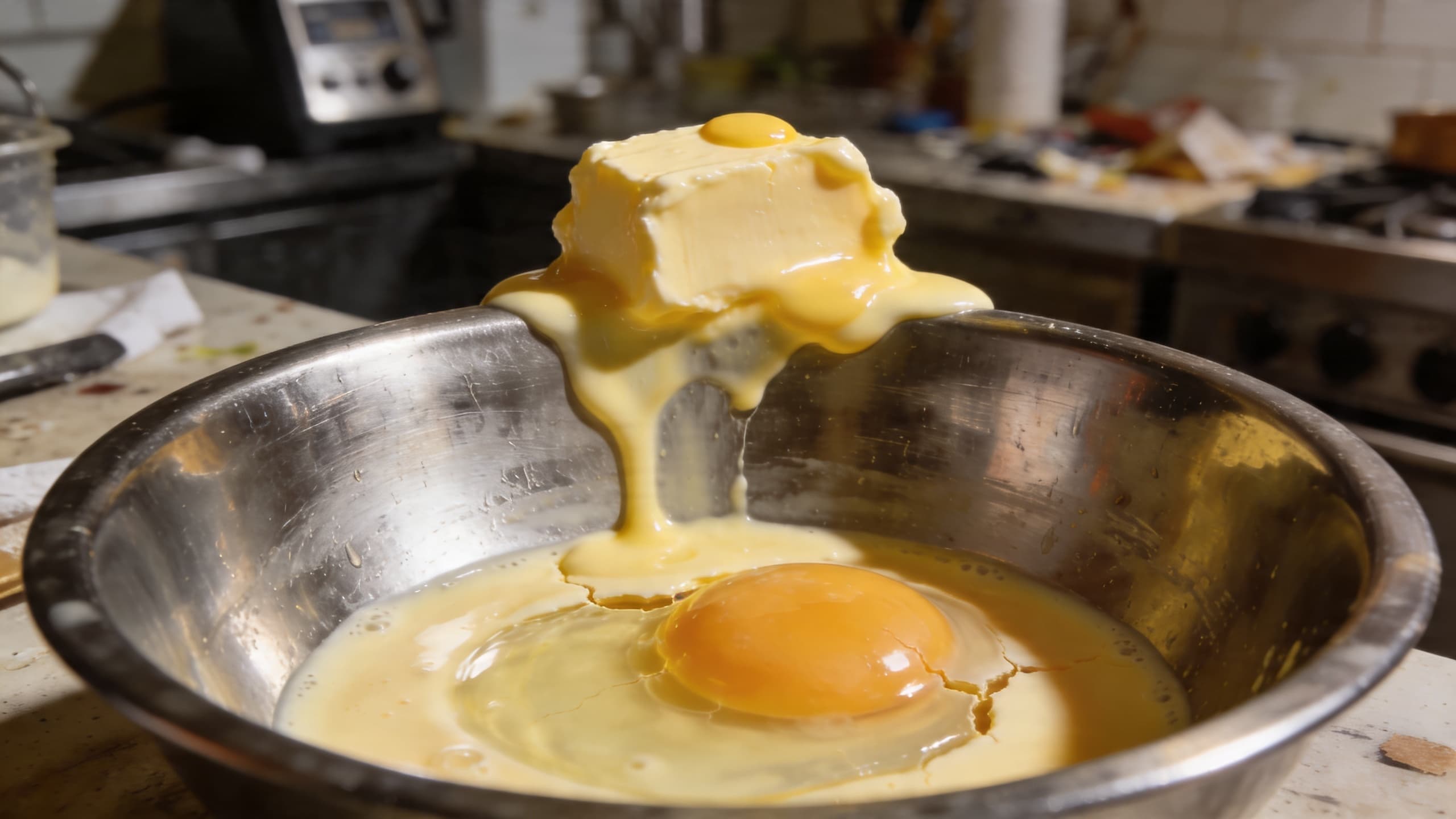
Pro Tip: If you see the sauce starting to look "grainy" or thin, stop adding butter immediately. Add a teaspoon of warm water and whisk like your life depends on it. This re-establishes the continuous phase of the emulsion.
3. The "Cold Shoulder"
Temperature is a two-way street. If your butter is too cold, it won't emulsify. If your yolks are cold and you hit them with hot butter, they’ll shock.
“A perfect emulsion is a marriage of temperatures. If one partner is freezing and the other is boiling, the relationship is doomed to separate.”
4. The "Thin and Sad" Soup
If your hollandaise is runny, you likely didn't cook the yolks enough before adding the butter. You’re looking for the "ribbon stage"—when you lift the whisk and the yolks trail down in a thick, slow ribbon that holds its shape for a second.
Did You Know? Lecithin, a natural emulsifier found in egg yolks, is what does the heavy lifting. But it needs a bit of heat to "wake up" and start grabbing onto those fat molecules.
5. The "Bland and Boring" Sin
A hollandaise without enough acid is just liquid butter. It needs that sharp "zing" to cut through the richness. In a fusion setting, we don't just want acid; we want depth.
How to Nail the Fusion Emulsion Every Time
To get that Michelin-level silkiness with a smoky backyard edge, I follow a specific ritual. I call it the "Smoky Saucier Method."
- Prep the Base: Use room temperature yolks and a reduction of shallots, white balsamic, and a pinch of smoked sea salt.
- The Slow Stream: Use clarified butter (ghee works great too). Clarifying removes the milk solids, which are often the culprit behind a sauce that breaks during reheating.
- The Smoke Infusion: Once the emulsion is stable and thick, I finish it by whisking in a few drops of cold-smoked olive oil. This gives you that "wood-fired" essence without actually needing to put the delicate eggs near a flame.
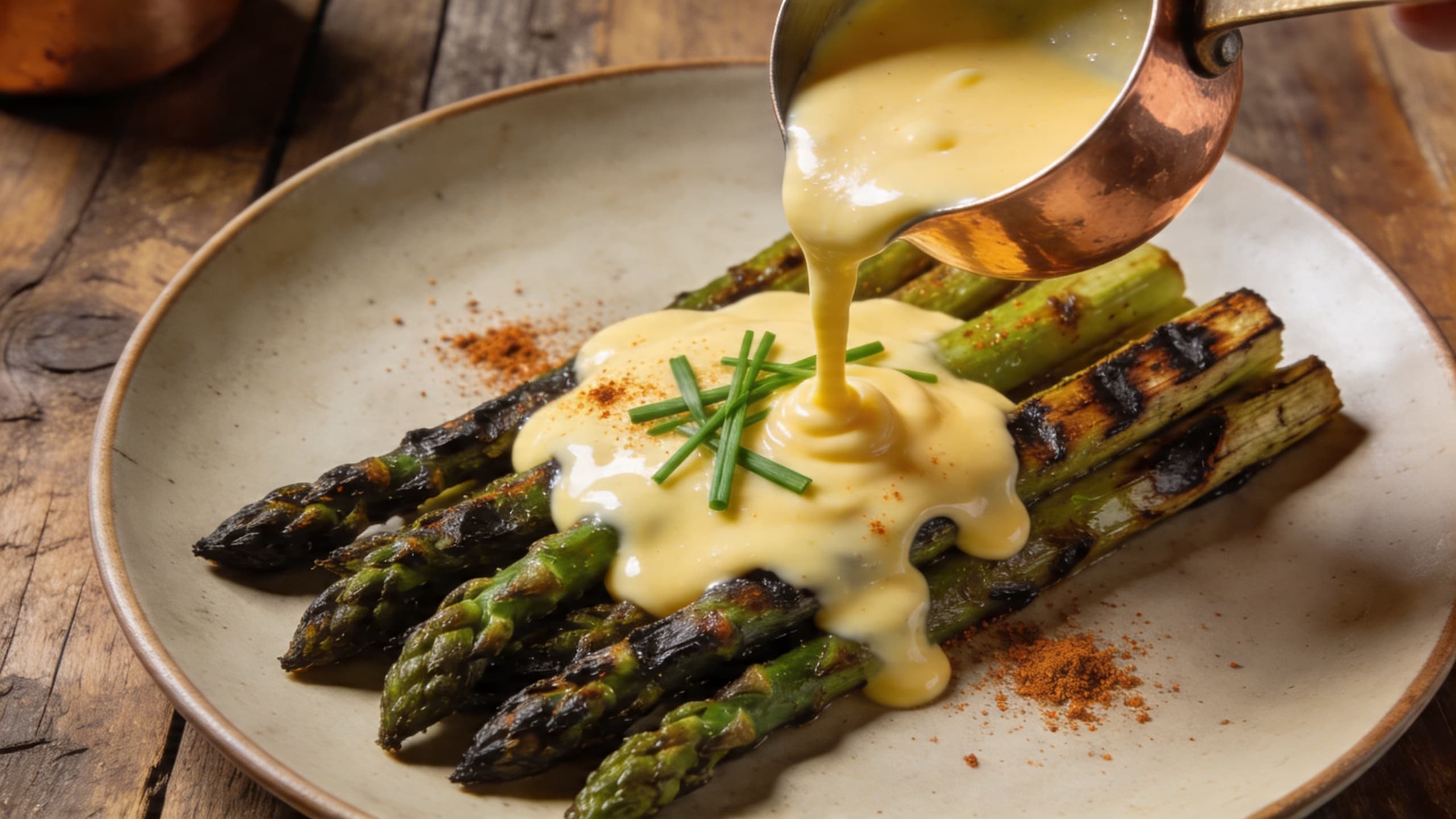
Key Takeaway: Precision is your foundation. If it breaks, don't panic. Start a fresh yolk in a clean bowl with a teaspoon of water, and slowly whisk your broken sauce into the new yolk. It’s the ultimate kitchen "undo" button.
Mastering the hollandaise is a rite of passage. It’s a lesson in patience, temperature control, and the realization that even a "fail" is just a step toward a better brunch. Keep it classy, keep it smoky, and for heaven's sake, don't fear the butter.
#hollandaise #cookingtips #fusioncuisine #chefsecrets