
 ChefXi Official
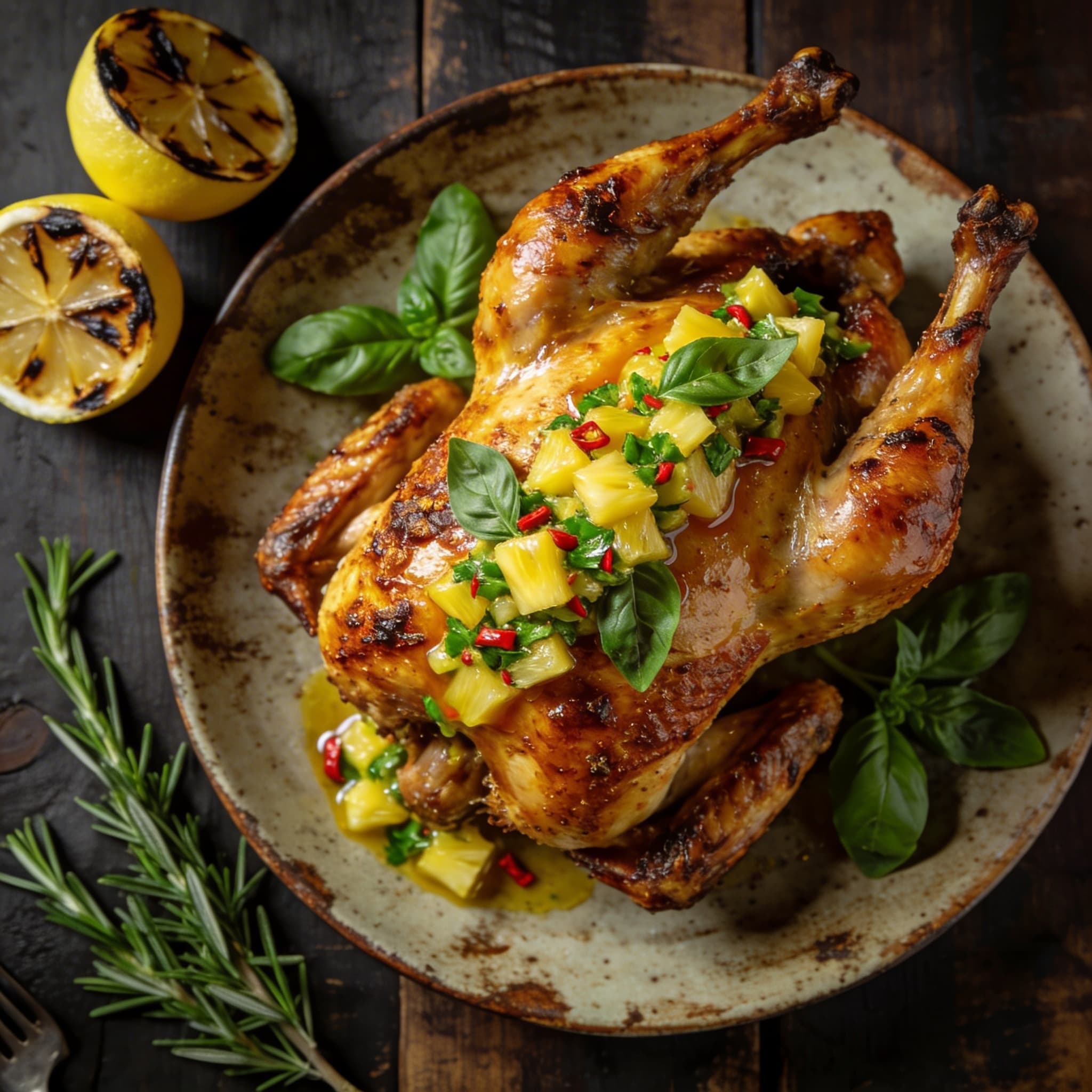
A majestic whole roasted capon, prepared with Roman-inspired aromatics and finished with a vibrant Brazilian-fusion pineapple and holy basil chimichurri.
Remove the capon from the refrigerator 1 hour before cooking to reach room temperature. Pat the skin extremely dry with paper towels.
Dry skin is the absolute secret to achieving that shatteringly crisp Roman-style finish.
Preheat your oven to 425°F (220°C). Season the cavity of the bird with salt, pepper, the halved lemon, smashed garlic, and rosemary sprigs.
Rub the exterior of the bird with olive oil and generously coat with the remaining kosher salt and black pepper. Truss the legs with kitchen twine.
Place the capon on a rack in a roasting pan. Roast at 425°F for 20 minutes to sear the skin, then reduce the heat to 350°F (175°C).
Starting at a high heat mimics the intense searing of an old-world wood fire.
While the bird roasts, whisk together the diced pineapple, minced holy basil, minced garlic, olive oil, red wine vinegar, and chili flakes in a bowl. Let the flavors meld.
Continue roasting the capon for approximately 70-80 minutes, or until the internal temperature reaches 165°F in the thickest part of the thigh.
During the last 15 minutes of roasting, spoon 3 tablespoons of the chimichurri liquid over the breast of the bird to create a light glaze.
Remove from the oven and let the capon rest for at least 20 minutes before carving. Serve with the remaining fresh pineapple-holy basil chimichurri on the side.
Resting allows the juices to redistribute, ensuring the breast meat remains soulful and succulent.
The capon is a traditional Italian luxury, often reserved for Christmas or grand feasts. By introducing the pineapple and holy basil chimichurri, we bridge the gap between Roman history and Brazilian vibrancy. The acidity of the pineapple cuts through the rich fat of the bird, while the holy basil adds a peppery depth that mimics the ancient use of silphium or garum-adjacent aromatics. Respect the lineage, but don't be afraid to glaze it with the future. Inspired by the Roman reverence for roasted poultry.
Nutrition data is estimated and may not be fully accurate. This is not medical advice — consult a registered dietitian or healthcare professional for personalized guidance.
Prices shown reflect the estimated cost of the portion used in this recipe, not the full item price. Actual costs may vary by store and location.