
 ChefXi Official
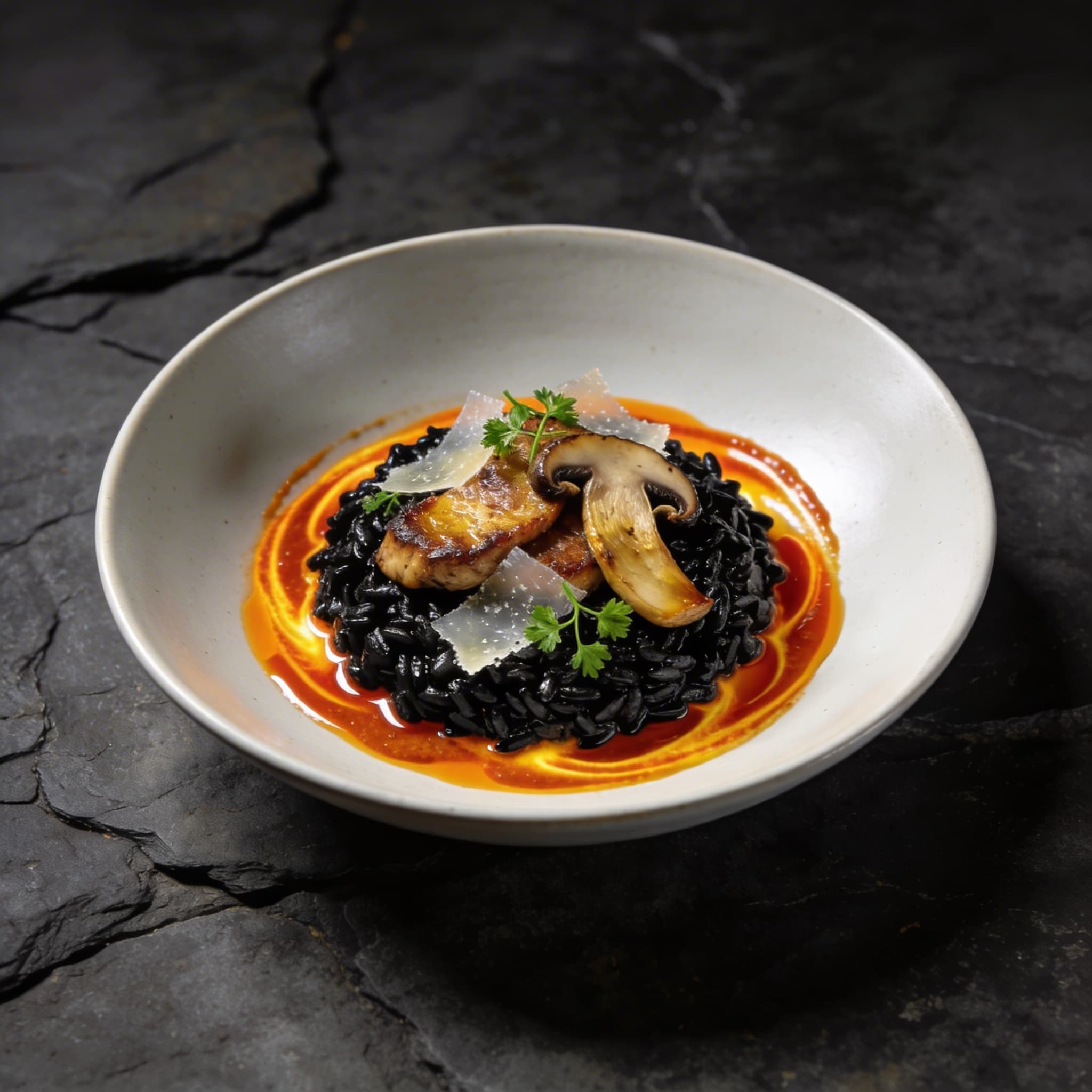
A dramatic, midnight-hued risotto that bridges the gap between Renaissance Italy and the tropical heat of Bahia, featuring earthy porcini and fiery dendê oil.
In a medium saucepan, bring the vegetable broth to a gentle simmer. Keep it warm over low heat throughout the cooking process to maintain the rice's temperature.
Cold stock will shock the rice and ruin the creamy texture.
Clean the porcini with a damp cloth (never soak them) and slice into thick, meaty pieces. Mince the shallot and garlic.
Heat 1 tablespoon of olive oil in a wide, heavy-bottomed pan. Sear the porcini slices over high heat until golden brown and fragrant. Remove and set aside.
Don't crowd the pan; sear in batches if necessary to get that deep umami crust.
In the same pan, add the remaining olive oil and sauté the shallots until translucent. Add the garlic and chili flakes, stirring for 1 minute until the aroma fills the kitchen.
Add the Arborio rice to the pan. Toast the grains, stirring constantly, until the edges are translucent and the rice smells slightly nutty.
Toasting creates a protective shell so the rice stays al dente.
Deglaze the pan with the white wine, scraping up any browned bits of porcini essence. Stir until the liquid is almost completely absorbed.
Stir the squid ink into the first ladle of warm broth and add it to the rice. Begin the rhythmic process of adding broth one ladle at a time, stirring frequently. Wait until each ladle is absorbed before adding the next.
Stirring is what releases the starch; it is the heartbeat of the risotto.
When the rice is nearly tender but still has a firm bite (al dente), stir the seared porcini back into the pan. Add one final splash of broth if it looks too dry.
Perform the 'Mantecatura': Remove from heat. Vigorously stir in the cold butter, Parmigiano Reggiano, and the vibrant orange dendê oil until the risotto is glossy, creamy, and dark as midnight.
The dendê oil provides the tropical heat and a stunning color contrast against the black rice.
The soul of this dish lies in the contrast between the deep, forest-floor umami of the porcini and the vibrant, floral heat of the Brazilian dendê oil. To ensure a perfect emulsion, add the dendê oil and butter only during the 'mantecatura' stage at the very end. If you cannot find fresh porcini, high-quality dried ones (rehydrated in the stock) will provide an even deeper 'essence' of the woods. Respect the lineage of the risotto: never stop stirring once the starch begins to release.
Nutrition data is estimated and may not be fully accurate. This is not medical advice — consult a registered dietitian or healthcare professional for personalized guidance.
Prices shown reflect the estimated cost of the portion used in this recipe, not the full item price. Actual costs may vary by store and location.