
 ChefXi Official
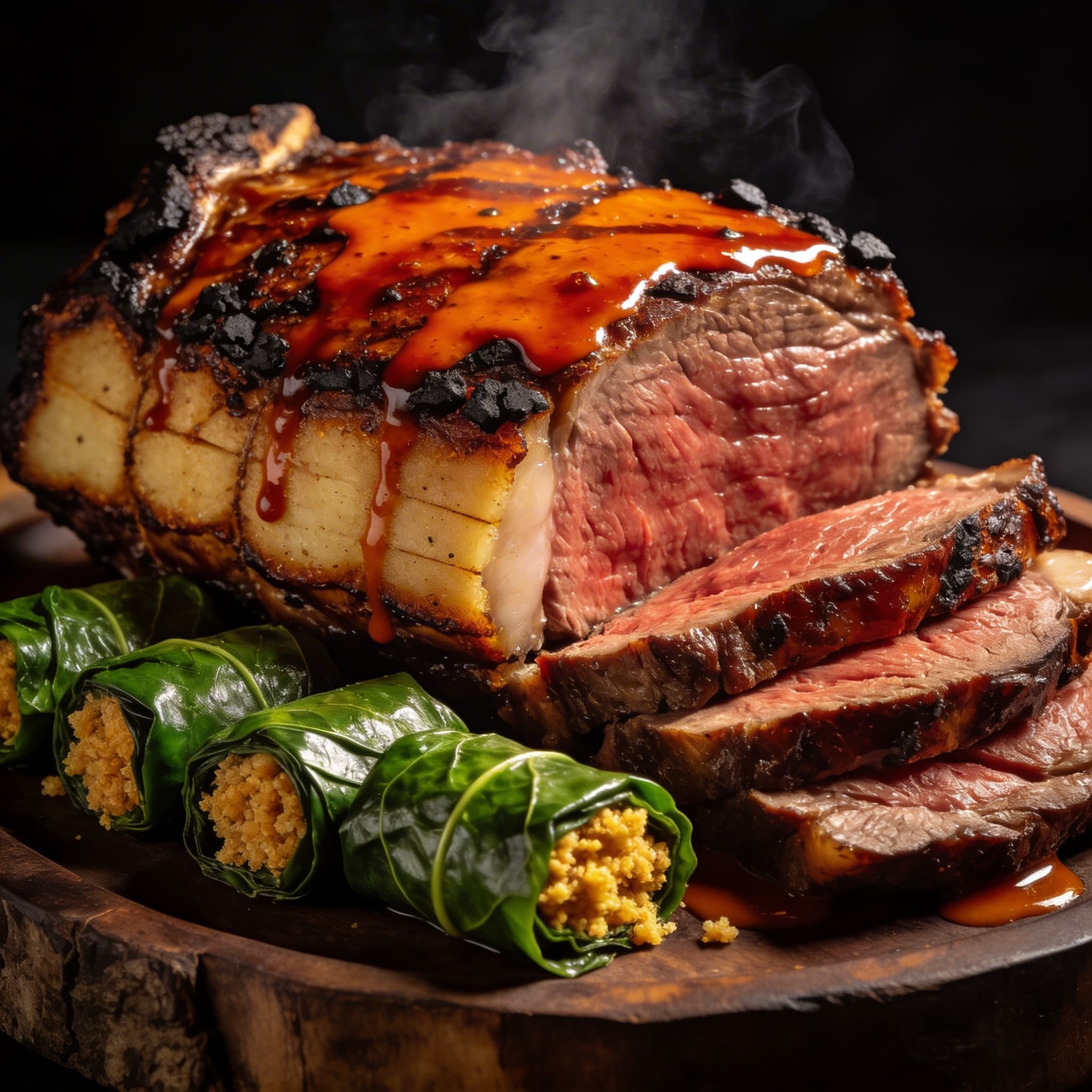
A monumental 10lb Picanha roast, crusted in toasted manioc and glazed with a rich balsamic-dendê reduction, served alongside collard greens stuffed with savory farofa.
Score the fat cap of the picanha in a crosshatch pattern, being careful not to cut into the meat. Season aggressively with sea salt and black pepper on all sides. Let sit at room temperature for 60 minutes.
Scoring the fat allows it to render more efficiently and creates more surface area for the crust.
In a bowl, combine the toasted manioc flour, garlic powder, and smoked paprika. Press this mixture firmly into the scored fat cap and the sides of the beef to create a thick coating.
The moisture from the meat will help the flour adhere.
Prepare your charcoal grill for indirect cooking, aiming for a steady temperature of 250°F (120°C). Add a few chunks of hardwood for a subtle smoke.
Low and slow is the secret to a tender picanha that doesn't lose its essence.
Place the picanha on the cool side of the grill, fat cap up. Close the lid and roast until the internal temperature reaches 115°F (46°C).
Use a meat thermometer; precision is the ink of the culinary arts.
While the beef roasts, simmer the balsamic vinegar in a small saucepan over medium heat until reduced by half. Whisk in the dendê oil and honey until emulsified and glossy. Set aside.
The dendê oil adds a vibrant orange hue and a unique silkiness to the glaze.
Blanch collard leaves in boiling water for 30 seconds, then shock in ice water. Sauté diced onions, mix with farofa, and roll 2 tablespoons of the mixture into each leaf, tucking the ends like a burrito. Steam for 10 minutes.
The stuffing should be moist but still retain the manioc's characteristic crunch.
Once the beef hits 115°F, move it directly over the hot coals, fat cap down. Sear for 3-5 minutes, basting with the Balsamic-Dendê glaze, until the manioc crust is dark, caramelized, and fragrant.
Watch for flare-ups from the rendering fat! This is where the 'bark' is born.
Remove from heat and let the roast rest for at least 20 minutes before carving against the grain into thick slices. Serve with the stuffed collards.
Resting allows the juices to find harmony within the muscle fibers.
This dish is a dialogue between the rugged heart of the Amazon and the refined soul of Modena. Using manioc flour (farinha de mandioca) for the crust provides a crunch that stands up to the intense heat of the charcoal, while the dendê oil adds a floral, earthy depth to the sharp balsamic reduction. Ensure your picanha has a thick fat cap; this is where the flavor lives. Respect the lineage of the fire.
Nutrition data is estimated and may not be fully accurate. This is not medical advice — consult a registered dietitian or healthcare professional for personalized guidance.
Prices shown reflect the estimated cost of the portion used in this recipe, not the full item price. Actual costs may vary by store and location.