
 ChefXi Official
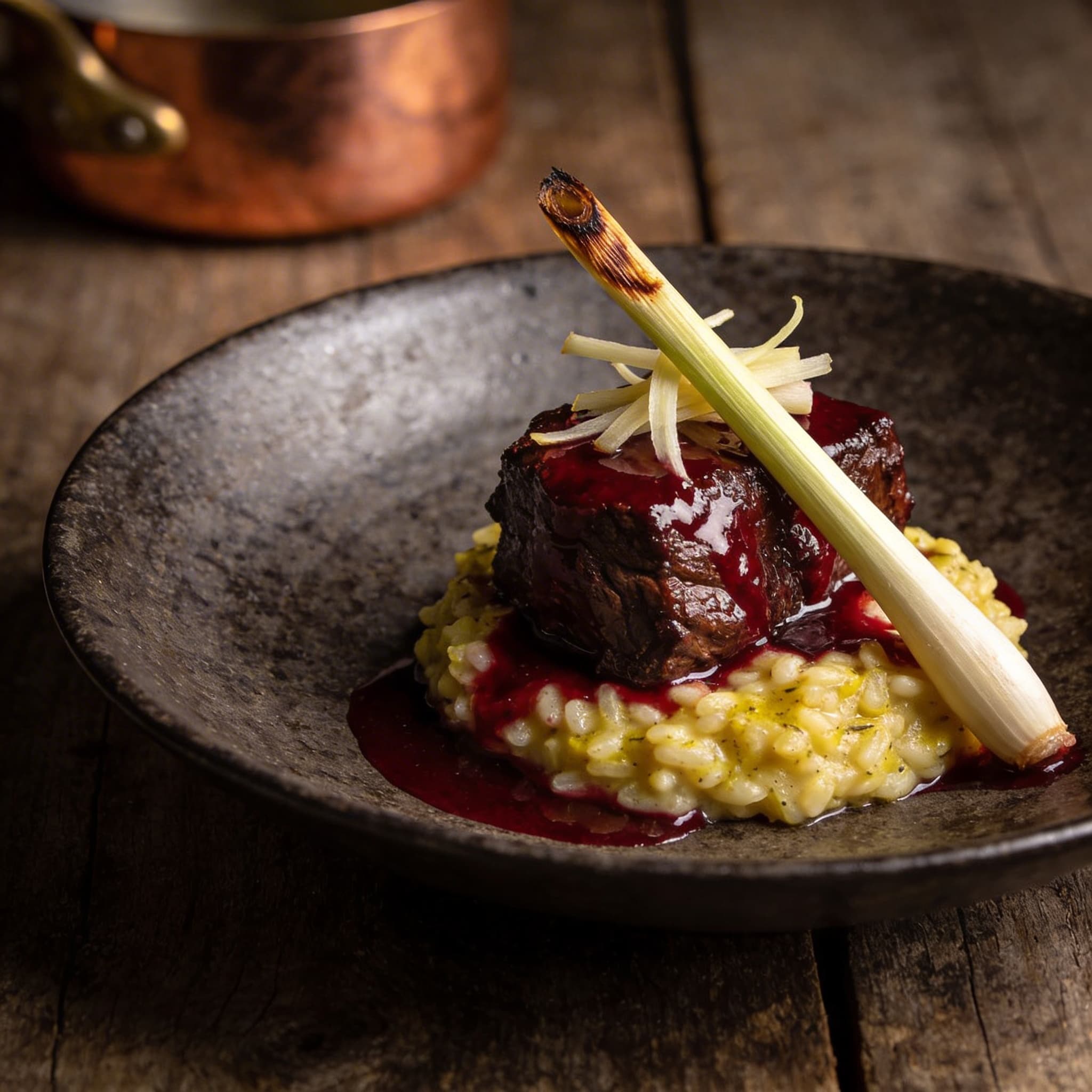
Tender, melt-in-your-mouth beef cheeks slow-braised in a deep red wine broth infused with aromatic Thai lemongrass, galangal, and kaffir lime.
Season the beef cheeks generously with salt and pepper on all sides.
Let the meat sit at room temperature for 20 minutes before searing to ensure an even crust.
Prepare the aromatics: peel the outer layers of the lemongrass and bruise the stalks with the back of a knife to release the essential oils. Slice the galangal.
In a large heavy-bottomed Dutch oven, heat olive oil over medium-high heat. Sear the beef cheeks in batches until deeply browned on all sides. Remove and set aside.
Don't crowd the pan, or the meat will steam instead of searing.
In the same pot, add the onion, carrots, and celery. Sauté until softened and starting to brown, about 8 minutes. Add the garlic, lemongrass, galangal, and kaffir lime leaves, cooking for another 2 minutes until fragrant.
Stir in the tomato paste and cook for 1 minute. Pour in the red wine, scraping the bottom of the pot to release all the browned bits (fond). Bring to a simmer and let the wine reduce by half.
Return the beef cheeks to the pot and add the beef stock until the liquid covers about two-thirds of the meat. Bring to a gentle simmer.
Cover with a tight-fitting lid and transfer to a 300°F (150°C) oven. Braise for 3 to 3.5 hours, or until the beef is fork-tender and falling apart.
Check halfway through to ensure there is still enough liquid; add more stock if necessary.
Carefully remove the beef cheeks from the pot. Strain the braising liquid through a fine-mesh sieve into a saucepan, discarding the solids. Simmer the liquid over medium heat until it reduces into a glossy, velvety sauce.
Plate the beef cheeks over risotto or polenta and spoon the reduced red wine-lemongrass sauce over the top. Garnish with fresh herbs.
This dish is a bridge between the ancient Roman love for slow-braised meats and the vibrant, aromatic profiles of Southeast Asia. Beef cheeks are the ultimate cut for this—they contain a high amount of connective tissue that transforms into silk after a long braise. The lemongrass and galangal don't overpower; they lift the heavy red wine and beef fats, creating a 'vibrant' harmony. Serve this over a simple saffron or parmesan risotto to let the 'velvety' braising liquid shine. Respect the lineage of the osteria while embracing the new.
Nutrition data is estimated and may not be fully accurate. This is not medical advice — consult a registered dietitian or healthcare professional for personalized guidance.
Prices shown reflect the estimated cost of the portion used in this recipe, not the full item price. Actual costs may vary by store and location.