
 ChefXi Official
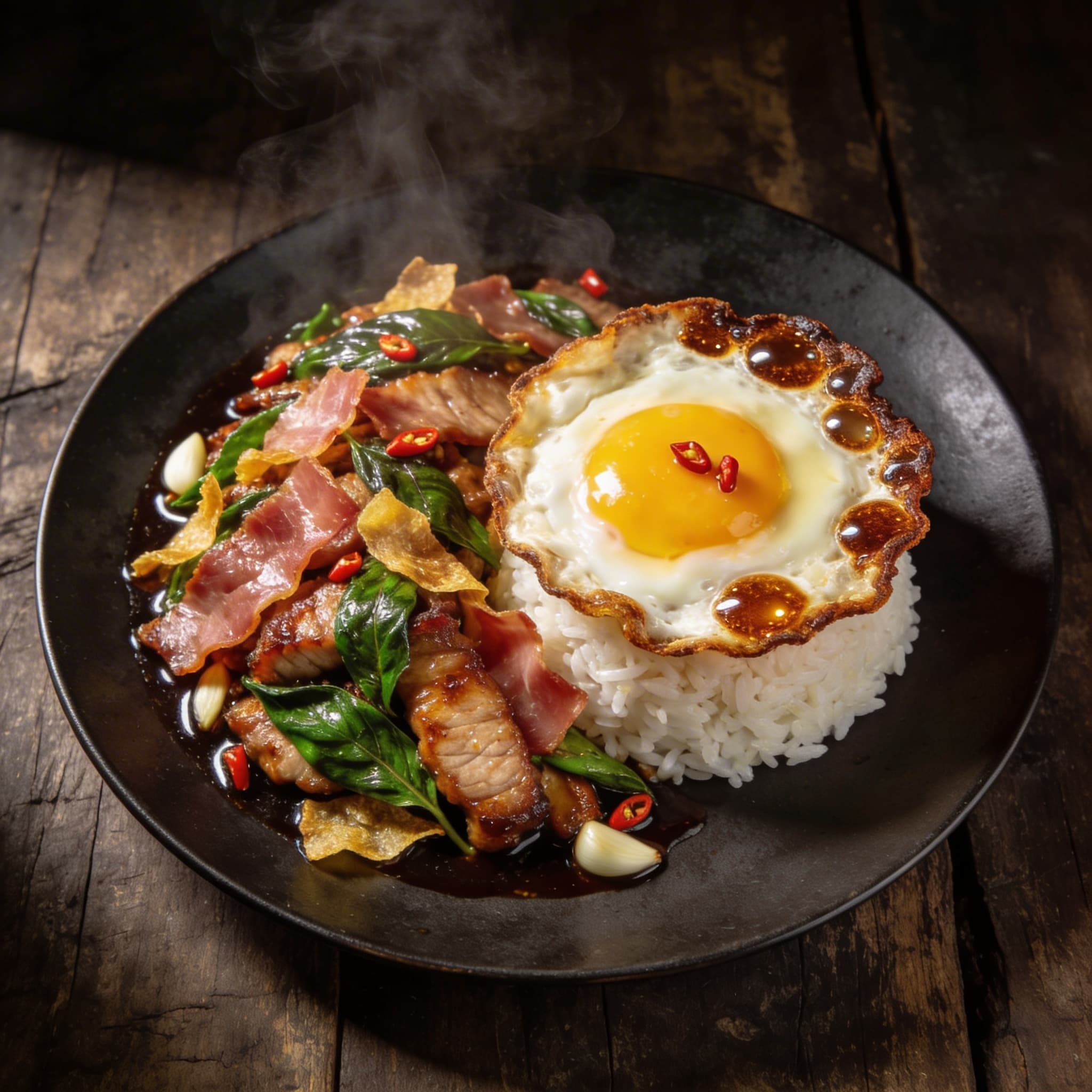
A bold fusion stir-fry featuring tender pork tenderloin and crispy Italian prosciutto tossed with peppery holy basil, served over jasmine rice with a classic crispy fried egg.
In a small bowl, whisk together the oyster sauce, soy sauce, fish sauce, dark soy sauce, and palm sugar until the sugar is dissolved. Set aside.
Dark soy sauce is mainly for color and a hint of molasses sweetness.
Heat 1 tablespoon of oil in a large wok or heavy skillet over medium-high heat. Add the torn prosciutto and fry until golden and crispy. Remove with a slotted spoon and drain on paper towels.
Keep the prosciutto pieces large enough so they don't disappear in the stir-fry.
In the same wok (adding more oil if needed), crack the eggs one at a time and fry until the edges are crispy and brown but the yolks are still runny. Remove and set aside.
This is the traditional 'Kai Dao' style egg.
Increase heat to high. Add the sliced pork tenderloin in a single layer. Sear without moving for 1-2 minutes to get a nice char, then stir-fry until just cooked through. Remove pork from the wok.
Don't overcrowd the pan; work in batches if necessary to maintain high heat.
Add the remaining oil if the wok is dry. Toss in the minced garlic, chilies, and shallots. Stir-fry for 30 seconds until fragrant but not burnt.
The aroma of the chilies will be intense—ensure your kitchen is well-ventilated!
Return the pork and crispy prosciutto to the wok. Pour in the sauce mixture and toss rapidly to coat everything evenly.
The sauce should glaze the meat, not pool at the bottom.
Turn off the heat and immediately fold in the holy basil leaves. The residual heat will wilt them perfectly while preserving their vibrant aroma.
Adding basil at the very end prevents it from turning bitter.
Serve immediately over warm jasmine rice, topped with a crispy fried egg. Enjoy the harmony of worlds.
This dish is a bridge between the street stalls of Bangkok and the salumerias of Parma. The key is high heat to achieve the 'wok hei' (breath of the wok) and ensuring the prosciutto gets shatteringly crisp. Holy basil (Bai Gaprao) is essential for its peppery, clove-like essence — if you must substitute, use Thai sweet basil with a pinch of cracked black pepper. Inspired by Phat Bai Horapha by various Thai street food traditions.
Nutrition data is estimated and may not be fully accurate. This is not medical advice — consult a registered dietitian or healthcare professional for personalized guidance.
Prices shown reflect the estimated cost of the portion used in this recipe, not the full item price. Actual costs may vary by store and location.