
 ChefXi Official
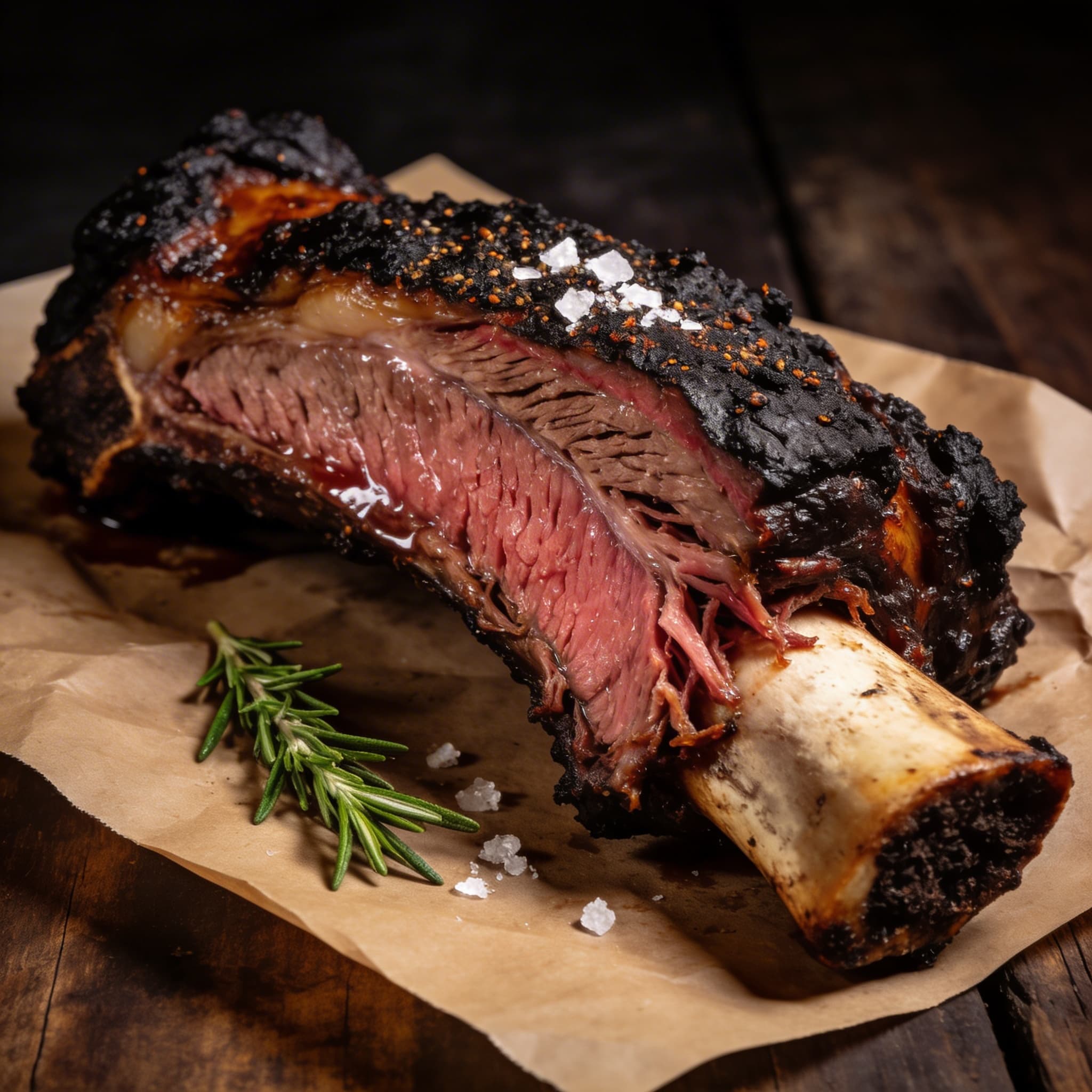
Massive, melt-in-your-mouth beef plate short ribs with a thick, peppery bark and deep smoky essence. These are the ultimate showstopper for any backyard pitmaster.
Trim any excess thick hard fat from the top of the ribs, but leave the bottom membrane intact to hold the meat on the bone during the long cook.
Cold meat is easier to trim; keep the ribs in the fridge until you are ready to prep.
Mix the kosher salt, cracked black pepper, and garlic powder in a bowl. Apply a thin layer of yellow mustard over the meat as a binder, then coat heavily with the rub on all sides.
Don't be shy with the pepper; beef ribs can handle a lot of seasoning.
Preheat your smoker to 250°F (121°C) using oak or hickory wood for a clean, strong smoke profile.
Place the ribs in the smoker, bone-side down. Close the lid and let them smoke undisturbed for the first 3 hours to allow the bark to set.
If your smoker has a hot spot, position the thickest part of the ribs toward it.
Mix the apple cider vinegar and water in a spray bottle. Spritz the ribs every 45-60 minutes once the bark looks dry, avoiding any areas where the fat is still rendering.
Spritzing helps build the smoke ring and keeps the exterior from burning.
Continue cooking until the internal temperature reaches approximately 203°F (95°C) and a butcher's probe slides into the meat with zero resistance (like butter).
Every cow is different; go by feel (probe tenderness) rather than just the thermometer.
Remove the ribs from the smoker, wrap them tightly in butcher paper, and let them rest in an insulated cooler for at least 1 hour before slicing.
Resting is mandatory to allow the juices to redistribute and the collagen to fully set.
These are 'Dino Ribs' (beef plate short ribs), known for their massive size and rich marbling. The key is extreme patience—do not rush the stall. Use a water pan in the smoker to keep the environment humid, which helps the smoke ring and prevents the bark from becoming too hard. Inspired by the central Texas style but with a nod to the Italian 'Peposo' tradition by using a heavy hand with high-quality black pepper.
Nutrition data is estimated and may not be fully accurate. This is not medical advice — consult a registered dietitian or healthcare professional for personalized guidance.
Prices shown reflect the estimated cost of the portion used in this recipe, not the full item price. Actual costs may vary by store and location.