
 ChefXi Official
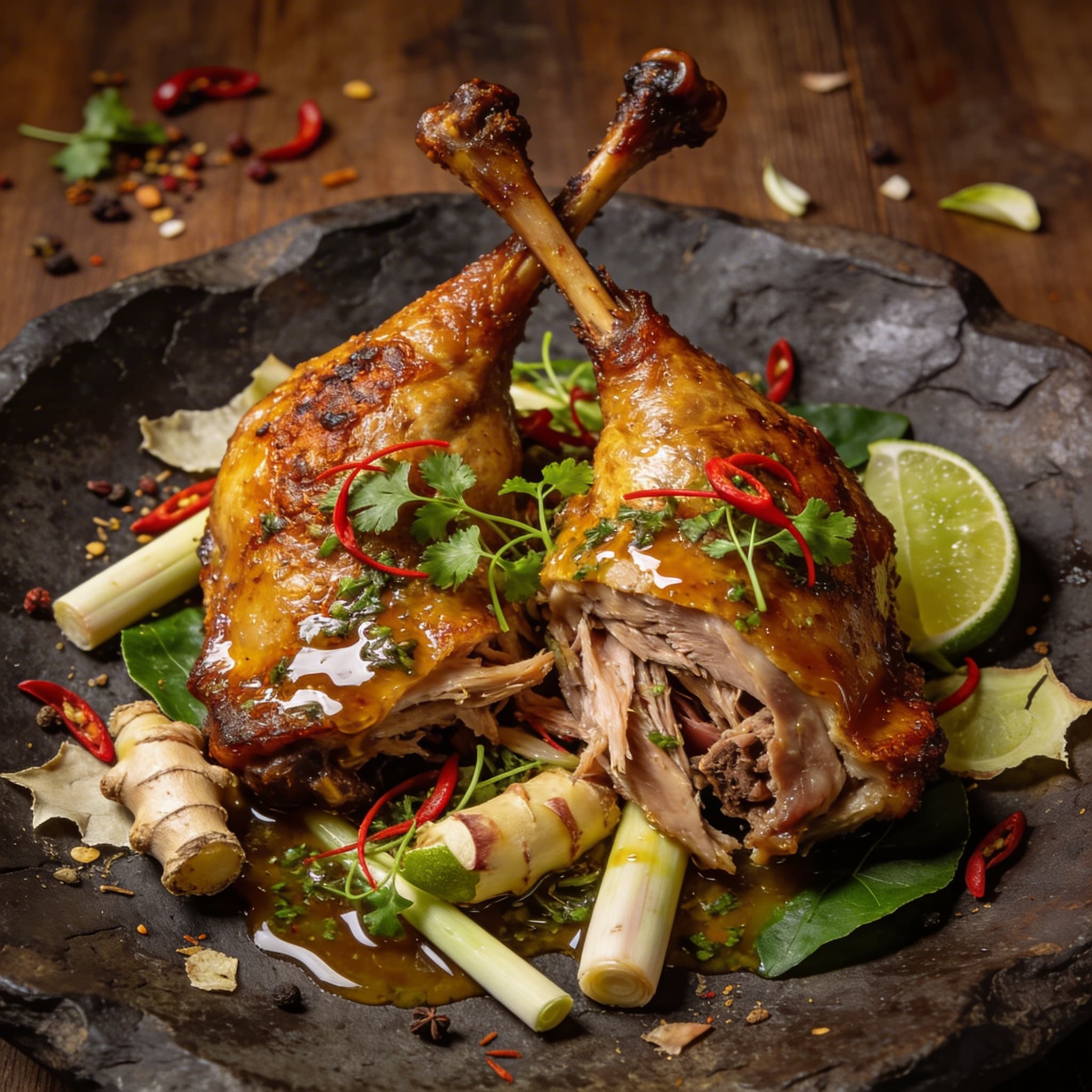
A soulful fusion where the slow-rendered luxury of French duck confit meets the vibrant, citrusy essence of Thai aromatics. Tender, fall-off-the-bone duck legs with a shatteringly crisp skin.
In a large bowl, toss the duck legs with kosher salt, half of the galangal, and one bruised lemongrass stalk. Cover and refrigerate for at least 6 hours, or ideally overnight, to cure and season the meat.
Curing draws out moisture, ensuring the meat becomes incredibly tender during the slow cook.
Preheat your oven to 225°F (110°C). Rinse the salt and aromatics off the duck legs and pat them bone-dry with paper towels. This is crucial for the fat to penetrate the meat properly.
Any moisture left on the skin will prevent it from crisping later.
In a heavy-bottomed oven-proof pot or Dutch oven, melt the duck fat over low heat. Add the remaining galangal, lemongrass, garlic, shallots, kaffir lime leaves, star anise, peppercorns, and chilies.
Let the aromatics steep in the fat for a few minutes to release their oils before adding the duck.
Submerge the duck legs into the fat, ensuring they are completely covered. Place a piece of parchment paper directly on the surface of the fat, then cover with a tight-fitting lid.
The parchment paper acts as a cartouche, preventing evaporation and keeping the heat even.
Transfer the pot to the oven and cook until the meat is very tender and starting to pull away from the bone, about 2.5 to 3 hours. Check periodically to ensure the fat is barely shimmering, not boiling.
If the fat boils, you are frying the duck, not confitting it. Low and slow is the mantra.
Carefully remove the duck legs from the fat. Strain and save the aromatic duck fat for future use (it's liquid gold!). Heat a cast-iron skillet over medium-high heat.
The fat can be filtered and kept in the fridge for months. Use it to roast potatoes!
Place the duck legs skin-side down in the hot skillet. Sear for 3-5 minutes until the skin is deep golden brown and shatteringly crisp. Serve immediately.
Press down lightly with a spatula to ensure even contact between the skin and the skillet.
The key to a perfect confit is patience. By infusing the duck fat with galangal and lemongrass, we bridge the gap between French technique and Thai aromatics. If you can't find rendered duck fat, you can use a high-quality neutral oil, but the depth of flavor from duck fat is unparalleled. Serve this over a silky parsnip purée or coconut-scented jasmine rice.
Nutrition data is estimated and may not be fully accurate. This is not medical advice — consult a registered dietitian or healthcare professional for personalized guidance.
Prices shown reflect the estimated cost of the portion used in this recipe, not the full item price. Actual costs may vary by store and location.