
 ChefXi Official
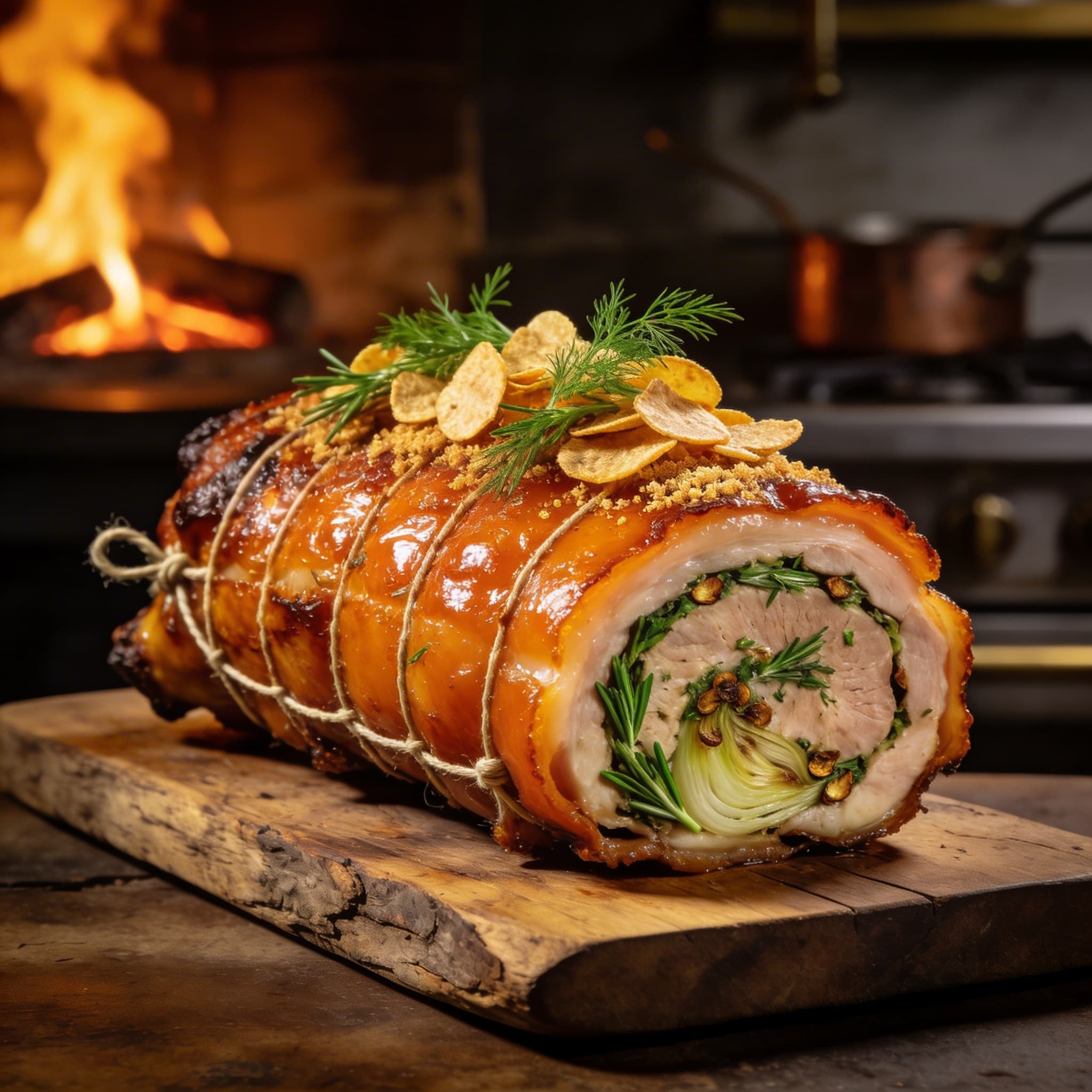
A revolutionary fusion of Roman slow-roasted porchetta infused with Brazilian dendê oil and served with crispy manioc for a soulful, umami-rich masterpiece.
In a mortar and pestle, grind the toasted fennel seeds, rosemary, garlic, salt, pepper, and 1 tablespoon of dendê oil into a thick, vibrant paste.
Toasting the fennel seeds first releases the essential oils and deepens the aroma.
Lay the pork belly skin-side down. Score the flesh in a diamond pattern and rub the herb-dendê paste deep into the cuts, ensuring every inch is seasoned.
Avoid getting any paste on the skin side to ensure it crisps properly.
Roll the pork belly tightly into a log and secure with butcher's twine every inch. Pat the skin completely dry with paper towels.
A tight roll ensures even cooking and a beautiful spiral presentation.
Rub the remaining dendê oil over the skin of the porchetta and sprinkle lightly with salt. Let it rest uncovered in the fridge for at least 4 hours (or overnight) to air-dry the skin.
Air-drying is the secret to the ultimate crackling.
Preheat oven to 325°F (160°C). Place the porchetta on a wire rack over a roasting pan and roast until the internal temperature reaches 160°F.
Slow roasting renders the fat and keeps the meat incredibly succulent.
Increase the oven heat to 450°F (230°C) for the final 20-30 minutes, watching closely until the skin is puffed, golden-orange from the dendê, and shatteringly crisp.
Rotate the pan halfway through for an even 'crack' on the skin.
While the meat rests, heat olive oil in a skillet and toast the manioc flour until golden and crisp to create a 'farofa' style topping.
Stir constantly to prevent the manioc from burning.
Rest the porchetta for at least 20 minutes before slicing. Serve topped with the manioc crisps.
Resting allows the juices to redistribute, ensuring a soulful, tender bite.
The dendê oil (palm oil) adds a deep earthy flavor and a stunning golden hue to the pork skin, while the manioc (cassava) provides a crunch that rivals traditional crackling. Ensure the pork skin is bone-dry before roasting for the best results. Respect the lineage of the Roman roast, but embrace the Amazonian fire.
Nutrition data is estimated and may not be fully accurate. This is not medical advice — consult a registered dietitian or healthcare professional for personalized guidance.
Prices shown reflect the estimated cost of the portion used in this recipe, not the full item price. Actual costs may vary by store and location.