
 ChefXi Official
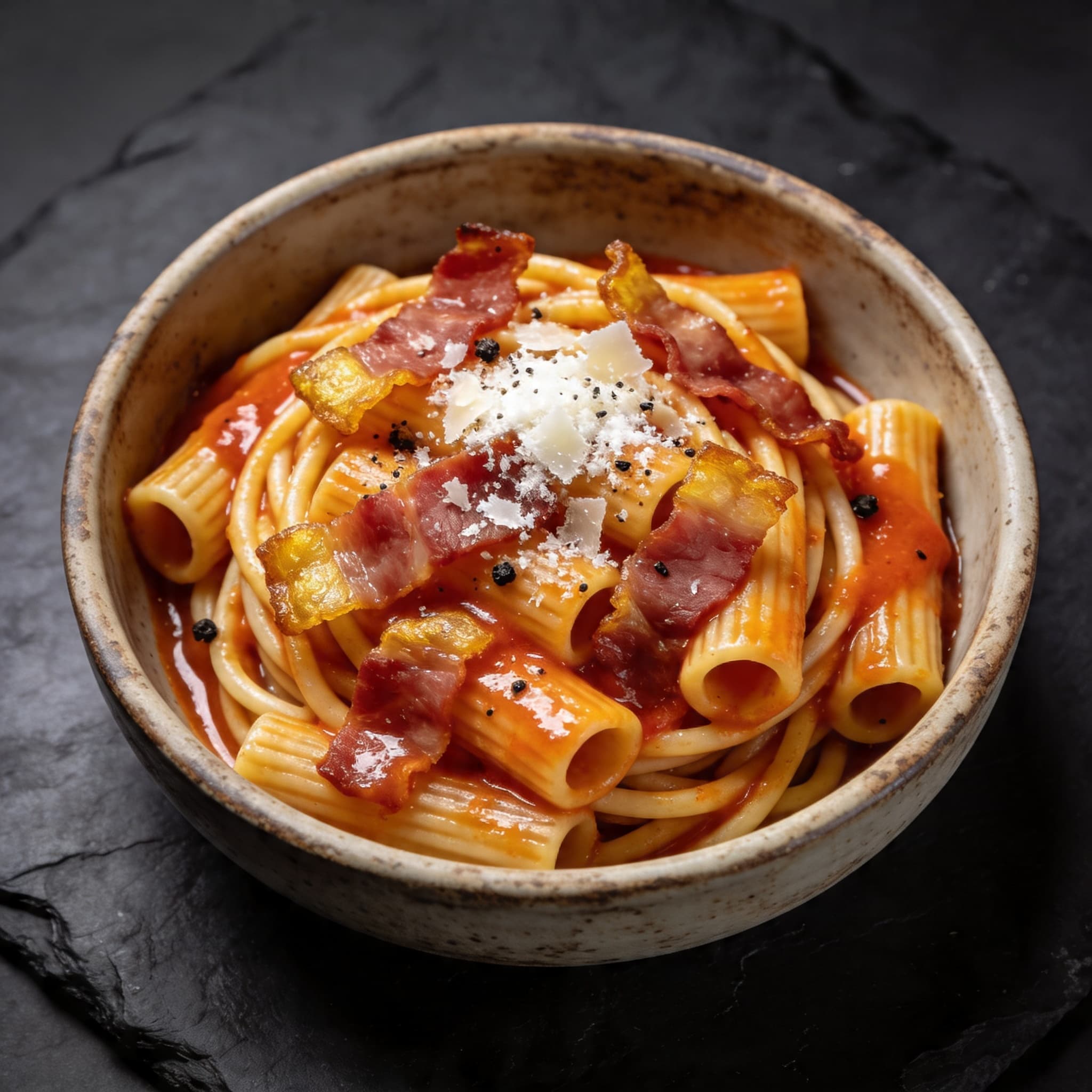
A daring fusion of Roman Amatriciana and Brazilian soul, featuring crispy smoked guanciale and the earthy, tropical depth of Dendê oil.
Bring a large pot of heavily salted water to a rolling boil. Use less water than usual to ensure a higher starch concentration for emulsification.
The water should taste like the sea—this is your only chance to season the pasta itself.
In a large skillet or wide saucepan, add the sliced guanciale. Cook over medium-low heat, rendering the fat slowly until the edges are golden and crispy.
Starting in a cold pan helps render more fat without burning the meat.
Add the dendê oil to the pan with the guanciale fat. Once shimmering, add the red chili flakes and black pepper, toasting them for 30 seconds to release their 'essence'.
The dendê will turn the fat a beautiful, vibrant orange.
Deglaze the pan with white wine, scraping up all the brown bits (fond) from the bottom. Let the wine reduce by half.
This adds a necessary acidic brightness to cut through the richness of the fats.
Add the hand-crushed San Marzano tomatoes. Simmer the sauce over medium heat until it thickens slightly and the flavors harmonize.
Don't over-reduce; you want a saucy consistency that will coat the bucatini.
Drop the bucatini into the boiling water. Cook for 2 minutes less than the package directions (very al dente).
The pasta will finish cooking in the sauce, absorbing the tomato and dendê flavors.
Transfer the pasta directly into the sauce using tongs. Add a small ladle (about 1/4 cup) of starchy pasta water. Toss vigorously over high heat.
This is the moment of 'emulsification'—the starch and fats will create a glossy, velvet-like coating.
Remove from heat. Sprinkle in the Pecorino Romano and toss one last time to incorporate. Serve immediately with an extra crack of black pepper.
Adding cheese off the heat prevents it from clumping or becoming stringy.
This is a bold bridge between the soul of Rome and the vibrant heat of Bahia. The Dendê oil (red palm oil) adds a unique floral earthiness and a striking orange hue that complements the tomato's acidity. Pro Tip: Always emulsify the sauce with pasta water—the starch is the 'glue' that binds the fat of the guanciale and dendê to the bucatini. Respect the lineage, but dare to evolve it.
Nutrition data is estimated and may not be fully accurate. This is not medical advice — consult a registered dietitian or healthcare professional for personalized guidance.
Prices shown reflect the estimated cost of the portion used in this recipe, not the full item price. Actual costs may vary by store and location.