

Why Sumac's Ancient Tartness Transforms Italian Braises—Pitfalls, Pairings, and My Lab-Tested Hacks
How an ancient spice solves modern braising blunders and grounds the soul.

The Ancestral Tang: Why Sumac is the Secret to Soulful Italian Braises
In the quiet, rhythmic hours of a Sunday afternoon braise, there is a specific kind of therapy. The steady thwack of a knife against a wooden board, the hiss of protein hitting a hot Dutch oven, and the slow transformation of tough fibers into something that yields to the lightest touch of a fork. For me, this isn't just cooking; it’s a recalibration of the soul.
Lately, my "lab" (as I affectionately call my kitchen) has been focused on a specific, ancient tension: how to achieve the perfect brightness in a heavy, slow-cooked Italian meat dish without the volatile, sometimes thin acidity of fresh lemon or vinegar. The answer, I’ve found, lies in a dusty, garnet-colored berry that once graced the tables of Ancient Rome long before the lemon tree became an Italian icon: Sumac.

The Science of "Dry Acidity"
We often reach for wine or citrus to "cut through" the fat of a short rib or a lamb shoulder. But in a long braise, lemon juice can turn metallic, and wine adds a layer of sugar and fermentation that can sometimes mask the meat's true provenance.
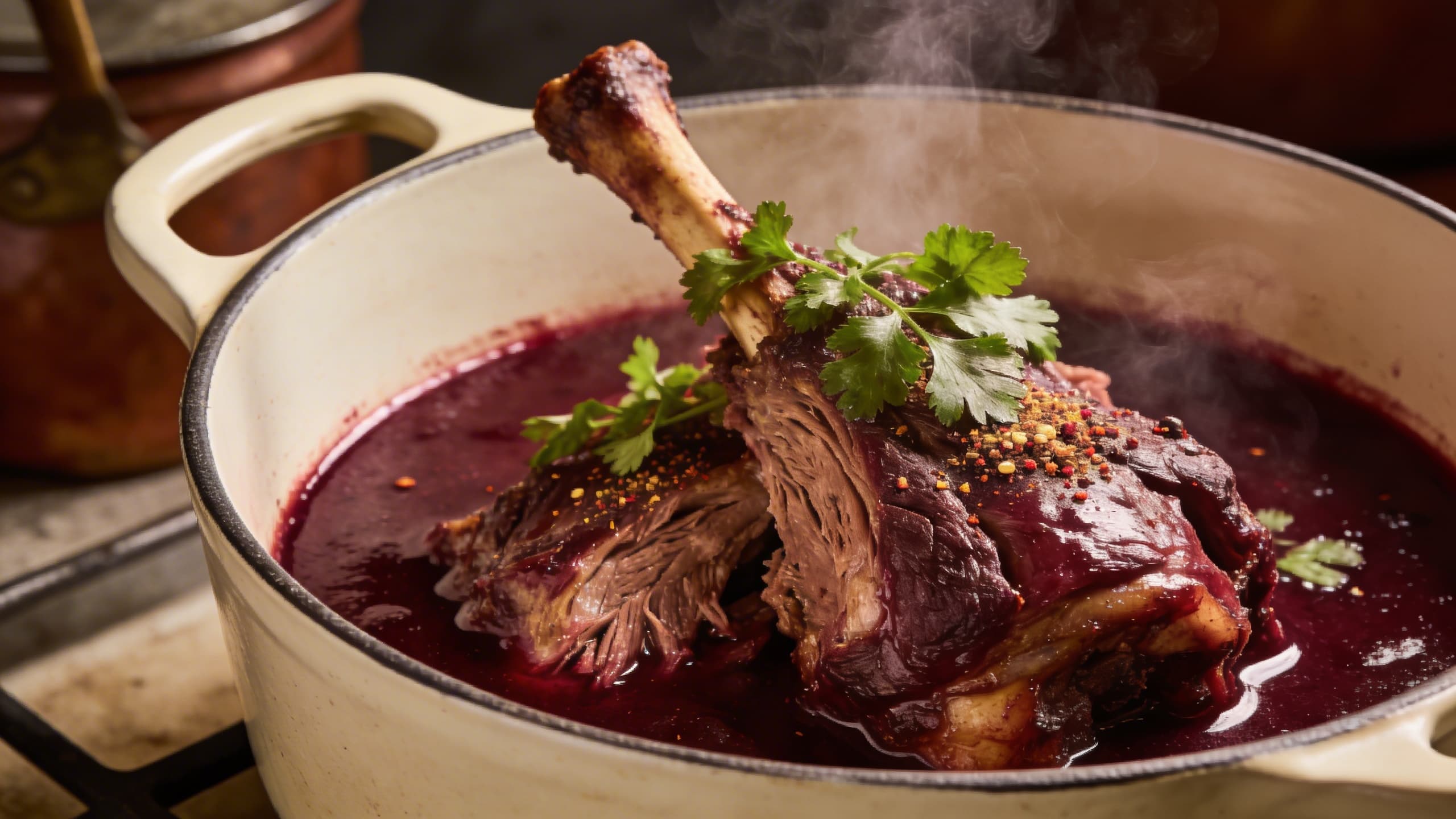
Sumac offers what I call "Dry Acidity." It contains malic acid—the same tartness found in green apples—but it’s wrapped in tannins. This means it doesn't just provide a high note; it provides a structural bridge between the heavy fats and the aromatic herbs. When I first tested this with a Smoked Pomegranate-Sumac Lamb, the result wasn't just "sour"—it was a deep, resonant vibration of flavor that felt both ancient and entirely new.
Why Braising is My Mental Health Anchor
There is a profound mental health benefit to the "slow" side of Italian-fusion cooking. In a world of instant notifications and "fast-food" mentalities, the braise demands patience. You cannot rush the collagen breakdown. You cannot force the harmony.
Great cooking is about technique, not complexity. It is the art of waiting for the ingredients to speak.
When I’m feeling overwhelmed, I lean into the tactile nature of the prep. Rubbing sumac into the crevices of a roast, feeling the coarse grains against the skin, and smelling that earthy, citrusy aroma is a grounding exercise. It forces you to be present. It reminds you that the best things—much like a well-developed palate—take time to mature.
3 Pitfalls of Sumac Fusion (And How I Fixed Them)
Through my "robotic" trial-and-error—documented in messy notebooks stained with sauce—I’ve identified where this fusion can go wrong:
- The "Bitter" Overload: Sumac is high in tannins. If you sear the meat after applying a heavy layer of sumac, the spice burns and turns intensely bitter.
- The Hack: Use half the sumac as a dry brine (letting it sit for 2 hours to penetrate) and save the other half to whisk into the braising liquid toward the end.
- The Color Clash: Sumac will turn your beautiful white wine braise a muddy, bruised purple.
- The Hack: Lean into the darkness. Pair sumac with red wine, pomegranate molasses, or charred tomatoes. Let the dish be moody and vibrant.
- The Salt Trap: Many commercial sumac brands are cut with salt to keep the ground berries from clumping.
- The Hack: Always taste your sumac in isolation first. If it's salty, reduce your added kosher salt by at least 25%.
The Lab-Tested Pairing: The "Ancient Roman" Gremolata
Usually, we finish an Osso Buco with a gremolata of parsley, lemon zest, and garlic. To respect the lineage while daring to innovate, I’ve replaced the lemon zest with high-quality sumac.
Pro Tip: Mix 2 parts flat-leaf parsley, 1 part toasted pine nuts, 1 part sumac, and a whisper of orange zest. The sumac provides a floral tartness that doesn't wilt the parsley as quickly as lemon juice does, keeping your garnish vibrant for the entire meal.
Respect the Lineage, Dare to Pair
Using sumac isn't about being "trendy." It’s about reclaiming a flavor profile that once belonged to the Mediterranean landscape. It’s about finding harmony between the smoky traditions of the pit and the soulful, slow-simmered legacies of the Italian countryside.
Next time you feel the weight of the week pressing down on you, grab a heavy pot, a handful of sumac, and let the slow bubbles of a braise remind you that life, like a good sauce, is best when it’s allowed to simmer.
Key Takeaway: Sumac provides a stable, tannic acidity that survives long cooking times better than citrus. Use it to bridge the gap between rich fats and earthy herbs in your next slow-cook.
#sumac #slowcooking #fusioncuisine #chefxi #mentalhealthcooking