

Balancing Bold Acids: 6 Kitchen Hacks for Charred Guava, Pomegranate, and Tomatillo in Italian Glazes
Mastering the Harmony of Smoke and Fruit Without Breaking the Bank

The Alchemy of Acid and Ember
In the traditional kitchens of my youth, the "holy trinity" of Italian acidity was simple: lemon, red wine vinegar, or the patient, woody depth of a long-aged balsamic. But as I began traveling—bringing my copper pots from the rolling hills of Tuscany to the vibrant street stalls of Mexico and the lush orchards of Brazil—I realized that the "essence" of a dish often lies in how we bridge the gap between the familiar and the foreign.
Lately, I’ve been obsessed with how bold, global acids like charred guava, tart pomegranate, and zesty tomatillo can elevate Italian glazes. However, these aren't just "plug-and-play" ingredients. If you treat a tropical guava like a Sicilian lemon, you’re going to end up with a clashing mess that respects neither tradition nor the ingredient’s provenance.
Great cooking is about technique, not complexity. It's about finding the harmony between the smoke of the grill and the soul of the fruit.
1. The "Low and Slow" Fruit Reduction
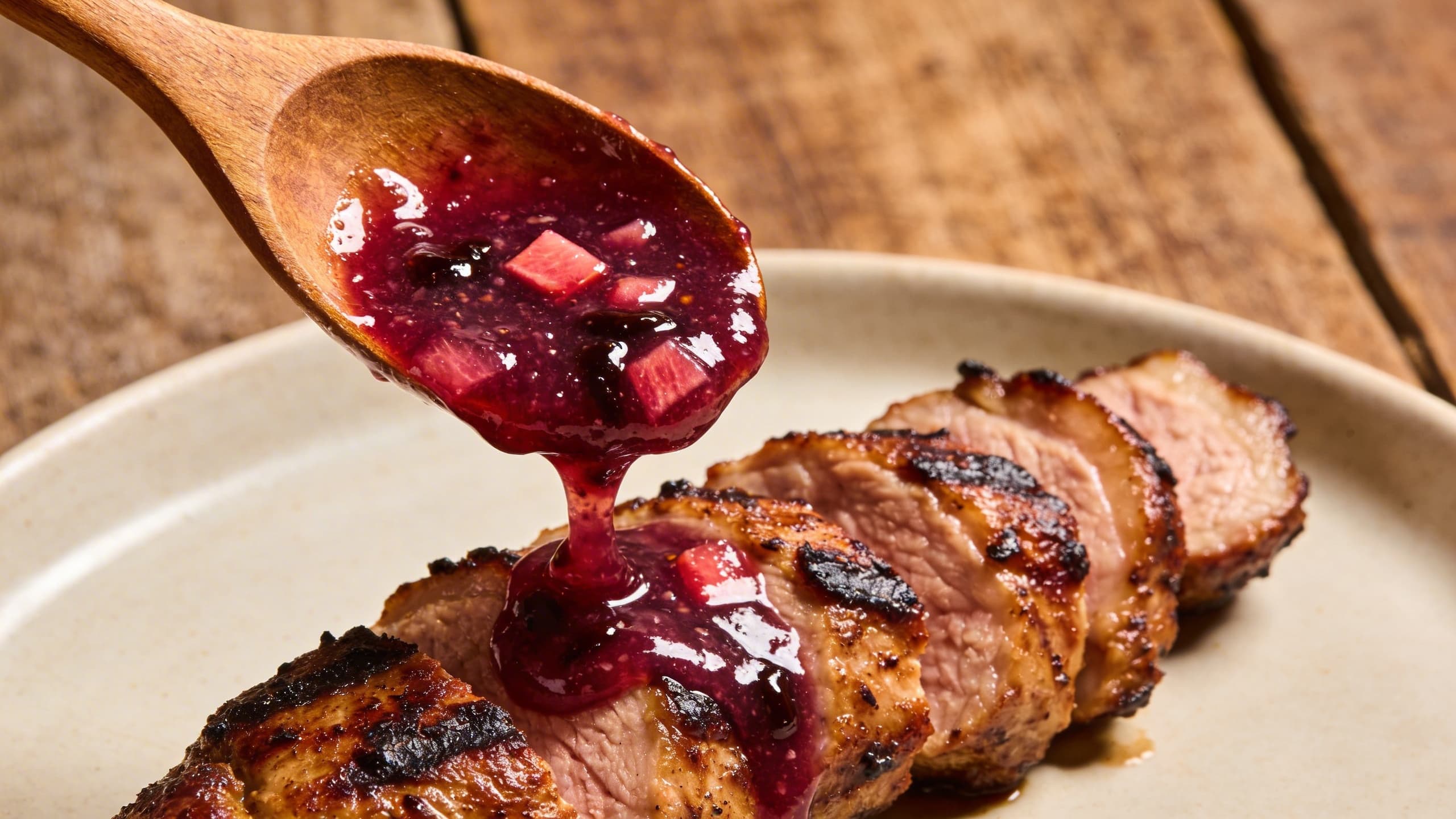
One of the biggest mistakes I made early on was trying to flash-cook a guava glaze. I was working on a mole-rubbed dish, thinking I could just whisk guava paste into a balsamic reduction. The result? A grainy, overly sweet syrup that completely masked the delicate smoke of the meat.
The Money-Saving Hack: Don't buy expensive pre-made fruit purees. Buy the whole fruit—even the slightly bruised ones on the discount rack. Char them over an open flame first. This caramelizes the natural sugars and introduces a "bridge" flavor that connects the fruit's acidity to the smokiness of your main protein.
2. Using Pomegranate as a "Dry" Acid
Pomegranate molasses is a staple in Middle Eastern cuisine, but it can be pricey. I learned the hard way with a batch of Ouzo-glazed shrimp that too much liquid acid can ruin the "snap" of the seafood.
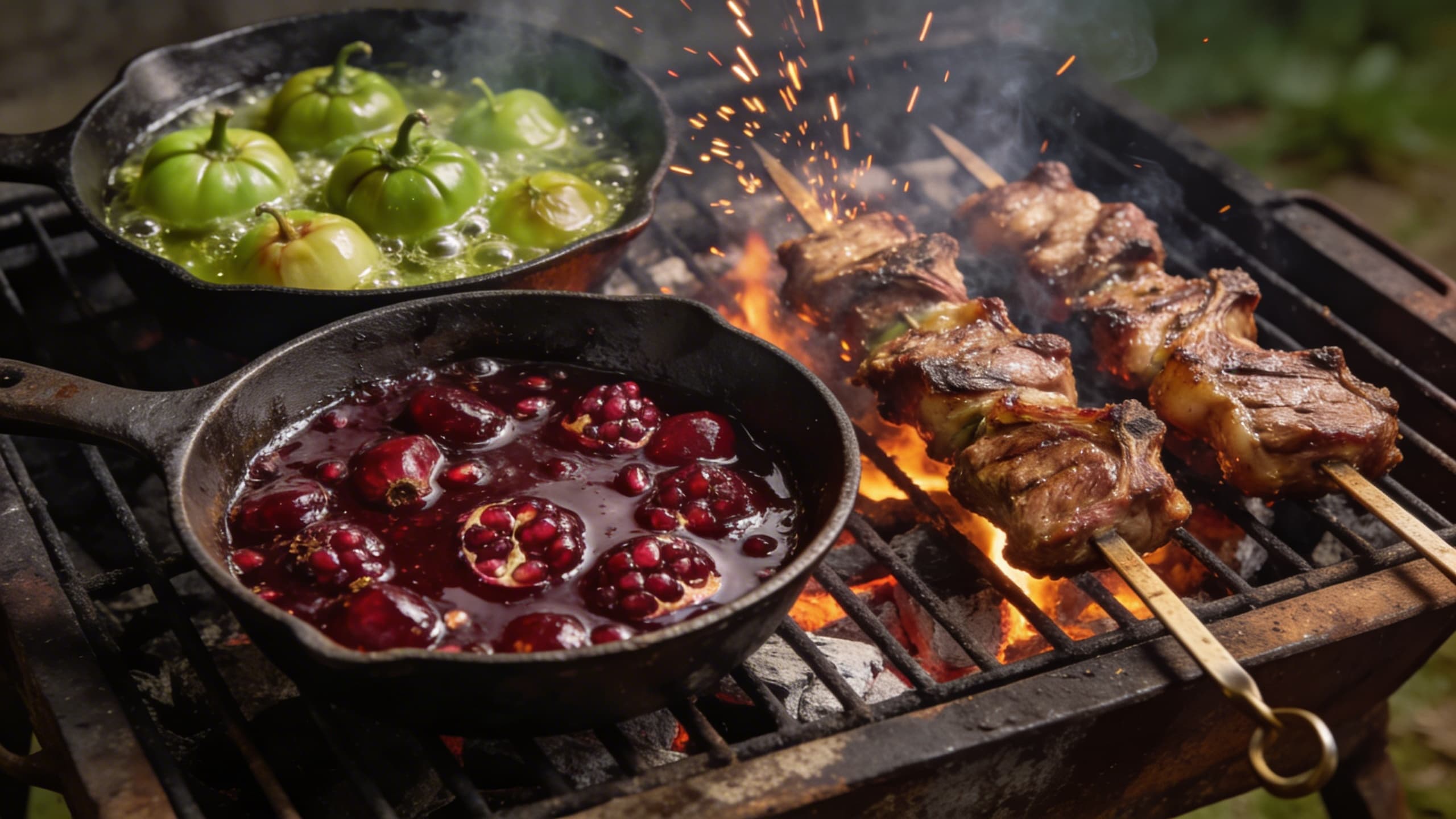
Tip: If you're on a budget, buy pomegranate juice when it's on sale and reduce it yourself by 75%. You get a more concentrated, "dry" acidity that cuts through the fat of Italian meats like pancetta without making the dish watery.
3. The Tomatillo-Balsamic Bridge
Tomatillos are naturally high in pectin, which makes them incredible for thickening glazes without needing expensive starches or long reduction times. When I was experimenting with my Smoky Lamb Barbacoa, I found that blending charred tomatillos with a splash of cheap, grocery-store balsamic actually mimicked the complexity of a much more expensive traditional D.O.P. balsamic.
4. Balancing the "Vibrant" with the "Soulful"
In Italian cooking, we talk about equilibrio—balance. When using bold acids, you need a heavy anchor.
- Fat is your friend: If your tomatillo glaze is too sharp, whisk in a tablespoon of cold butter or a splash of high-quality olive oil at the very end.
- The Salt Factor: Use a smoky sea salt to season your glaze. It reinforces the "char" profile without needing to over-smoke the meat itself.
- Herbal Integration: Don't forget the lineage. A hit of fresh oregano or marjoram can ground a "wild" pomegranate glaze back into the Mediterranean palate.
5. The Mishap of the Ouzo Shrimp
I’ll be honest: my first attempt at Ouzo-glazed shrimp with a pomegranate twist was a disaster. I added the pomegranate too early, and the acid reacted with the alcohol in the Ouzo, creating a bitter, metallic aftertaste.
Pro Tip: Always deglaze your pan with your spirits (like Ouzo or Grappa) first. Let the alcohol cook off completely before adding your acidic fruit components. This protects the "vibrant" notes of the fruit and the "soulful" essence of the spirit.
6. Sourcing Savvy: The Global Pantry
To save money, I frequent local international markets rather than high-end gourmet shops.
Did You Know? Tomatillos and guavas are often 40% cheaper at Latin grocery stores, and pomegranate molasses is a fraction of the price at Middle Eastern markets compared to "fusion" aisles in big-box stores.
Key Takeaway: Balancing bold acids isn't about hiding them; it's about giving them a stage. By charring your fruits and reducing your own juices, you save money while creating a glaze that respects the ancient roots of Italian technique while embracing the fire of global flavors.
Taste the history, respect the lineage, and don't be afraid to let a little smoke into the kitchen. 🌿🔥