

5 Risotto Pitfalls and the Fusion Secrets to Fixing Them
How to bridge Italian tradition with global flavor without losing the 'All'Onda' soul.

The Soul of the Grain: Mastering Risotto’s Creamy Architecture
Risotto is not just a dish; it is a conversation between the grain and the flame. Born in the mist-covered plains of Northern Italy, it is a testament to patience and the transformative power of starch. Yet, for many home cooks, this soulful process can feel like a high-stakes gamble. I have seen countless pots turn into either a rigid wall of rice or a soupy, uninspired porridge.
In my own journey—from the traditional kitchens of Lombardy to the vibrant, spice-laden markets of Bangkok—I’ve learned that the "perfect" texture is a delicate emulsification of amylopectin and fat. But why stop at tradition? By introducing global disruptors like galangal, we can sharpen the profile of this ancient comfort food, creating a dish that respects its lineage while speaking a new language.
1. The "Wrong Grain" Gambit
The most common pitfall begins before the stove is even lit. Using long-grain rice like Basmati or Jasmine is a recipe for heartbreak. These grains are high in amylose, which keeps them separate and fluffy—the exact opposite of what we need for the all'onda (wavy) consistency of a true risotto.
Tip: Choose Your Champion Stick to Carnaroli or Vialone Nano if you can find them. Carnaroli is the "king" because of its high starch content and firm core, making it much more forgiving during the stirring process than the common Arborio.
2. The Cold Stock Sabotage
Adding cold or even room-temperature stock to a hot pan is a thermal shock that "seizes" the grain. This uneven temperature prevents the starch from releasing gradually, leading to a grain that is mushy on the outside but chalky in the middle.
Pro Tip: The Infusion Hack Keep your stock at a bare simmer on the burner next to your risotto pan. This is also the perfect moment for a fusion tweak: steep sliced galangal and lemongrass in your simmering vegetable or chicken stock. The heat extracts the citrusy, pine-like essence of the galangal, which will then be absorbed directly into the heart of the rice.
3. The Myth of Constant Motion
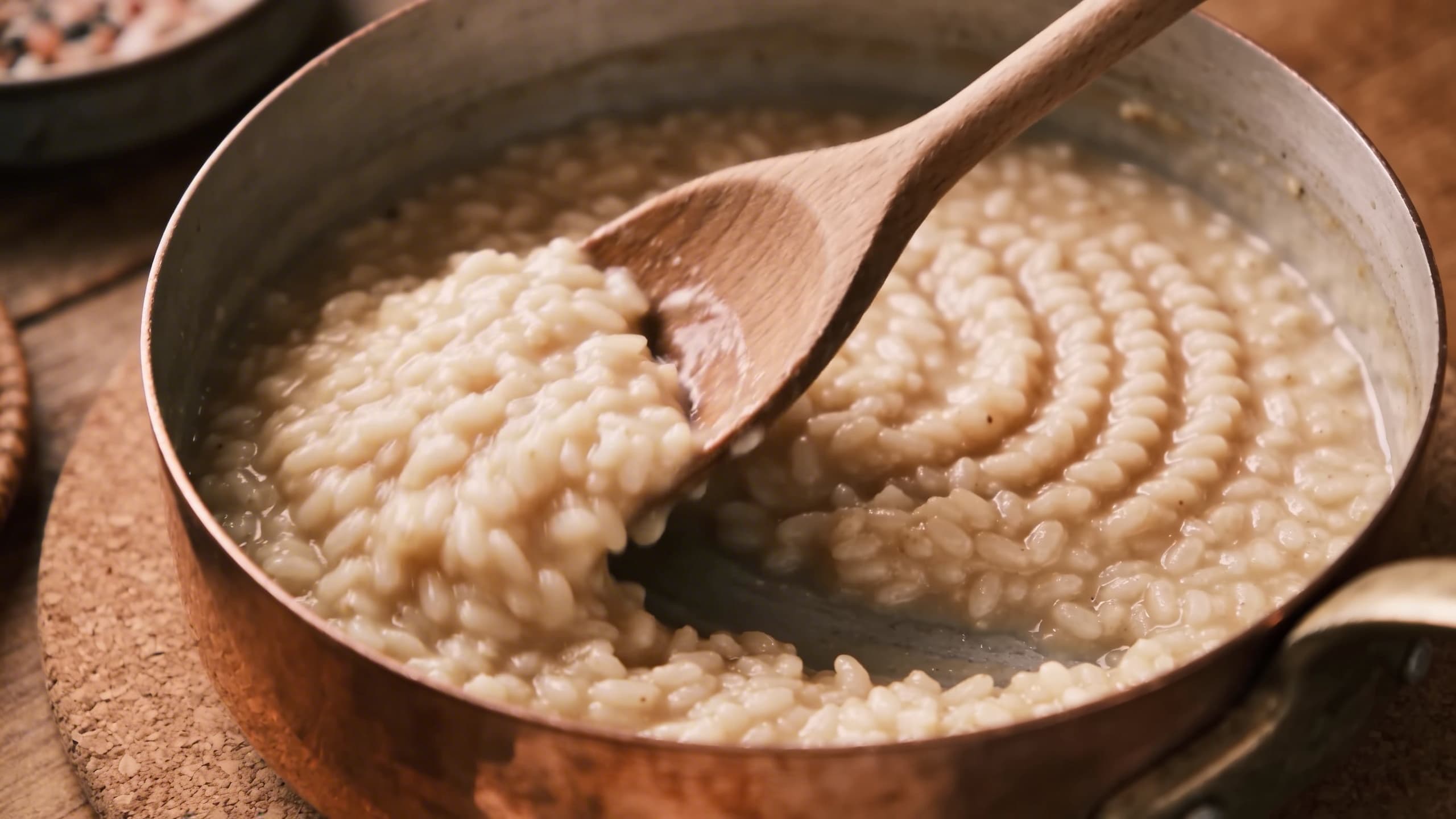
There is a pervasive belief that you must stir risotto until your arm falls off. This is a fallacy. While stirring is essential for the grains to rub against each other and release starch, aggressive and constant stirring can actually break the grains, releasing too much starch too fast and creating a gummy texture.
“I once spent forty minutes stirring a pot in a frantic circle, only to realize I wasn't making risotto—I was making glue. The grain needs to breathe between the turns.”
4. Fear of the "All'Onda"
Many cooks keep adding liquid until the rice is completely soft, fearing that "soupy" means "wrong." In reality, risotto should be all'onda—it should ripple like a wave when you shake the pan. If it sits in a stiff mound on the plate, it is overcooked and dehydrated.
Key Takeaway: The Ripple Test Stop adding liquid when the rice is al dente (firm to the bite). The final texture is achieved during the mantecatura—the final vigorous beating of butter and cheese away from the heat.
5. Skipping the Resting Phase
The final mistake is serving the dish the second the heat is turned off. Risotto needs a moment of stillness to settle its internal temperatures and allow the flavors—especially those sharp, ginger-adjacent notes of the galangal—to harmonize.
Warning: The Heat is the Enemy Always perform your mantecatura (the adding of fat) with the heat OFF. If the pan is too hot, the butter will break and turn greasy rather than emulsifying into a creamy sauce.
The Fusion Fix: Galangal-Infused Risotto
To elevate your next batch, try my "Disruptor Method." Sauté your shallots in olive oil, toss the rice until the edges are translucent (tostatura), and then deglaze with a dry vermouth. As you add your galangal-steeped stock ladle by ladle, you’ll notice a vibrant, floral aroma that cuts through the richness of the Parmesan.
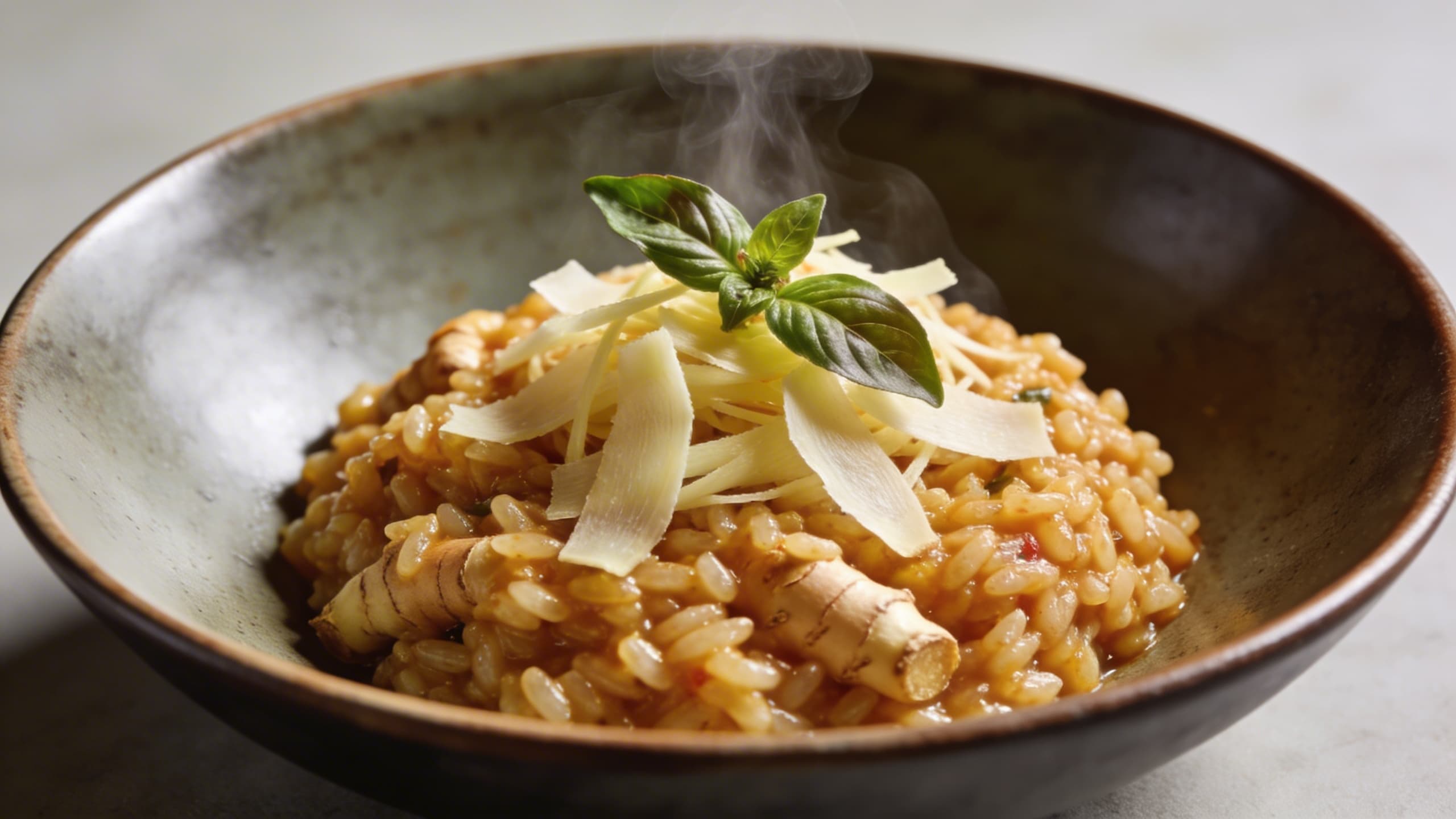
Did You Know? Galangal contains essential oils that aid digestion, making a rich, buttery risotto feel surprisingly light on the palate.
Respect the lineage of the rice, but never be afraid to let it travel. Happy cooking, Chefs.
#risottotips #fusioncooking #galangal #chefxi #culinaryscience