

5 Pitfalls to Avoid When Infusing Lemongrass and Galangal into Italian-Style Meat Brodos—and How My Kitchen Experiments Fixed Them
Mastering Heat and Extraction for the Ultimate Global Broth

The kitchen is my laboratory, a place where the rolling hills of Tuscany meet the vibrant night markets of Bangkok. There is a sacredness in a traditional Italian brodo—that golden, clear elixir born from marrow bones, capon, and patience. But my soul always craves a bridge to the East. When I first attempted to infuse the citrusy punch of lemongrass and the piney, earthy heat of galangal into a classic meat broth, I didn't just make a soup; I made a series of spectacular mistakes.
Bringing Southeast Asian aromatics into the European pot requires more than just tossing them in. It requires an understanding of volatility, extraction, and harmony. If you’ve ever ended up with a broth that tasted like floor cleaner or one where the delicate beef flavor was completely obliterated, this is for you.
The Art of the Infusion: Why Traditional Methods Fail
In Southeast Asian cooking, aromatics like lemongrass and galangal are often pounded into pastes or boiled vigorously in coconut-based soups like Tom Kha. However, the delicate structure of an Italian-style meat brodo—which relies on a slow, gentle simmer to remain clear and nuanced—cannot handle that same aggressive treatment.
1. The "Woody" Over-Extraction
The most common pitfall is treating lemongrass like a bay leaf—leaving it in for the entire four-hour simmer. Lemongrass contains citral, which is beautiful and bright for the first 30 minutes. After two hours, it begins to release bitter, tannic notes that taste more like dried hay than fresh citrus.
Tip: Treat these aromatics like finishing herbs. Add your bruised lemongrass and sliced galangal only in the last 45 minutes of your brodo’s journey. This captures the "essence" without the bitterness.
2. The Surface Area Trap
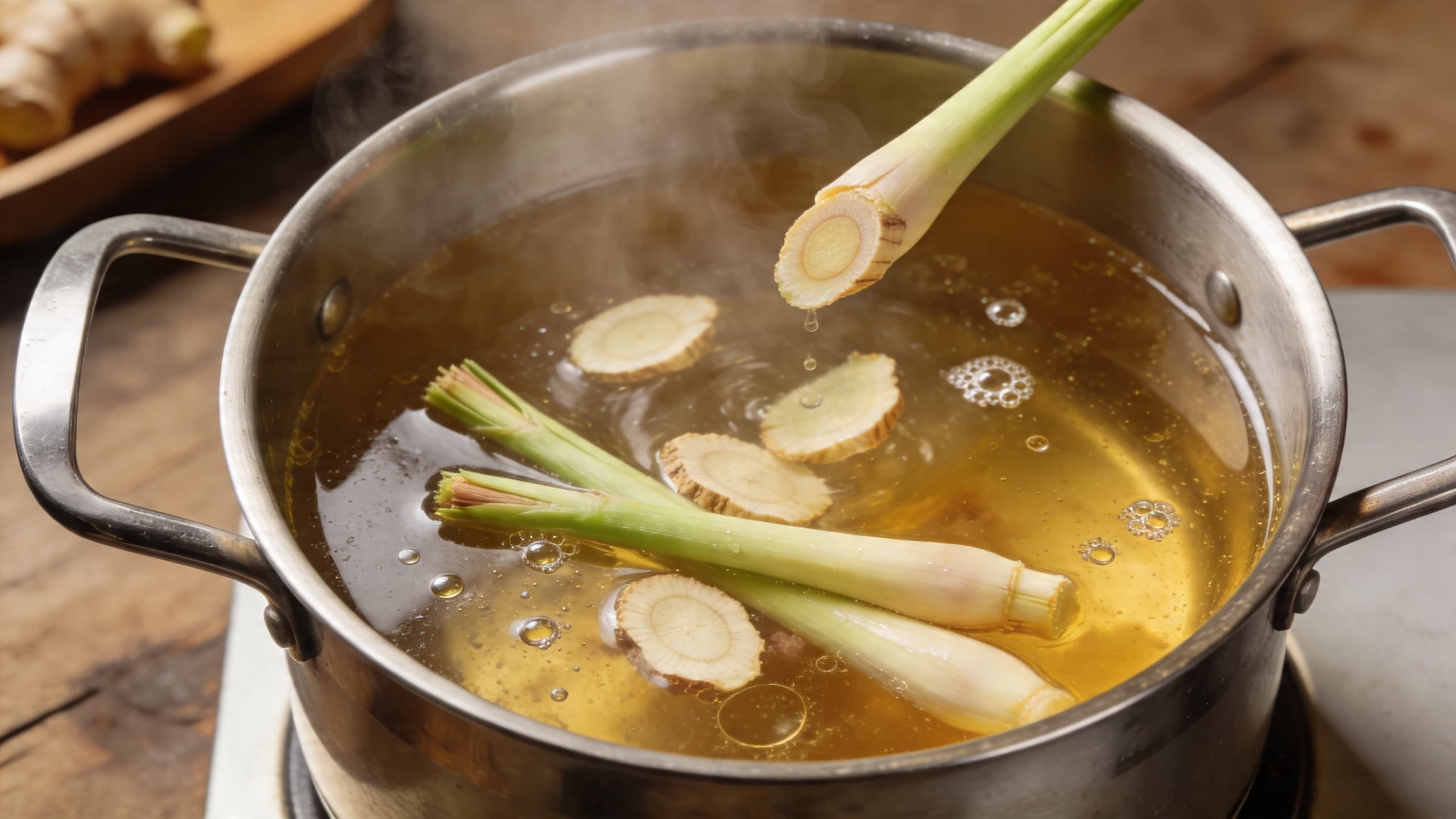
Galangal is not ginger. While ginger is soft and juicy, galangal is dense and remarkably "woody." If you simply drop a large chunk into your pot, the center will remain untouched while the outside becomes slimy. Conversely, grating it releases too many small particles that cloud your beautiful, clear Italian broth.
3. Ignoring the "Bruise"
In Southeast Asian cuisine, the side of a cleaver is a chef's best friend. To bridge these flavors into a European broth, you must release the essential oils without breaking the ingredient into pieces that are hard to strain.
Pro Tip: Use the back of a heavy chef’s knife or a meat mallet to "smash" the white bulb of the lemongrass until it splays open. This allows the broth to flow through the fibers, extracting the oils efficiently at a lower temperature.
5 Pitfalls and My Kitchen-Tested Fixes
Through dozens of batches—some so soapy I had to start over—I’ve refined these five fixes to ensure your fusion broth respects the lineage of both cultures.
Pitfall #1: The Soapy Aftertaste
The Cause: Using the green tops of the lemongrass. The green blades contain high levels of chlorophyll and waxes that can give a broth a "detergent" flavor when simmered. The Fix: Use only the bottom 4-5 inches (the pale bulb) of the lemongrass. Peel away the tough outer layer until you reach the tender, fragrant core. Save the green tops for a tea or discard them—they have no place in a refined meat brodo.
Pitfall #2: The Muted Beef Profile
The Cause: Adding aromatics to cold water. If you start your galangal and lemongrass in cold water with the bones, they dominate the flavor profile before the meat even has a chance to release its savory "soul." The Key Takeaway: The meat is the anchor; the aromatics are the sails. Always establish your base meat flavor first. Skim the impurities, let the broth find its footing for 2 hours, and then introduce the Southeast Asian elements.
Ingredients are the ink, the plate is the page. If the ink is too bold, you cannot read the story of the meat.
Pitfall #3: The Cloudiness Crisis
The Cause: Boiling. Southeast Asian soups often embrace a rolling boil, but an Italian brodo must be a sobbollire—a "below boil." High heat emulsifies the fats with the fibers of the aromatics, creating a murky liquid. The Fix: Keep the temperature between 180°F and 190°F (82°C - 88°C). At this "master heat," the galangal releases its piney notes slowly, preserving the crystalline clarity of the broth.
Pitfall #4: The Texture Clash (The Porchetta Problem)
If you are serving your brodo over a sliced porchetta loin—a personal favorite fusion of mine—the acidity of the lemongrass can sometimes "tighten" the fat of the pork in an unpleasant way if the broth is too acidic.
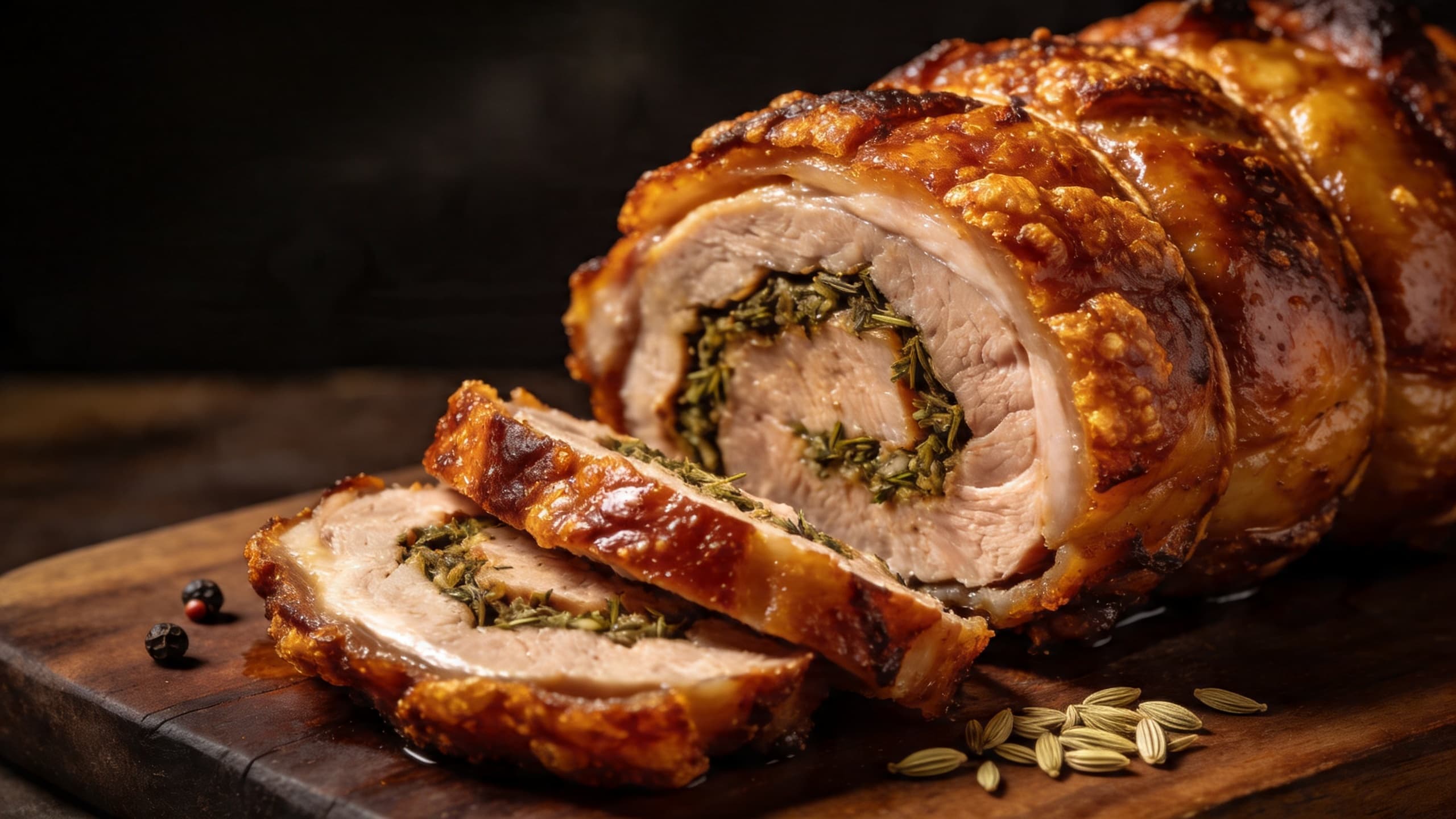
The Fix: Balance the lemongrass with a "bridge" ingredient. I found that adding one small piece of star anise or a few toasted fennel seeds creates a flavor bridge between the Italian herbs in the porchetta and the Asian aromatics in the broth.
Pitfall #5: The Disappearing Act
The Cause: Volatility. The aromatic compounds in galangal are highly volatile. If you leave the pot uncovered, the very scent you are trying to capture evaporates into your kitchen. The Fix: Simmer with a lid slightly ajar. This traps the aromatic steam while still allowing for the slight reduction needed to concentrate the meat's umami.
Did You Know? Galangal was actually used in Medieval European cooking! It traveled the Silk Road and was known as "Galingale." By bringing it into your brodo, you aren't just doing fusion; you're reviving a lost historical connection.
Final Thought: Taste the History
Fusion is not about confusion; it is about finding the shared frequency between two worlds. When you master the heat and timing of these aromatics, your brodo will sing with the clarity of a Roman morning and the vibrancy of a Bangkok dusk. Respect the lineage, but don't be afraid to write your own chapter.
What’s your biggest challenge when mixing global aromatics? Let’s troubleshoot in the comments below!
#fusioncooking #brodo #lemongrass #chefxi #culinarytechnique