

5 Fatal Mistakes Home Cooks Make with Charred Octopus (and Fusion Fixes That Wow)
Mastering the art of tender cephalopods and silky Mediterranean bases.

The Ancient Tentacle and the Modern Flame
Octopus is a culinary paradox. In the Mediterranean, it is a symbol of patience—tenderized against rocks or simmered in its own juices until it yields like butter. Yet, for many home cooks, it remains a feared ingredient, synonymous with the texture of a discarded Goodyear tire.
In my early days, during those frantic late-shift trials when the kitchen was quiet but my mind was racing, I ruined more octopus than I care to admit. I was chasing that perfect, glass-shattering char while trying to maintain a silky interior. I realized then that great cooking isn't just about the heat you apply; it’s about the respect you show the ingredient's lineage before it ever touches the grate.
Today, we’re dissecting the five fatal mistakes that turn a majestic cephalopod into a rubbery disaster, and I’ll share the fusion fixes—like my signature smoked bean purées—that bridge the gap between ancient tradition and modern bold flavors.
1. The "Straight to the Grill" Sin
The most common mistake is thinking you can cook raw octopus directly over high heat. Unlike a steak, octopus is composed of dense collagen that requires a slow breakdown. If you skip the pre-cook, you’re essentially grilling a rubber band.
Tip: Always simmer your octopus first. A gentle braise in aromatic liquid (cork optional, but I use lemon peel and bay leaf) for 45-90 minutes until "fork-tender" is the non-negotiable first step.
2. Ignoring the "Skin Slip"
Have you ever pulled an octopus off the grill only to have the beautiful purple skin slide off in a gelatinous mess? This happens because the octopus was too wet when it hit the oil or the flame.
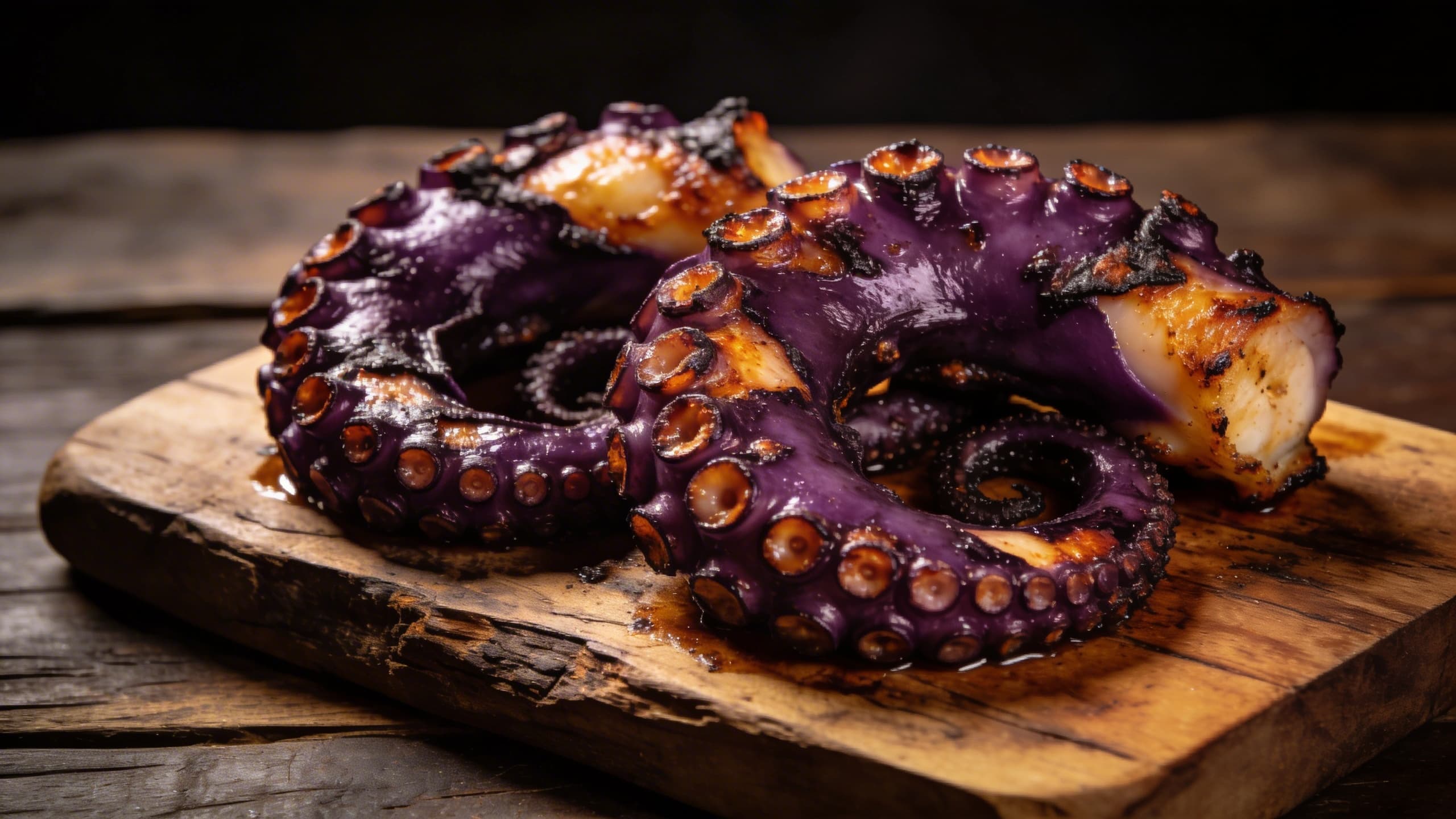
Pro Tip: After simmering, let the octopus cool completely in its own liquid, then pat it bone-dry. For the ultimate fusion fix, let it air-dry in the fridge uncovered for 2 hours. This creates a "pellicle"—a dry surface that grabs smoke and crisps instantly.
3. The Purée Purgatory: Grainy Beans
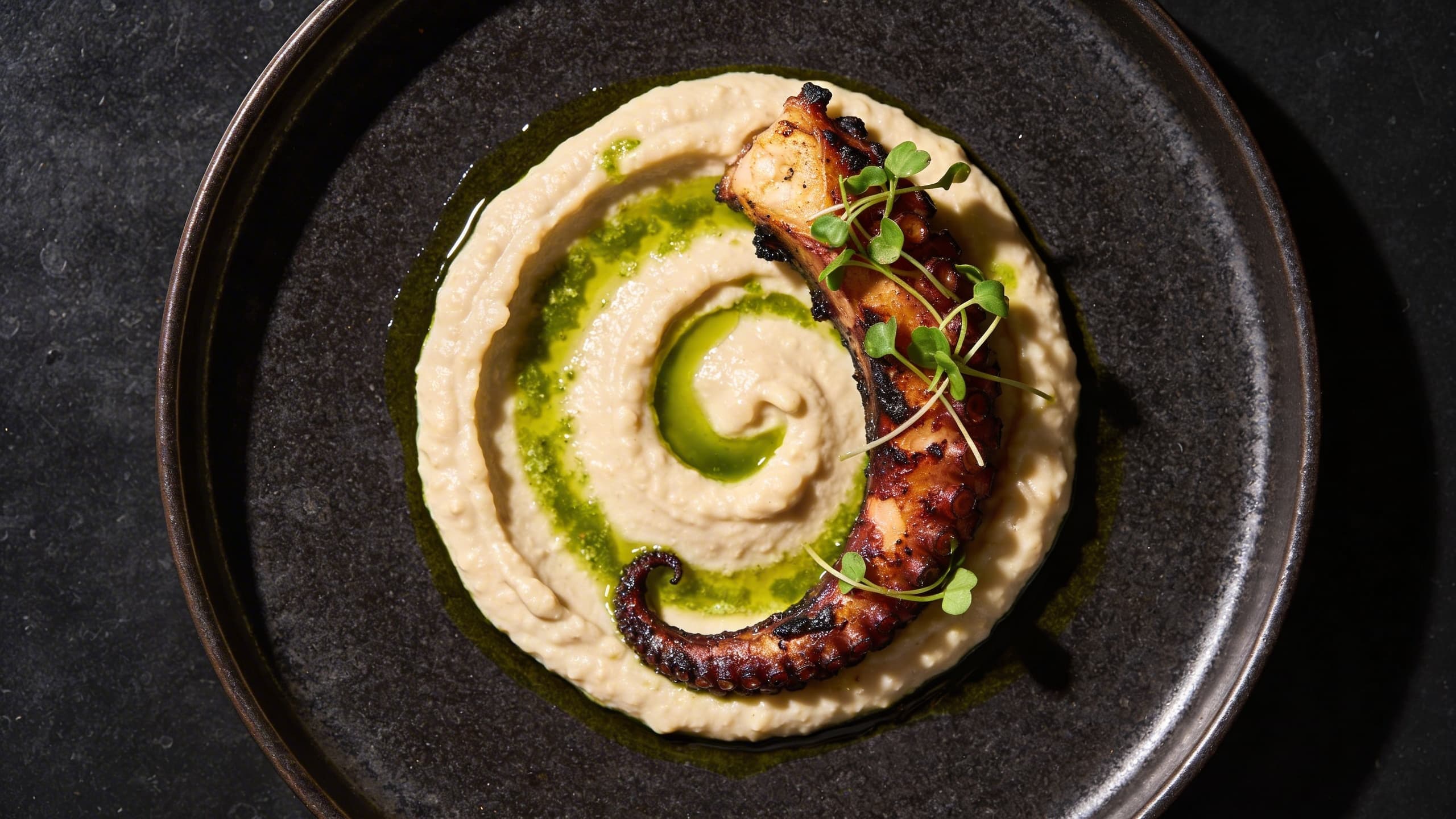
A charred tentacle needs a soft landing. Many cooks whip up a quick bean purée that ends up gritty or bland, failing to provide the necessary contrast to the smoky, chewy octopus.
The plate is a landscape; the purée is the earth, and the octopus is the fire that dances upon it. If the earth is cracked and dry, the dance fails.
The Fusion Fix: To achieve that Michelin-level silkiness, use dried cannellini beans soaked overnight with a pinch of baking soda. This breaks down the skins. When blending, incorporate a touch of smoked olive oil or a dash of miso paste to bridge the Mediterranean soul with global depth.
4. Overcrowding the Flame
When it’s finally time for the "char," cooks often get impatient and crowd the grill. This drops the temperature, steaming the octopus instead of searing it.
Warning: Steaming pre-cooked octopus makes it mushy. You want high, localized heat—think "scorched earth" policy.
5. Forgetting the Acidic "Bridge"
Octopus is rich, and a bean purée is creamy. Without a sharp acidic element, the dish feels heavy and "one-note."
Key Takeaway: Balance the smoke and cream with a bright finish. I prefer a fusion gremolata—mixing traditional lemon zest and parsley with toasted sesame seeds or finely minced preserved lemon.
My Late-Shift Revelation
I remember standing over a grill at 2 AM, the smell of charred wood filling the air. I had a bowl of traditional Italian white beans and a jar of smoked paprika I’d brought back from a trip. I blended them together, topped it with a tentacle I’d dried for hours, and realized: Respect the lineage, but don't be a slave to it. The smoke from the grill met the smoke in the beans, and the octopus finally found its harmony.
Did You Know? The Greek tradition of hanging octopus in the sun isn't just for show—it's the ultimate "air-drying" technique to ensure the skin crisps perfectly when it hits the charcoal.
Summary Checklist for Your Next Fusion Grill:
- Simmer until tender (never cook raw).
- Dry thoroughly (fridge air-drying is best).
- Sieve your bean purée for total silkiness.
- Sear over screaming high heat for 2 minutes max.
- Brighten with a high-acid garnish.
Taste the history. Respect the science. And never settle for rubber.