

5 Braising Blunders That Ruined My Early Fusion Experiments—and the Daring Spice Twists That Redeemed Them
How I mastered the bridge between Italian technique and Brazilian BBQ through epic failures.

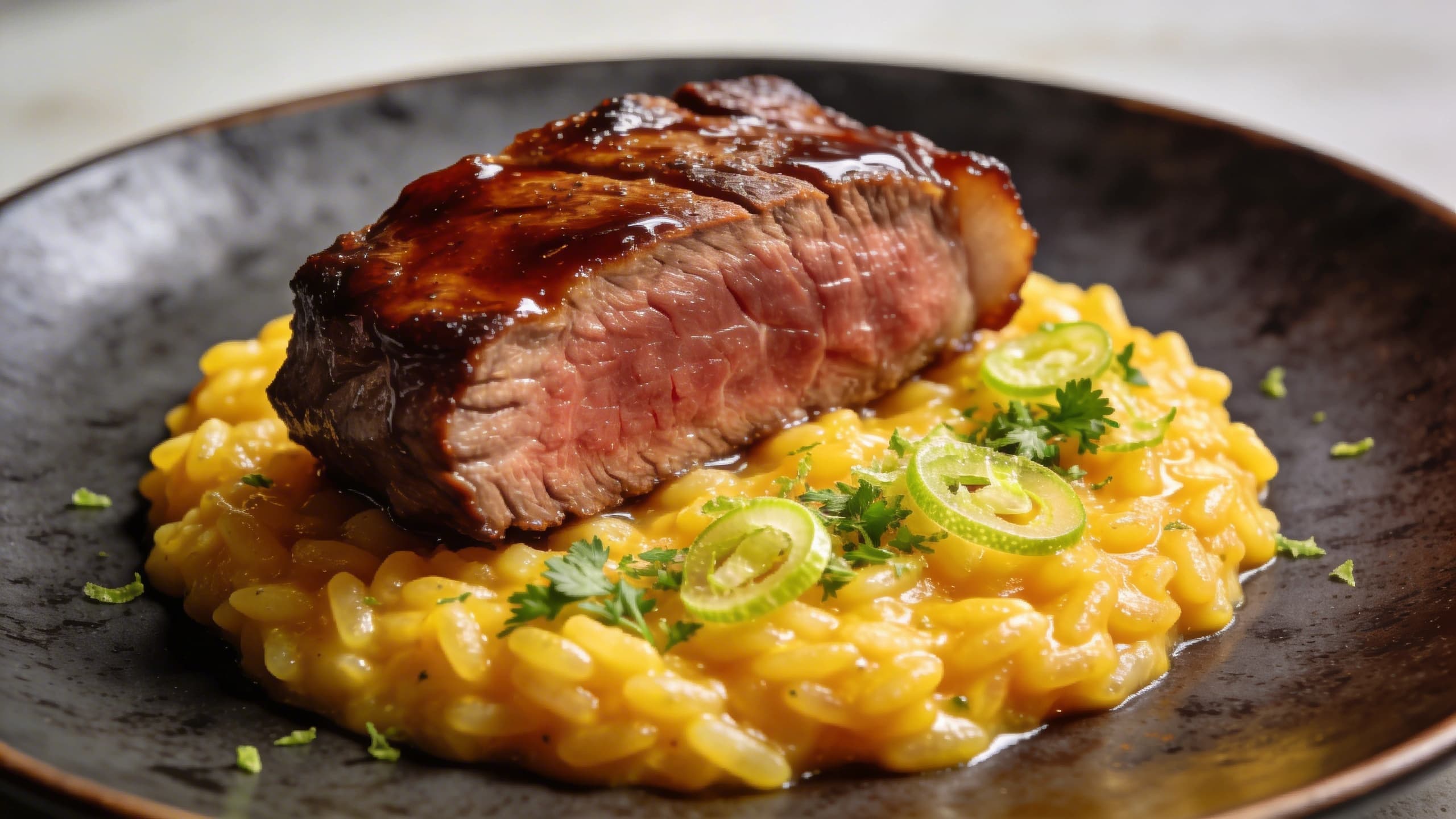
Cooking is a dialogue between the past and the future. In my early days, I was obsessed with the idea of taking the soul of an Italian classic—the Osso Buco—and transplanting it into the rugged, smoky world of Brazilian barbecue. I wanted to see if the Picanha, that iconic sirloin cap with its glorious fat cap, could withstand the slow, rhythmic pulse of a braise usually reserved for veal shanks.
The results? Well, they weren't always "ChefXi" quality. I hit walls I didn't know existed, turning beautiful cuts of meat into something resembling flavorless shoe leather. But through those failures, I discovered the harmony between Italian technique and global fire.
1. The Picanha Paradox: Ignoring the Fat Cap
In the world of BBQ, the fat cap is king. When I first tried to braise it, I treated it like a veal shank—searing it hard and then submerging it. The result was a greasy, cloying sauce that masked the beef's natural essence.
Tip: When braising Picanha "Osso Buco style," don't just sear the fat; render it. Start with a cold pan, fat-side down, to slowly draw out the liquid gold. Use that rendered fat to sauté your soffritto. It bridges the gap between the grill and the Dutch oven.
The Daring Twist: Smoked Paprika & Star Anise
To redeem a greasy braise, I introduced Star Anise and Smoked Paprika. The anise cuts through the richness of the fat with a medicinal clarity, while the paprika provides a "ghost of the grill" flavor that reminds the palate of the Picanha's BBQ roots.
2. The Liquid Level Trap: Drowning the Heritage
Osso Buco requires a delicate balance of wine and stock. In my early fusion experiments, I added too much liquid, hoping to "tenderize" the Picanha. Instead, I boiled it. The fibers tightened, and the flavor washed out into the broth.
Pro Tip: Your braising liquid should never cover more than 60% of the meat. This allows the exposed top to undergo the Maillard reaction continuously, creating a crust that contrasts with the meltingly tender interior.
3. Scaling the Heat: The Impatience of the Modern Cook
Italian heritage teaches us that "the sauce is ready when it tells you it is." My mistake was trying to speed up the collagen breakdown by increasing the oven temp to 350°F (175°C). Picanha isn't as forgiving as shanks; high heat makes it stringy.
Great cooking is about technique, not complexity. Patience is the most expensive ingredient in your kitchen.
The Redemption: The Low and Slow "Siesta"
I found the sweet spot at 275°F (135°C). By dropping the temperature and extending the time, the connective tissue melts into gelatin without the muscle fibers seizing up.
4. The Gremolata Glitch: Overpowering the Soul
Traditional Osso Buco is finished with a Gremolata of parsley, lemon, and garlic. When I paired this with a Picanha braised in red wine and Brazilian spices, it felt... disjointed. The lemon was too sharp, the parsley too grassy for the heavy beef.
Did You Know? The word "Osso Buco" literally means "bone with a hole." Since Picanha is boneless, the "hole" in the soul of the dish must be filled with a more robust finishing touch.
The Daring Twist: Lime Zest & Toasted Cumin
I swapped lemon for Lime Zest and added a pinch of Toasted Cumin to the parsley mix. The lime resonates with Latin American flavors, while the cumin provides an earthy anchor that ties the Italian braise to the global spice road.
5. Scaling for the Crowd: The Texture Inconsistency
One of the biggest blunders in "recipe scaling" for dinner parties is overcrowding the pot. When you cram six Picanha steaks into a Dutch oven meant for four, the steam has nowhere to go. You end up with grey, flabby meat instead of a vibrant, mahogany masterpiece.
Key Takeaway: If you are scaling up for a crowd, braise in batches or use multiple shallow pans. Air circulation is just as important in a braise as it is on a grill.
Final Thoughts: Respect the Lineage
Fusion isn't about replacing the old; it’s about honoring the provenance of an ingredient while giving it a new passport. These blunders were my greatest teachers. They taught me that while the ink of the recipe changes, the page—the technique—remains the same.
Taste the history.
#braisingtips #fusioncooking #picanha #ossobuco #chefxi #cookingtechniques